
Cancer fatigue is not ordinary tiredness, and you cannot simply sleep it off. The most reliable natural approach combines pacing your energy, gentle regular movement, protected sleep, good food and fluids, and emotional support, all agreed with your oncology team. Around that foundation, calm restorative time can help you feel more like yourself. At Live5dhealth in Boyle, County Roscommon, we offer sauna, steam, cold plunge, massage and light-based sessions for people who have been cleared by their medical team to enjoy them.
TL;DR
- Cancer-related fatigue does not ease with normal rest, so it needs its own plan: pacing, movement, sleep habits and nutrition.
- Exercise has the strongest evidence of any approach. Start with 5 to 10 minutes and build up slowly, once your care team agrees.
- “Natural” does not automatically mean safe. Tell your doctor or cancer nurse before you try any herb, supplement or complementary therapy.
- Some fatigue has treatable causes, such as anaemia, pain, poor sleep or low mood. Report it rather than coping silently.
- Restorative sessions can sit alongside this plan once your oncology team has said yes.
Table of Contents
- What cancer fatigue is, and why it is different
- Step one: tell your team and keep a fatigue diary
- Pace yourself: energy conservation
- Move a little, often
- Protect your sleep without over-napping
- Eat and drink for steady energy
- Calm the mind: support that counts as treatment
- Herbs, supplements and complementary therapies: check first
- Restorative time at Live5dhealth
- A way to start: a quiet first visit
- A week that respects your energy: a worked example
- FAQ
- Sources
What cancer fatigue is, and why it is different
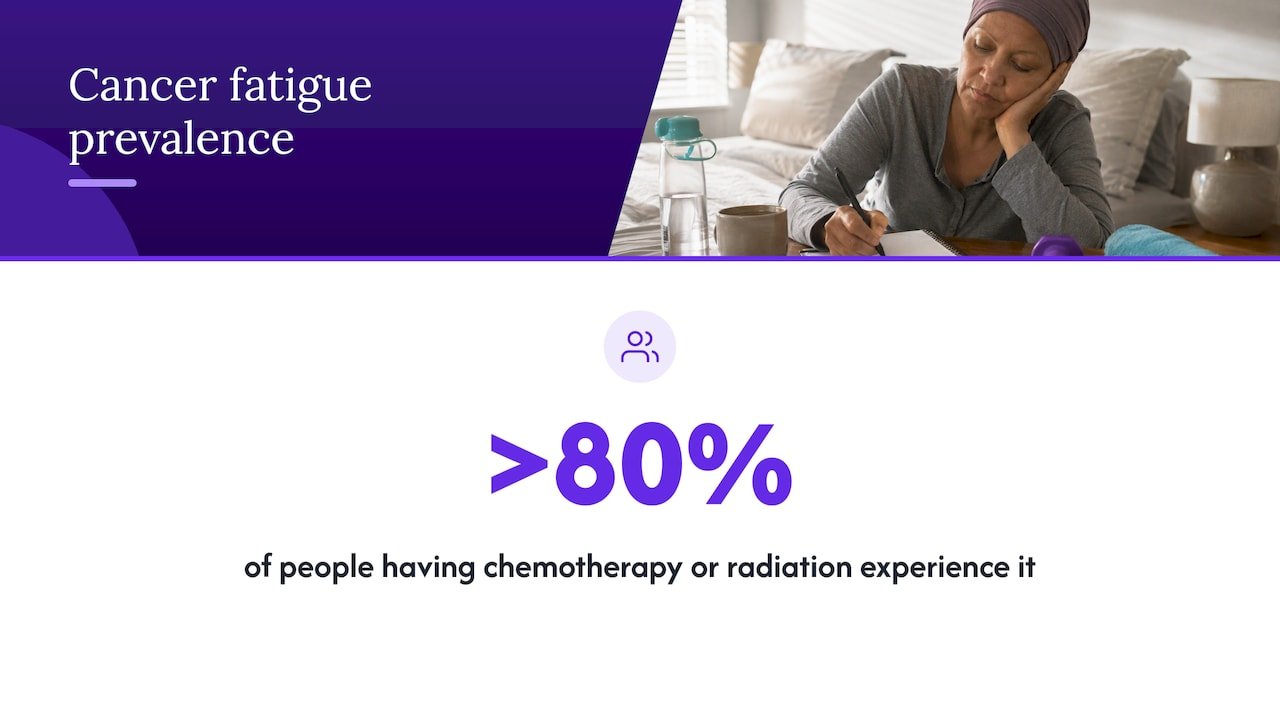
The NCCN patient guideline describes cancer-related fatigue as physical, emotional or mental exhaustion linked to cancer or its treatment that is distressing, does not improve with normal rest or sleep, and disrupts daily life. The US National Cancer Institute reports that more than 80% of people having chemotherapy or radiation therapy experience it. If you feel flattened, you are far from alone.
The causes are often layered. The cancer itself can play a part. So can treatment, along with anaemia (low red blood cells), dehydration, pain, poor sleep and the emotional weight of a diagnosis. Some are treatable. The NCCN guideline lists anaemia, pain, sleep problems, depression, anxiety, nutrition problems, infection and thyroid changes among them. That is why the first natural step is not a remedy at all. It is telling your team how tired you are.
For many women over 40, fatigue arrives on top of work, family, caring duties and, often, menopausal changes to sleep. Naming all of that to your team gives them a fuller picture.
Step one: tell your team and keep a fatigue diary
The Irish Cancer Society’s fatigue booklet advises telling your doctor or cancer nurse about it, resting, exercising, eating well and getting support if your mood is low or anxious. It also suggests a fatigue diary.
A simple diary is worth ten minutes a week:
- Rate your energy morning, afternoon and evening, from 0 to 10.
- Note what you did, how you slept, what you ate and drank.
- Mark treatment days and the days after.
- Write down anything that made things better or worse.
Within two weeks you will see patterns. Perhaps mornings are your best time, or the second day after chemotherapy is your lowest. Those patterns let you plan your week around your energy, and they give your team something concrete to work with.
When to call your care team promptly
The American Cancer Society says to contact your care team if you are too tired to get out of bed for a full day, have trouble waking, get short of breath with activity, have a fever or infection, are dehydrated or struggling to eat and drink, or your fatigue is getting worse. These can be signs of other problems that need treatment.
Pace yourself: energy conservation
Pacing means spending your energy deliberately, as you would a budget. A 2022 practice review in Palliative Medicine recommends energy conservation, meaning planning, pacing and prioritising daily tasks, for people with advanced cancer. The authors describe the recommendation as tentative, because the potential for harm is low.
Practical ways to do it:
- Prioritise. Pick the one or two things that matter most each day. Let the rest wait or be shared.
- Alternate activity and rest. Cancer Care Ontario suggests 10 minutes of activity followed by 10 minutes of rest as a pattern.
- Rest before you crash. The Irish Cancer Society advises planning rest after activity rather than waiting to run out.
- Schedule demanding tasks for your best time of day, which your diary will show you.
- Accept help. A neighbour doing the shopping is energy you keep for something you enjoy.
Move a little, often
It feels backwards to move when you are exhausted, but exercise is the approach with the strongest backing. The NCCN guideline says it is the treatment for cancer-related fatigue most strongly supported by evidence, with 3 to 5 hours a week linked to better outcomes. That can be broken into 10 to 15 minute sessions. The 2024 ASCO and Society for Integrative Oncology guideline, based on 113 randomised trials, also recommends exercise, cognitive behavioural therapy, mindfulness-based programmes and tai chi or qigong during treatment.
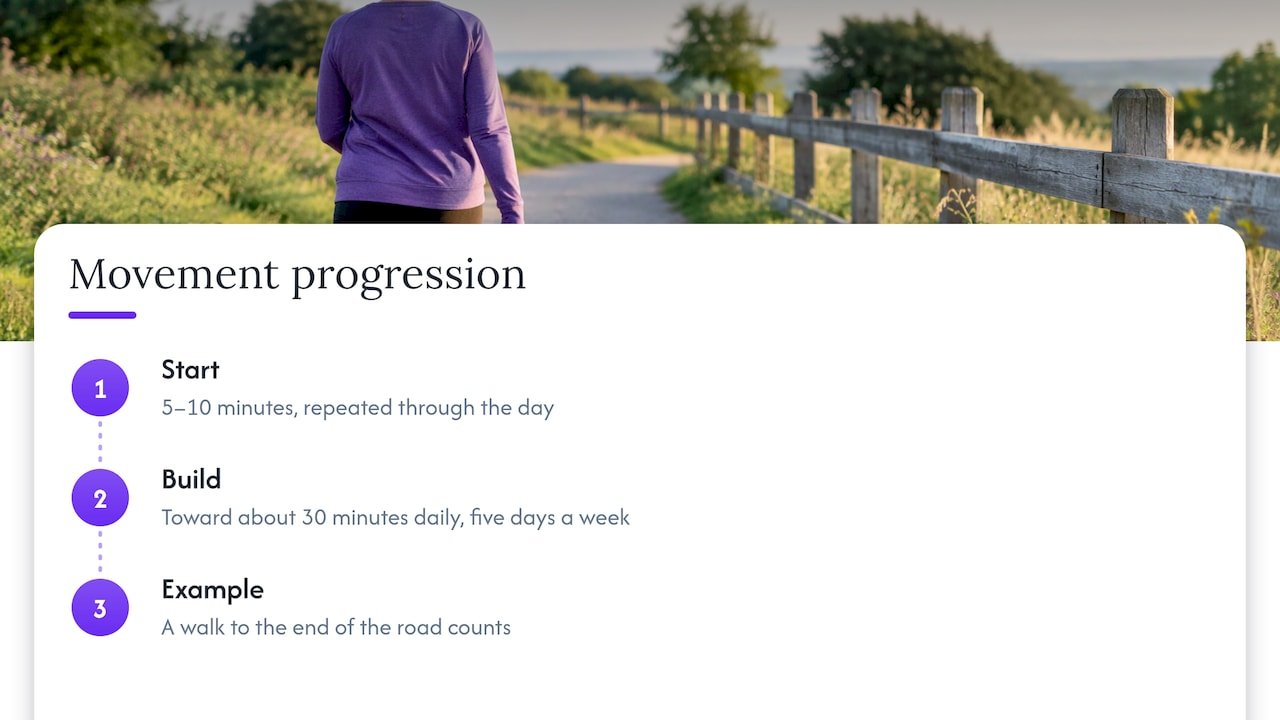
Cancer Care Ontario suggests starting with 5 to 10 minutes of movement repeated through the day, building towards about 30 minutes a day, five days a week. A walk to the end of the road counts.
Safe exercise rules
The Irish Cancer Society lists the cautions that matter most:
- Get advice from your medical team before you start.
- Avoid swimming pools when your immune system is low after chemotherapy, and avoid chlorinated water after radiotherapy.
- Ask your doctor first if you are anaemic or have low platelets.
- Stop and report chest pain, dizziness or breathlessness.
- Avoid high-impact exercise if cancer has spread to the bones or you have osteoporosis.
The NCCN adds that bone metastases, fever or infection, recent surgery or lymphoedema need care-team approval first. If any of those apply, our guides to strength training with osteoporosis and to lymphoedema after cancer explain what to ask. Our gym is a state-of-the-art facility, and our article on recovery workouts after 40 shows how to structure a gentle week.
Protect your sleep without over-napping
Sleep is where fatigue and worry often feed each other. The American Cancer Society suggests aiming for 7 to 8 hours, with consistent sleep and wake times, naps under 30 minutes, finishing exercise at least 3 hours before bed and avoiding caffeine for at least 4 hours before bed. The Irish Cancer Society sets its nap limit at under an hour. Either way, short and early is the principle. Long afternoon sleeps tend to steal from the night.
If you cannot sleep, tell your team. Poor sleep is on the list of treatable contributors, and cognitive behavioural approaches for sleep are among the options the Irish Cancer Society nursing material lists.
Eat and drink for steady energy
When appetite is poor, small and frequent beats big and rare. Cancer Care Ontario suggests protein-rich small meals and 6 to 8 glasses of water or unsweetened clear drinks daily, unless your team has told you otherwise. The American Cancer Society recommends a balanced diet with protein, fruit, vegetables and whole grains, staying hydrated and seeing a registered dietitian if eating is difficult. Ask your hospital team for a dietitian referral if you are losing weight or finding food hard.
Stay flexible. If treatment has changed your taste, a food that was a staple may not work now, and that is normal.
Calm the mind: support that counts as treatment
Anxiety, grief and low mood can drain energy as surely as treatment can. Mindfulness-based programmes, cognitive behavioural therapy and psychoeducation all appear in the ASCO and SIO guideline and in the Irish Cancer Society material. Ask your team about psycho-oncology or counselling services, and about whether your local cancer support centre runs relaxation or mindfulness classes. Talking to someone is a legitimate fatigue strategy, not a luxury.
Herbs, supplements and complementary therapies: check first
The Irish Cancer Society is clear that natural does not mean safe: herbal products and supplements can have serious side effects or interact dangerously with other medicines, so talk to your doctor before using any complementary therapy, even one you have used safely before.
Some examples of why checking matters:
- The fatigue booklet notes that herbal medicines and supplements may interfere with cancer treatment.
- Acupuncture may not be suitable if white blood cell or platelet counts are low.
- The ASCO and SIO guideline says American ginseng may be recommended during treatment. A 2024 review in Medicine describes a trial of 300 patients in which 2,000 mg a day of American ginseng beat placebo at week 8, while a separate trial of Asian ginseng at a lower dose found no difference. Dose, type and timing are exactly what your oncologist or pharmacist should confirm with you.
We write about this more in our guides to alternative cancer therapies and vitamin C in cancer care. Bring your full list of supplements to every appointment, including anything from our online shop.
Massage and gentle touch
Massage is listed among the complementary therapies in Irish Cancer Society nursing material on fatigue. The booklet advises asking your doctor or nurse first. Our guide to oncology massage and safer sessions explains what to tell a therapist about your treatment, areas to avoid and how to keep pressure light.
Restorative time at Live5dhealth
The heart of managing fatigue is the plan above. Alongside it, many people want a place where recovery feels like a treat rather than a chore. Our spa day gives you a luxury sauna, steam room and cold plunge for €30. Our red light therapy sessions are priced from €20 to €40. Hyperbaric oxygen therapy sessions are €80 to €120. We also offer holistic massage, PEMF, EWOT, a hydrogen bar and 3, 5 and 10-day wellness retreats.
We do not present any of these as a treatment for cancer or cancer fatigue. Heat, cold, pressure and oxygen all put demands on the body, so whether and when they suit you is a question for your oncologist first. Our article Ask Your Oncologist First: Sauna Safety During Chemotherapy lists what to ask, and the EWOT contraindications guide does the same for exercise with oxygen.
For hyperbaric oxygen, a 2023 meta-analysis of 24 trials found that ear discomfort was the most frequent side effect, and that adverse effects were more common with courses beyond 10 sessions or chamber pressures above 2.0 ATA. Mention it to your doctor, and let us know your treatment stage when you book so we can make sure the session is right for you.
Our view: gentle, joined-up recovery
We meet many women over 40 who are tired of being tired. After a diagnosis they are told to rest, and then find that rest alone does not bring the energy back. Our view is that recovery works best when it is steady and kind, and when it is led by your medical team.
That is why we built Live5dhealth around calm, restorative technology and traditional wisdom in one place: a spa, a gym, light and oxygen-based sessions, massage, clean energised water throughout the facility, and retreats where you can take time away from the daily load. Members also get free energised water and access to our unique therapies. Our aim is to give you comfortable, welcoming time to recharge, planned around what your oncologist has said is right for you.
Come with your questions, your medication list and your pace. We will meet you there.
Mark
A way to start: a quiet first visit
If your oncology team has agreed, a short spa session is a gentle way to begin. Our Sauna, Steam & Cold Plunge Spa page has the details, and our red light therapy and hyperbaric oxygen therapy pages explain what each session involves. If you would like a longer break, our 3, 5 and 10-day retreats give you time to rest in a supportive setting. Friends or family can come too through group bookings.

A week that respects your energy: a worked example
Here is how the pieces can fit together for someone mid-treatment. Adjust it to your own diary and to your team’s advice.
- Monday to Friday mornings: a 10-minute walk, split into two 5-minute outings if needed. Rate your energy afterwards.
- Each afternoon: one rest of under 30 minutes, early enough not to affect your night.
- Meals: three small meals and two snacks with protein, plus water or unsweetened drinks within reach all day.
- Evenings: a regular wind-down time, with the screen off and caffeine well behind you.
- Once a week: something that restores you, such as a call with a friend, a counselling session, a mindfulness class or, with your team’s approval, a calm session of massage or spa time.
- Every Sunday: read your diary, then send your team a short note about anything that has worsened.
If you feel better after four weeks, increase one thing by a small amount. If you feel worse, ease back and tell your team. Fatigue can fluctuate with treatment cycles, and the NCCN reminds patients that it cannot always be completely relieved. The goal is a steadier, more manageable life, not perfection.
FAQ
Can cancer fatigue be managed without medication?
Many people find that non-drug approaches make a real difference. Exercise, pacing, sleep habits, nutrition, psychological support and mindfulness all feature in guidance from the Irish Cancer Society and in the 2024 ASCO and SIO guideline. Because some fatigue has treatable medical causes such as anaemia, your doctor should still review it.
How much should I rest when I have cancer fatigue?
Rest is important, but little and often works better than long stretches. The Irish Cancer Society suggests limiting daytime naps to under an hour, and the American Cancer Society suggests under 30 minutes, so night-time sleep is protected. Plan rest after activity, before you are exhausted.
Is it safe to take herbal remedies for cancer fatigue?
Not without checking. The Irish Cancer Society warns that herbal products and supplements can interact with cancer treatment, so speak to your doctor or cancer nurse before starting anything, including products you have used before.
Can I try spa therapies or hyperbaric oxygen during treatment?
Ask your oncologist first, because heat, cold, pressure and oxygen each affect the body differently depending on your treatment and blood counts. Once you have their agreement, tell us your treatment stage when you book at Live5dhealth so we can plan a suitable session.
Sources
- NCCN Guidelines for Patients: Fatigue and Cancer
- Fatigue and Cancer, National Cancer Institute
- Irish Cancer Society: Coping with fatigue booklet
- American Cancer Society: Cancer-Related Fatigue
- Practice review: management of fatigue in advanced cancer, Palliative Medicine
- Cancer Care Ontario: Managing Your Fatigue
- ASCO and SIO guideline: Management of Fatigue in Adult Survivors of Cancer
- Irish Cancer Society: Cancer and complementary therapies
- Narrative review of nutritional and complementary approaches, Medicine
- Adverse effects of hyperbaric oxygen therapy: a systematic review