

Nattokinase is a potent fibrinolytic enzyme extracted from natto, a traditional Japanese fermented soy food, and “nattokinese” is the commonly searched variant of the same compound. Its primary action is breaking down fibrin, the protein that forms blood clots, which makes it one of the more studied natural enzymes for cardiovascular and circulatory health. For adults over 40 exploring complementary wellness options, understanding what the science actually supports, and where it falls short, is the difference between a useful tool and a wasted investment.
1. What is nattokinese and how does it work?
Nattokinase works by directly breaking down fibrin and modulating the plasminogen/plasmin system, which is the body’s natural mechanism for dissolving clots. This dual action supports vascular elasticity and healthy blood flow. Unlike many pharmaceutical thrombolytics, nattokinase can be taken orally and has a comparatively favourable side-effect profile, which is why researchers have described it as a promising fibrinolytic alternative to traditional clot-dissolving drugs. That said, it is a complement to medical care, not a replacement for it.

2. The standard nattokinase dosage recommendation
The standard effective dose is 2,000 Fibrinolytic Units (FU) daily, based on a North American double-blind, placebo-controlled study. Participants in that trial saw systolic blood pressure drop by an average of 5 mmHg after 8 weeks of supplementation. That is a modest but clinically meaningful reduction for adults managing borderline hypertension. Most quality supplements are formulated to deliver exactly 2,000 FU per capsule, making dose tracking straightforward.
3. Nattokinase and heart health: what the evidence actually shows
Nattokinase has modest, documented cardiovascular benefits, but current evidence does not support claims that it dissolves arterial plaque or prevents heart attacks and strokes. Trials have used surrogate markers, such as blood pressure and clotting factors, rather than hard outcomes like cardiac events. This is an important distinction. If you are over 40 and managing cardiovascular risk, nattokinase may support your wider plan, but it cannot substitute for prescribed therapies or proven lifestyle changes. For broader context on heart health prevention, combining supplementation with diet, exercise, and medical oversight remains the gold standard.
4. Why the FU unit matters more than milligrams
The milligram content on a nattokinase label tells you very little about its actual potency. The FU unit is the critical efficacy metric because it measures enzyme activity directly, not just the weight of the powder. Two products with identical mg counts can have vastly different fibrinolytic activity depending on extraction quality and storage conditions. Always look for FU on the label, and verify it is backed by third-party testing.
Pro Tip: When comparing nattokinase supplements, ignore the mg figure entirely if no FU count is listed. A product without a stated FU value cannot confirm its enzyme is active.
5. Enteric coating and bioavailability
Stomach acid degrades nattokinase before it reaches the small intestine, which is where absorption occurs. Enteric-coated capsules protect the enzyme from this acid environment, significantly improving bioavailability and ensuring the enzyme reaches the bloodstream intact. Non-coated forms risk losing a substantial portion of their activity before absorption. For adults over 40, whose digestive efficiency may already be reduced, this formulation detail is not optional. It is a baseline requirement for a supplement worth taking.
6. Product quality: the label claim problem
Testing showed that 3 out of 8 nattokinase products failed to meet their stated enzyme activity levels. That represents 37.5% of tested supplements not delivering what the label promised. This is a significant quality gap. It means that without third-party verification, you may be paying for a product that provides little to no fibrinolytic benefit. Choosing supplements with independent lab certification is not a luxury. It is the only way to confirm you are getting the dose the label claims.
| Quality indicator | What to look for |
|---|---|
| Enzyme activity | 2,000 FU stated on label |
| Third-party testing | Certificate of Analysis from an independent lab |
| Capsule type | Enteric-coated for acid protection |
| Vitamin K2 status | Removed or clearly labelled for anticoagulant users |
| Brand transparency | Batch-level testing results publicly available |
7. Vitamin K2 removal and anticoagulant interactions
Traditional natto contains high levels of Vitamin K2, which directly interferes with warfarin and similar anticoagulant medications. Most nattokinase supplements remove Vitamin K2 to reduce this interaction risk. This is critical information if you are on blood thinners. Even without K2, nattokinase itself has blood-thinning properties through its fibrinolytic action. Taking it alongside anticoagulants can amplify bleeding risk significantly. Always disclose nattokinase use to your prescribing doctor before starting.
8. Who should avoid nattokinase?
Nattokinase is contraindicated for several groups. The bleeding risk is real and should not be underestimated.
- Anticoagulant users: Warfarin, rivaroxaban, apixaban, and similar drugs interact dangerously with nattokinase’s fibrinolytic action.
- Bleeding disorder patients: Conditions such as haemophilia or thrombocytopenia make clot-dissolving enzymes genuinely dangerous.
- Pre- and post-surgery patients: Nattokinase should be stopped at least two weeks before any planned surgical procedure.
- Adults over 65: Age-related changes in kidney and liver function alter how the enzyme is metabolised. Medical supervision is strongly advised.
- Soy allergy sufferers: Nattokinase is derived from fermented soy and may trigger allergic reactions in sensitive individuals.
Red-flag symptoms requiring urgent medical attention include unusual bruising, prolonged bleeding from cuts, blood in urine or stools, and sudden severe headache. Professional advice stresses consultation before combining nattokinase with any current medication.
9. Nattokinase’s potential role in cancer support
Preliminary research suggests nattokinase may have a role as an adjunct in cancer-related care, particularly around cancer-associated thrombosis. Studies combining nattokinase with doxorubicin showed increased antitumour activity in animal and in vitro models. Separate research has explored its ability to break down amyloid fibrils, which has implications for neurological conditions. These are genuinely interesting findings. However, they are early-stage results from laboratory and animal studies, not human clinical trials. Nattokinase is not a cancer treatment. It should never replace oncology-prescribed therapies, and any interest in using it alongside cancer care must be discussed with your oncologist first.
10. Realistic expectations and long-term use
Nattokinase has high stability and a long half-life, which are pharmacological advantages over many natural compounds. Despite this, trial sizes remain small and most studies use surrogate markers rather than definitive health outcomes. The honest picture is that nattokinase is a well-tolerated, biologically active enzyme with genuine cardiovascular support potential. It works best as part of a broader wellness plan that includes diet, physical activity, stress management, and regular medical review. Patience matters here. Benefits observed in trials appeared after 8 weeks of consistent use, not days.
Pro Tip: Keep a simple log of your blood pressure readings before starting nattokinase and at 4-week intervals. This gives you real data to share with your GP and helps you assess whether the supplement is contributing to your goals.
How to choose a high-quality nattokinase supplement
Selecting a reputable product requires looking beyond the marketing copy on the front of the box. For guidance on evaluating supplement quality, independent verification is the single most reliable filter.
Key points to check before purchasing:
- FU count is stated clearly: If the label only shows milligrams, the brand is not being transparent about enzyme activity.
- Third-party Certificate of Analysis: Look for testing by recognised independent laboratories, not just in-house quality claims.
- Enteric-coated capsule: Non-coated products risk significant enzyme degradation in the stomach.
- Vitamin K2 status: Confirm whether K2 has been removed, particularly if you take any blood-thinning medication.
- Batch traceability: Reputable brands publish batch-specific test results. If this information is not available on request, consider it a warning sign.
You can browse quality-verified options through the nattokinase supplement range at Live5dhealth, where products are selected with enzyme activity and formulation standards in mind.
Key takeaways
Nattokinase delivers real but modest cardiovascular benefits at 2,000 FU daily, and product quality verification is non-negotiable because 37.5% of tested supplements fail to meet their label claims.
| Point | Details |
|---|---|
| Standard effective dose | 2,000 FU daily, associated with measurable blood pressure reduction after 8 weeks. |
| Enteric coating is essential | Non-coated capsules risk enzyme degradation before absorption occurs. |
| FU beats milligrams | Enzyme activity in FU is the only reliable potency measure on a supplement label. |
| Safety comes first | Anticoagulant users and those with bleeding disorders must consult a doctor before use. |
| Cancer support is preliminary | Animal and in vitro findings are promising but do not constitute clinical evidence. |
My honest view on nattokinase for over-40s
I have followed the nattokinase research closely for several years, and my view is straightforward: this is one of the more credible natural enzymes in the cardiovascular supplement space, but it is also one of the most over-marketed.
The blood pressure data is real. A 5 mmHg reduction in systolic pressure is not dramatic, but for someone managing borderline hypertension, it is meaningful. What frustrates me is the number of products making claims about dissolving arterial plaque or supporting cancer recovery. The science does not support those claims at this stage, and making them to people over 40 who are genuinely worried about their health is irresponsible.
What I tell people is this: nattokinase earns its place in a well-considered supplement plan, but only if you have chosen a product with verified FU activity, you are not on anticoagulants, and your GP knows you are taking it. The lifestyle factors, sleep, movement, diet, and stress, still do far more for cardiovascular health than any single supplement. Nattokinase is a useful addition to that foundation, not a shortcut around it.
The cancer-support angle is worth watching. The in vitro and animal data on fibrin reduction in tumour environments is genuinely interesting. But I would caution anyone against reading those early findings as a treatment signal. They are a research direction, not a clinical recommendation.
If you are over 40 and curious about nattokinase, start with the basics: get a quality-verified product, track your blood pressure, and give it at least 8 weeks. Then decide based on your own data, not the marketing copy.
— Mark
Live5dhealth and your wellness plan after 40
At Live5dhealth, the approach to supplementation is grounded in quality and transparency. The supplements range includes products selected for verified enzyme activity and formulation standards, so you are not left guessing about what you are actually taking.
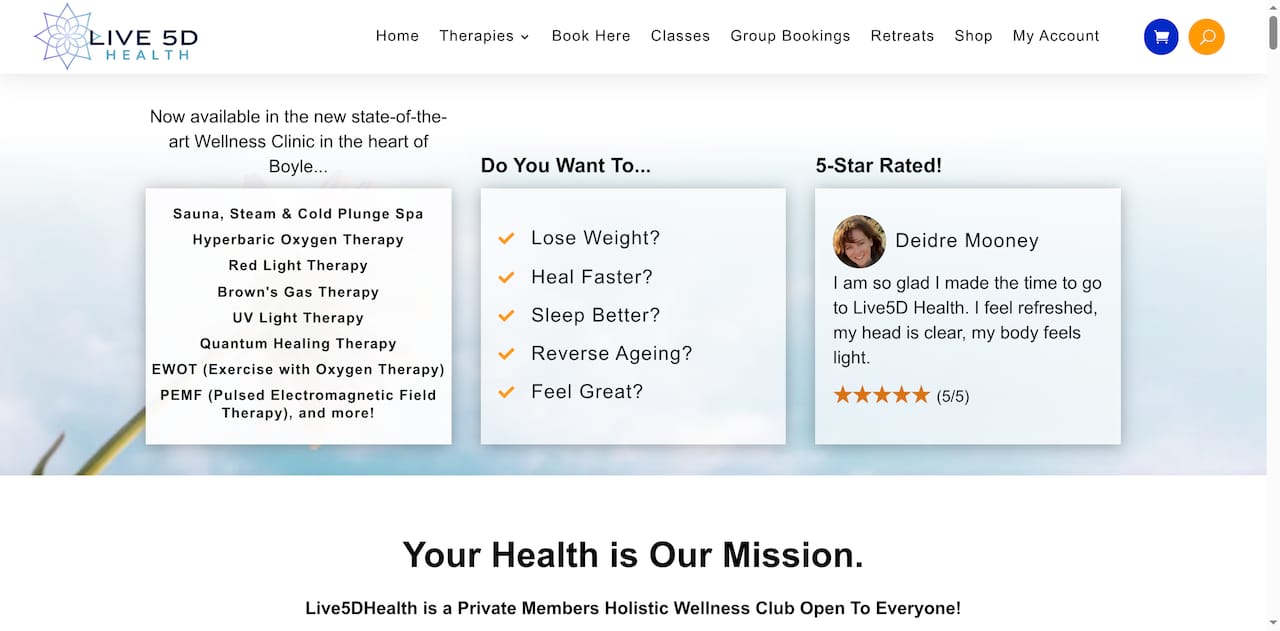
Beyond supplements, Live5dhealth offers a full wellness environment at its retreat centre in Boyle, County Roscommon. Whether you are looking to combine nattokinase with a broader health reset or simply want expert guidance on what your body needs after 40, the luxury spa and retreat provides the space and support to make that happen. Good health is built on consistent, informed choices, and Live5dhealth is here to help you make them.
FAQ
What is the correct nattokinase dosage for adults over 40?
The standard dose is 2,000 FU daily, based on a double-blind clinical study that showed a measurable reduction in systolic blood pressure after 8 weeks. Always confirm the FU count on the label before purchasing.
Is nattokinase safe to take with blood pressure medication?
Nattokinase has its own blood-pressure-lowering and blood-thinning effects, so combining it with antihypertensive or anticoagulant medication requires medical supervision. Consult your GP before starting.
Can nattokinase help with cancer?
Preliminary animal and in vitro studies suggest nattokinase may reduce cancer-associated thrombosis and enhance certain chemotherapy agents, but no human clinical trials confirm it as a cancer treatment. It should never replace prescribed oncology care.
How do I know if a nattokinase supplement is good quality?
Look for a stated FU count, an enteric-coated capsule, and a third-party Certificate of Analysis. Testing has shown that 37.5% of products fail to meet their label claims, so independent verification is the most reliable quality filter.
Does nattokinase contain Vitamin K2?
Most nattokinase supplements have Vitamin K2 removed to reduce interactions with anticoagulant medications. Check the label carefully, particularly if you take warfarin or any similar blood-thinning drug.