
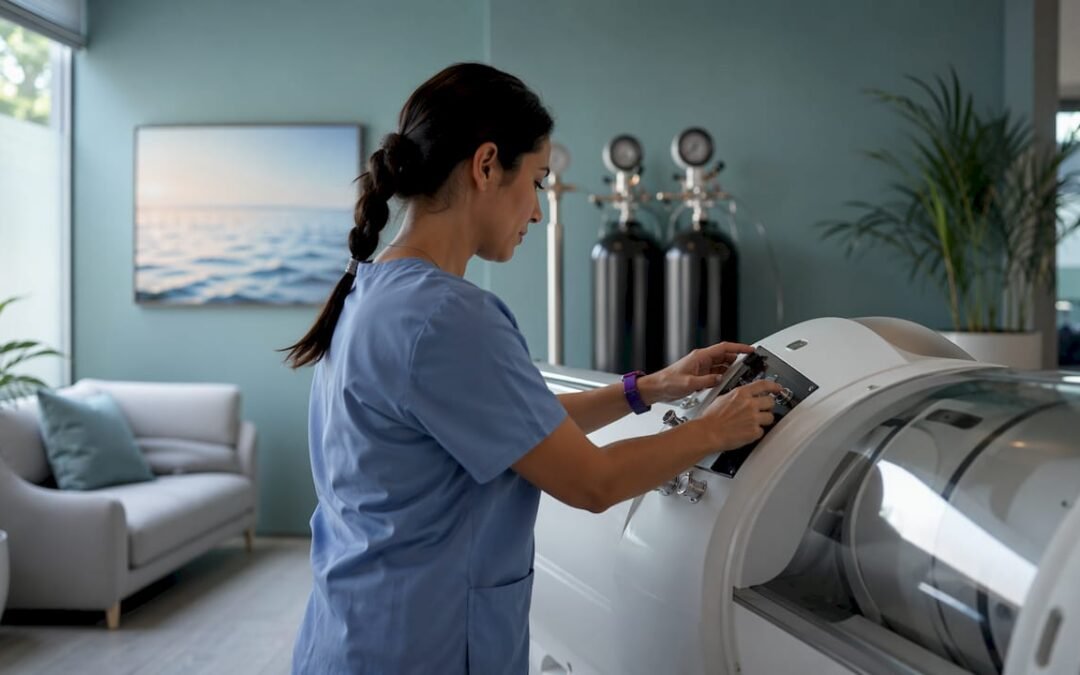
Hyperbaric oxygen therapy (HBOT) accelerates bone healing by flooding ischaemic tissue with dissolved oxygen at therapeutic pressures of 1.5–3.0 ATA, triggering a cascade of biological programmes that couple new blood vessel formation directly with new bone formation. At those pressures, dissolved plasma oxygen rises 10–15× above normal atmospheric levels, reaching bone tissue that haemoglobin-bound oxygen simply cannot perfuse. The result is a coordinated upregulation of VEGF, BMP-2, and Runx2, mobilisation of bone-marrow stem cells, and a shift in the inflammatory environment that favours repair over resorption.
The practical bottom line for patients and clinicians:
- HBOT does not replace surgical fixation or standard orthopaedic care; it works as an adjunct, enhancing the body’s repair biology.
- Clinical benefits are cumulative. Protocols often require multiple sessions before radiographic callus changes become measurable.
- The strongest evidence base covers delayed and non-union fractures, chronic osteomyelitis, and irradiated bone; evidence for acute uncomplicated fractures is more limited.
- Monitoring progress means tracking both clinical signs (pain, swelling, function) and imaging (callus density, bridging on X-ray or CT).
Key figure: HBOT at 1.5–3.0 ATA raises dissolved plasma oxygen 10–15 times, restoring oxygen supply to bone where circulation is compromised.
Table of Contents
- How HBOT changes oxygen delivery to bone
- The cellular and molecular mechanisms that drive bone repair
- What the experimental and clinical evidence shows
- Common HBOT protocols for bone healing and what to expect
- Safety, side effects, and contraindications you should know
- What patients in the UK should expect and questions to ask a provider
- What recent 2024–2025 research tells us about HBOT and bone repair
- Key takeaways
- A clinician’s perspective on when HBOT genuinely helps
- Experience HBOT for bone recovery at Live5dhealth
- Key sources and further reading
How HBOT changes oxygen delivery to bone
Bone is metabolically demanding and poorly tolerant of ischaemia; the detailed mechanisms of hyperbaric oxygen therapy in enhancing recovery after such ischemic injury are explained in Tlenoterapia hiperbaryczna po udarze: jak to działa? | UdarRehab.pl. When a fracture disrupts the local vasculature, or when chronic infection or radiation damage has already compromised it, the partial pressure of oxygen at the repair site drops sharply. Osteoblasts and osteogenic progenitors stall. Collagen synthesis slows. Mineralisation cannot proceed without ATP, and ATP production requires oxygen.
HBOT addresses this directly through Henry’s Law: the amount of gas dissolved in a liquid is proportional to its partial pressure. Breathing 100% oxygen at 2.0–2.5 ATA forces far more oxygen into plasma than is possible at sea level, bypassing the haemoglobin transport system entirely. Dissolved oxygen in plasma rises to levels sufficient to sustain cellular respiration even in tissue with severely impaired capillary flow.
At therapeutic pressures, the diffusion distance of oxygen from capillary walls into surrounding tissue increases substantially. Oxygen diffusion distance and tissue oxygen tension increase at ≥2.0 ATA, restoring mitochondrial ATP production in hypoxic osteocytes and chondrocytes. This is the immediate, single-session effect: cells that were energy-starved resume their repair functions within the session itself.
The cumulative picture is different and arguably more important:
- Immediate effect (single session): tissue pO₂ rises sharply, hypoxic cells resume ATP synthesis, and pro-repair signalling begins.
- Short-term cumulative effect (sessions 1–10): VEGF and angiogenic growth factors accumulate; early capillary sprouting begins at the fracture margin.
- Medium-term cumulative effect (sessions 10–30): a stable microvascular bed forms; osteoprogenitor cells arrive at the site in greater numbers; mineralisation accelerates.
- Late cumulative effect (sessions 30–40+): callus consolidation and remodelling proceed in a well-oxygenated environment, reducing the risk of fibrous non-union.
Pro Tip: Ask your HBOT provider for transcutaneous oxygen measurements (TcPO₂) before and during your course. A rise in tissue oxygen tension at the fracture site is an early, objective sign that the therapy is working.
The cellular and molecular mechanisms that drive bone repair
Understanding why HBOT works at the cellular level is where the science becomes genuinely compelling. It is not simply an oxygen delivery system; it acts as a metabolic regulator that shifts redox signalling and inflammatory balance to favour repair. Several distinct but interconnected pathways are involved.
Angiogenesis: building the vascular scaffold
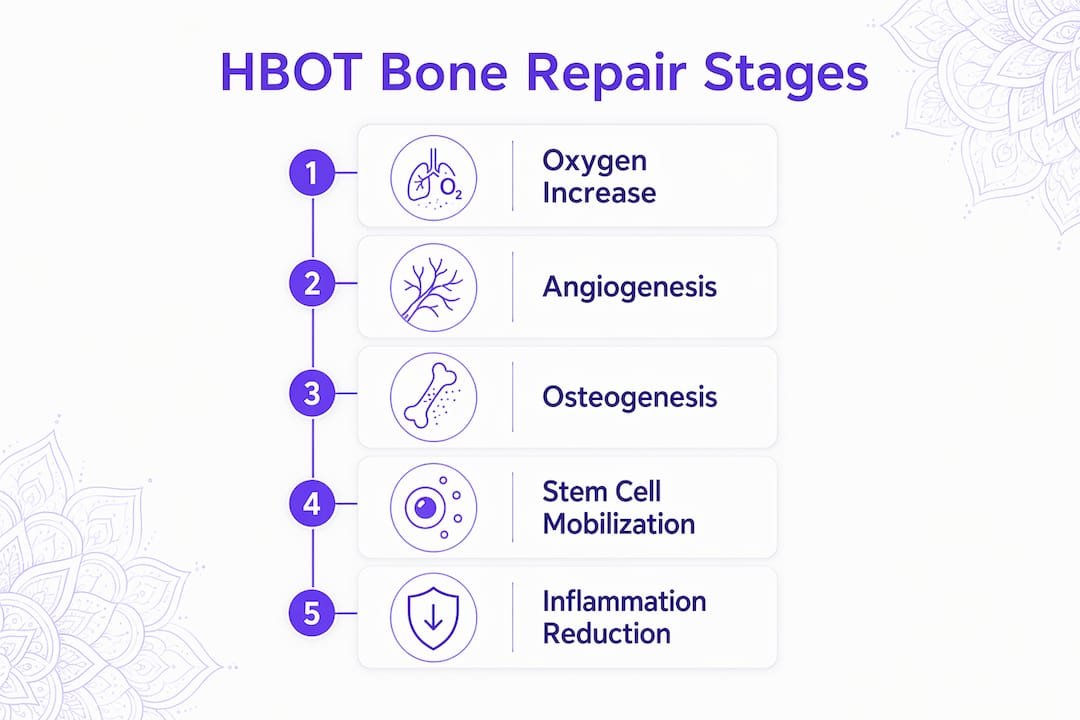
New bone cannot mineralise without a stable vascular bed. HBOT upregulates VEGF and BMP-2 signalling, promoting capillary sprouting and the formation of angiopoietin-stabilised microvessels. Without this vascular scaffold, osteoprogenitors arrive at the fracture site but cannot sustain the oxygen and nutrient supply needed for mineralisation. This angiogenesis–osteogenesis coupling is the central mechanism that explains HBOT’s clinical value in poorly vascularised bone.
Osteogenesis: activating the bone-forming machinery
HBOT drives osteoblast proliferation and upregulates the transcription factor Runx2, the master regulator of osteogenic differentiation. BMP-2 expression rises alongside alkaline phosphatase activity, both markers of active bone formation. In osteonecrosis models, HBOT has been shown to enhance osteoblast proliferation and suppress osteoclast activity, directing the cellular environment towards osseous regeneration rather than resorption.
Stem cell mobilisation
One of the more striking findings in HBOT research is its effect on circulating progenitor cells. A single HBOT session doubled CD34+ circulating stem cells, and repeated sessions produced up to 8× increases in experimental observations. The mechanism involves nitric oxide signalling, which releases stem cells from bone marrow niches and increases their concentration in peripheral circulation, from where they can home to the fracture site.
Inflammation and redox regulation
Chronic inflammation is a major driver of non-union. HBOT activates the Nrf2 pathway, increasing antioxidant enzymes such as superoxide dismutase (SOD) and reducing pro-inflammatory cytokines including IL-1, IL-6, and TNF-α. Crucially, it also modulates the OPG/RANK/RANKL axis, reducing osteoclast-driven resorption and tipping the balance towards net bone formation.
The Piezo1–YAP mechanosensitive pathway
Perhaps the most exciting recent finding is that HBOT activates the Piezo1–YAP mechanosensitive axis in osteogenic progenitors. Piezo1 is a mechanosensory ion channel that normally responds to physical loading. HBOT upregulates Piezo1 and its downstream effector YAP, increasing expression of Runx2 and COL1. When Piezo1 was knocked out in experimental models, the osteogenic effect of HBOT was significantly attenuated. This means HBOT can partially mimic the anabolic signals that bone normally receives from mechanical loading, which has direct implications for patients who are immobilised or non-weight-bearing.
Key insight: HBOT’s ability to activate Piezo1 suggests a genuine synergy with progressive physiotherapy and load rehabilitation. The two interventions may reinforce the same osteogenic signalling pathway from different directions.
What the experimental and clinical evidence shows
The evidence base for HBOT in bone healing spans animal models, mechanistic studies, and clinical series, with a small number of randomised controlled trials and several systematic reviews.
Animal and mechanistic studies
Rodent femoral defect and cranial graft models consistently show accelerated bone formation and increased VEGF and basic FGF expression after HBOT courses. Earlier endochondral ossification and larger bone volume at defect sites have been reported in daily HBOT protocols. These findings are mechanistically coherent with the cellular pathways described above and provide the biological plausibility that clinical trials need to build on.
Clinical evidence and systematic reviews
The clinical picture is more nuanced. A 2025 PubMed review synthesising the current evidence identified angiogenesis, osteoblast proliferation, and redox modulation as the principal mechanisms, and noted that HBOT shows particular promise in delayed union, non-union, chronic osteomyelitis, and irradiated bone. In chronic refractory osteomyelitis, HBOT as an adjunct to surgery and antibiotics has been reported to achieve remission in 80–85% of patients over 2–3 years, using protocols of 100% oxygen at 2.4 ATA for 40–60 sessions of 90 minutes.
For fracture non-union specifically, the Cochrane review found insufficient randomised trial evidence to support or refute HBOT’s efficacy, noting that existing trials measured soft-tissue rather than bone outcomes. Clinical series and case reports, however, describe HBOT as a callus accelerator in tibia non-union, allowing earlier removal of external fixators.
| Evidence type | Key finding | Strength |
|---|---|---|
| Animal models (rodent defect) | Accelerated bone formation, increased VEGF/FGF, earlier callus mineralisation | Consistent; mechanistically coherent |
| Chronic osteomyelitis (clinical series) | 80–85% remission at 2–3 years with HBOT adjunct at 2.4 ATA, 40–60 sessions | Moderate; no large RCT |
| Fracture non-union (Cochrane review) | Insufficient RCT evidence to confirm or refute benefit | Weak; ongoing trials |
| Irradiated bone / osteoradionecrosis | Angiogenesis identified as principal mechanism; clinical improvement reported | Moderate; Cochrane-level review |
| Systematic reviews (2025 PubMed) | Angiogenesis, osteoblast proliferation, redox modulation confirmed as mechanisms | Good mechanistic consensus |
Evidence caveats
Protocol heterogeneity is the biggest limitation across the literature. Studies vary widely in pressure (1.5–3.0 ATA), session length (60–120 minutes), and total session counts (20–60). Small sample sizes and the absence of sham-controlled fracture trials mean that effect sizes remain uncertain for most orthopaedic indications. Better-designed RCTs, particularly for delayed union and post-surgical bone defects, are needed before HBOT can be recommended as standard of care for fractures.
Common HBOT protocols for bone healing and what to expect
Translating the science into a treatment plan requires understanding the parameters clinicians actually use and the realistic timeline for seeing results.
Typical protocol parameters
- Pressure: 1.5–3.0 ATA, with most bone-healing protocols using 2.0–2.4 ATA.
- Session length: 60–90 minutes of oxygen breathing, plus compression and decompression time (total chamber time is typically 90–120 minutes per session).
- Session frequency: once daily, five days per week, is the most common schedule.
- Total sessions: 20–40 sessions for fracture-related indications; up to 40–60 sessions for chronic osteomyelitis.
For chronic refractory osteomyelitis, the Undersea and Hyperbaric Medical Society (UHMS) has defined minimum cycle counts, dose, and frequency. For fracture non-union and delayed union, protocols are less standardised and are typically individualised by the treating clinician.
Key figure: Stem cell mobilisation studies show significant increases in CD34+ cells after extended sessions, which helps explain why shorter courses may be insufficient for full osteogenic benefit.
How benefits progress over time
The timeline is not linear. Tissue oxygenation improves from the very first session, but the structural changes that matter clinically take weeks to accumulate:
- Weeks 1–2: improved tissue pO₂, early reduction in oedema and inflammatory markers.
- Weeks 3–5: measurable increases in VEGF and angiogenic activity; early capillary network formation.
- Weeks 6–10: radiographic callus changes may begin to appear; clinical pain and function often improve before imaging confirms it.
- Beyond 10 weeks: consolidation and remodelling in well-oxygenated tissue; reduced risk of refracture.
Protocol tailoring
Clinicians adjust session counts and frequency based on several factors. Smokers have impaired microvascular function and typically need longer courses. Diabetic patients with peripheral vascular disease may respond more slowly, though they often benefit substantially once vascularisation improves. Irradiated bone presents a distinct challenge: radiation-induced obliterative endarteritis means the vascular bed is severely compromised, and protocols for osteoradionecrosis commonly run to 30–40 pre-operative and 10–20 post-operative sessions. For session frequency and cumulative dosing, your provider should give you a written protocol with clear outcome milestones.
Safety, side effects, and contraindications you should know
HBOT has a well-characterised safety profile when delivered in a properly equipped facility by trained staff. The vast majority of patients complete a full course without serious adverse events.
Common, usually mild effects
- Ear and sinus barotrauma: the most frequent complaint. Pressure equalisation difficulties cause discomfort or pain in the ears or sinuses during compression. Valsalva manoeuvres and slow compression rates minimise this.
- Transient myopia: temporary worsening of near vision, typically resolving within weeks of completing the course.
- Claustrophobia: monoplace chambers (single-person tubes) provoke anxiety in some patients; multiplace chambers are an alternative.
- Fatigue: mild tiredness after sessions is common, particularly in the first week.
Serious but rare risks
Oxygen toxicity seizures are the most serious acute risk, occurring in fewer than 1 in 10,000 sessions at standard therapeutic pressures. Pulmonary oxygen toxicity is a concern in very long or high-pressure courses. Both risks are managed by air breaks during sessions, strict adherence to pressure limits, and pre-session neurological screening. For a full overview of HBOT safety and general indications, including how providers manage these risks, it is worth reviewing the evidence before your first appointment.
Contraindications
- Absolute: untreated pneumothorax (risk of tension pneumothorax under pressure).
- Relative: uncontrolled asthma, certain chemotherapy agents (bleomycin, doxorubicin, cisplatin), active ear infection, severe claustrophobia, and some cardiac conditions.
A full contraindication checklist and pre-screening assessment should be completed before starting any course. ENT assessment is standard practice before a full course, and cardiopulmonary review is recommended for patients with relevant history.
Pro Tip: Tell your provider about every medication you take, including over-the-counter supplements. Several drugs interact with high-pressure oxygen and require dose adjustment or temporary cessation.
What patients in the UK should expect and questions to ask a provider
Where HBOT is available in the UK
NHS provision of HBOT is limited to a small number of approved indications, primarily decompression sickness, carbon monoxide poisoning, and certain wound complications. For orthopaedic indications such as delayed union, non-union, and chronic osteomyelitis, HBOT is almost always accessed privately. A small number of NHS trusts have hyperbaric units, and funding applications for specific indications are occasionally approved, but this is the exception rather than the rule.
Private HBOT centres vary considerably in equipment quality, clinical governance, and staff credentials. Choosing a centre with medical oversight and a formal pre-treatment assessment process is not optional; it is the minimum standard you should expect.
Your step-by-step pathway
- Step 1 — Referral and screening: obtain a referral letter from your orthopaedic surgeon or GP summarising your diagnosis, imaging findings, and treatment history. A reputable HBOT centre will require this before booking.
- Step 2 — Baseline imaging: ensure you have recent X-rays or CT scans showing the current state of the fracture or bone defect. These are your baseline against which progress will be measured.
- Step 3 — Pre-treatment assessment: the centre should conduct an ENT check, blood pressure and cardiopulmonary review, and a medication review before your first session.
- Step 4 — Course planning: your clinician should give you a written protocol specifying pressure (ATA), session length, total sessions, and the outcome milestones they will use to assess progress.
- Step 5 — Monitoring during the course: expect a clinical review at roughly the midpoint of your course (around session 20 for a 40-session protocol) with repeat imaging if indicated.
Questions to ask your provider
- What is the evidence for HBOT in my specific indication, and what outcome can I realistically expect?
- What exact protocol will you use: pressure in ATA, session length, total sessions, and frequency per week?
- What are your staff credentials, and is there a physician on site during sessions?
- What emergency procedures are in place if I experience a seizure or barotrauma?
- How will you measure whether the therapy is working, and at what point would you recommend stopping if it is not?
What recent 2024–2025 research tells us about HBOT and bone repair
The 2025 PubMed review represents the most current synthesis of HBOT’s mechanisms in bone-related disease. Its novel emphases go beyond simple oxygenation to highlight redox regulation and the tight coupling between angiogenesis and osteogenesis as the two pillars of clinical benefit. The review’s conclusions suggest that longer courses may be needed to fully establish the capillary networks that sustain mineralised bone, supporting the 30–40 session range for complex indications rather than shorter protocols.
The Piezo1–YAP pathway finding is the most clinically significant mechanistic advance in recent years. HBOT activates Piezo1 and YAP in osteogenic progenitors, upregulating Runx2 and COL1 and promoting osteogenesis–angiogenesis coupling. Because Piezo1 normally responds to mechanical loading, this finding implies that HBOT can partially substitute for the anabolic mechanical stimuli that immobilised or non-weight-bearing patients cannot generate themselves.
The clinical implication is direct: coordinating HBOT with staged physiotherapy and progressive load rehabilitation may produce additive or synergistic osteogenic effects, because both interventions converge on the same mechanosensitive pathway from different directions. Physiotherapists and orthopaedic surgeons involved in fracture rehabilitation should be aware of this when planning the timing of load progression alongside an HBOT course.
- Patient selection: patients with impaired vascularity (smokers, diabetics, irradiated bone) are likely to benefit most, as HBOT addresses the primary limiting factor in their healing.
- Combination potential: HBOT plus progressive mechanical loading targets Piezo1–YAP from two angles simultaneously.
- Protocol length: the 2025 review supports longer courses (30–40 sessions) for complex bone disease rather than shorter, lower-dose protocols.
Pro Tip: If you are undergoing physiotherapy alongside HBOT, ask your physiotherapist and HBOT clinician to communicate directly about the timing of load progression. Scheduling weight-bearing exercises in the days following HBOT sessions may amplify the Piezo1-mediated osteogenic signal.
Key takeaways
HBOT accelerates bone healing by raising dissolved plasma oxygen 10–15× at 1.5–3.0 ATA, activating angiogenesis–osteogenesis coupling through VEGF, BMP-2, Runx2, and Piezo1–YAP signalling, and reducing the inflammatory burden that stalls repair.
| Point | Details |
|---|---|
| Dissolved oxygen is the foundation | HBOT raises dissolved plasma oxygen 10–15× at 1.5–3.0 ATA, perfusing ischaemic bone that haemoglobin cannot reach. |
| Angiogenesis and osteogenesis must couple | VEGF, BMP-2, and Runx2 upregulation synchronises capillary formation with bone mineralisation; without the vascular bed, new bone is poorly formed. |
| Stem cells multiply with repeated sessions | CD34+ circulating stem cells increase up to 8× after 20 sessions, explaining why short courses are insufficient for full osteogenic benefit. |
| Protocols require multiple sessions | Clinical and expert practice support sustained courses; osteomyelitis protocols often involve extended sessions at around 2.4 ATA lasting about 90 minutes. |
| Live5dhealth offers HBOT for bone recovery | Live5dhealth provides HBOT sessions in a clinical wellness setting, supporting patients with fracture recovery and bone-related indications. |
A clinician’s perspective on when HBOT genuinely helps
The science of HBOT in bone healing is genuinely impressive at the mechanistic level. The Piezo1 data, the stem cell mobilisation findings, the redox modulation work — these are not fringe claims. They are peer-reviewed, biologically coherent, and increasingly well-replicated. What the evidence does not yet support is using HBOT as a first-line or standalone treatment for routine fractures. The patients who benefit most are those in whom the standard healing biology has already stalled: the smoker with a tibial non-union at six months, the patient whose jaw bone was damaged by radiotherapy, the person with chronic osteomyelitis that has resisted two rounds of surgery and antibiotics.
For those patients, the question is not whether HBOT has a mechanism. It clearly does. The question is whether the clinical team has selected the right protocol, set realistic expectations, and built in the imaging checkpoints to know whether it is working. A 20-session course in a patient with severe obliterative endarteritis from radiation is unlikely to be enough. A 40-session course in a well-selected non-union patient, coordinated with progressive physiotherapy, is a genuinely different proposition.
What I find most underappreciated in the clinical conversation is the Piezo1 finding. Clinicians who dismiss HBOT as “just oxygen” are missing the mechanosensitive dimension entirely. If HBOT can partially substitute for mechanical loading in an immobilised patient, that changes the calculus for post-surgical bone repair considerably. The research is still early, but the biological logic is sound, and it is the kind of finding that should be shaping how physiotherapists and hyperbaric physicians plan combined rehabilitation programmes right now.
Experience HBOT for bone recovery at Live5dhealth
If you are exploring HBOT for a fracture, non-union, or bone-related condition, Live5dhealth offers hyperbaric oxygen therapy in a calm, clinically supported wellness environment in Boyle, County Roscommon. Your first visit includes a pre-treatment consultation to review your imaging, medical history, and treatment goals, so your protocol is tailored to your specific situation rather than a generic template.

Live5dhealth supports patients with fracture recovery, delayed healing, and orthopaedic rehabilitation, with HBOT delivered alongside complementary therapies including PEMF, red light therapy, and structured recovery support. For those who want to combine HBOT with a broader healing programme, the centre’s luxury spa and recovery facilities offer sauna, steam, and cold plunge as part of a full restorative experience. You can also explore healing retreats in Ireland that incorporate HBOT as part of a structured multi-day programme. To discuss your bone health goals and book an initial assessment, visit live5dhealth.com or contact the centre directly.
This article is general health information, not medical advice. Always confirm your specific indication and treatment plan with a qualified HBOT physician or orthopaedic specialist.
Key sources and further reading
The following peer-reviewed sources underpin the evidence discussed in this article. Clinicians are encouraged to consult the primary literature for protocol details and to discuss specific indications with an HBOT physician.
- 2025 PubMed review: HBOT for bone-related diseases — the most current synthesis of mechanisms including angiogenesis, osteoblast proliferation, redox modulation, and clinical indications; the anchor citation for this article.
- MDPI International Journal of Molecular Sciences: HBOT mechanisms — detailed molecular analysis of VEGF, BMP-2, and stem cell mobilisation pathways relevant to bone repair.
- ScienceDirect: Piezo1–YAP pathway in osteogenic progenitors — the key mechanistic paper on HBOT’s activation of mechanosensitive osteogenesis signalling; essential reading for clinicians considering HBOT alongside physiotherapy.
- PMC: HBOT in orthopaedics — adjunct therapy review — covers UHMS-approved indications, mechanism of action, and clinical evidence across musculoskeletal conditions including osteomyelitis and osteonecrosis.
- Cochrane review: HBOT for fracture healing and non-union — the most rigorous assessment of RCT evidence for fracture indications; essential for understanding the current evidence gap and ongoing trial landscape.
- PMC: HBOT in regenerative therapy and anti-ageing — broader review of HBOT’s regenerative mechanisms including stem cell dynamics, angiogenesis, and collagen synthesis.