
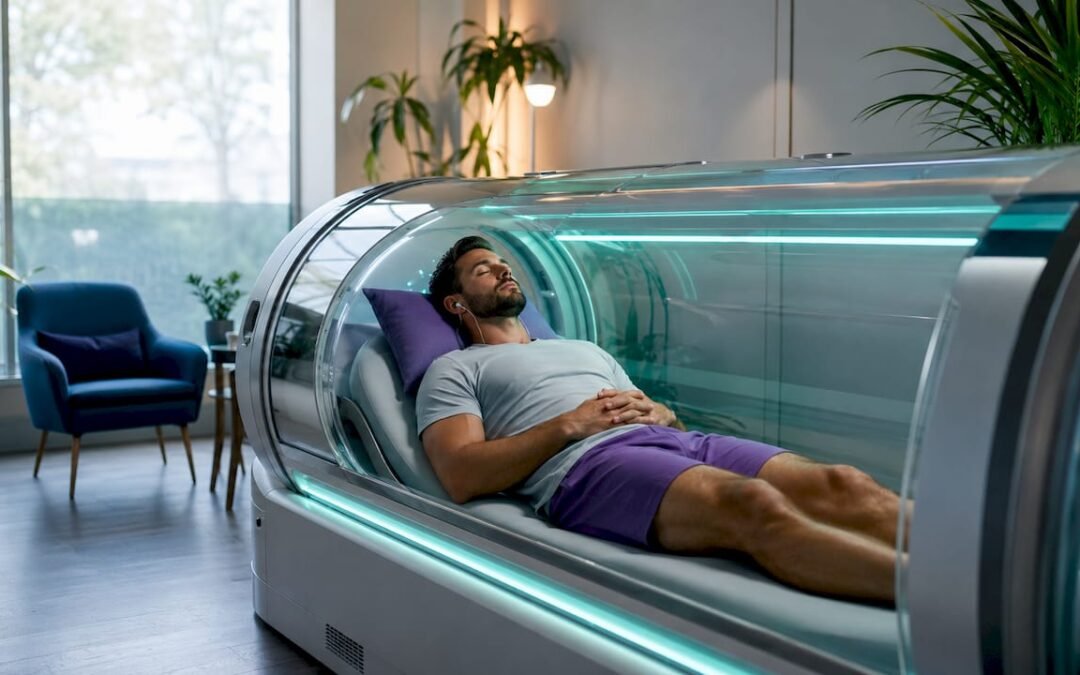
Hyperbaric oxygen therapy (HBOT) is defined as breathing 100% pure oxygen inside a pressurised chamber to accelerate tissue repair, reduce inflammation, and support recovery from injury or intense training. Sports recovery hyperbaric therapy examples from 2026 show professional athletes and entire teams adopting medically supervised HBOT protocols, not as a general wellness trend, but as a clinically governed adjunct to standard rehabilitation. Morgan Moses, the Philadelphia Phillies, and Rishabh Pant are among the most documented cases this year, each using structured, dose-specific sessions to address real physiological needs. Understanding how these protocols work, and why medical oversight is non-negotiable, will help you decide whether HBOT belongs in your own recovery plan.
1. Top sports recovery hyperbaric therapy examples in 2026
The most compelling examples of hyperbaric therapy in sport share one feature: they are medically supervised, goal-specific, and integrated with existing rehabilitation. Here are the standout cases from 2026.
Morgan Moses and the portable chamber protocol
New England Patriots offensive lineman Morgan Moses used a personal HBOT protocol involving up to 6 hours nightly to recover from a Grade 2 MCL tear, even transporting his chamber to Gillette Stadium during practice. This is not a casual wellness choice. A Grade 2 MCL tear involves partial ligament disruption, and the elevated oxygen environment is intended to accelerate angiogenesis and collagen synthesis in the damaged tissue. Moses’ case illustrates that for acute soft tissue injuries, consistent, high-frequency sessions can form a meaningful part of a return-to-play strategy.
Philadelphia Phillies: the first MLB team to adopt HBOT
The Philadelphia Phillies became the first Major League Baseball team to adopt HBOT as part of a multi-year agreement, deploying mobile chambers during both the season and training. Catcher J.T. Realmuto reported improved sleep and faster recovery between games. For a professional baseball squad managing a 162-game season, the cumulative recovery benefit across a full roster is significant. The Phillies’ adoption signals a shift from individual athlete experimentation to team-wide, institutionalised recovery protocols.
Rishabh Pant’s medically supervised post-injury sessions
Indian cricket wicketkeeper Rishabh Pant used medically supervised HBOT following serious injuries sustained in a road accident, with sessions focused on soft tissue repair and neurological recovery. His case is particularly instructive because it demonstrates HBOT used within a defined medical indication, not as a performance shortcut. The Indian Express commentary from his medical team stressed that HBOT functions as an adjunct to standard rehabilitation, not a replacement for it.
Pro Tip: Never replicate a professional athlete’s HBOT session count or duration without a clinical assessment. Oxygen acts like a drug, and the correct dose depends on your specific injury, health status, and therapeutic goals.
2. How HBOT supports sports injury recovery and performance
HBOT works by dissolving significantly more oxygen into blood plasma than normal breathing allows, delivering it to tissues that standard circulation may not reach efficiently when swelling or damage is present. This mechanism underpins several physiological benefits relevant to athletes.
The core recovery processes supported by HBOT include:
- Angiogenesis: HBOT stimulates the formation of new blood vessels in damaged tissue, improving long-term circulation to injured areas.
- Collagen production: Elevated oxygen levels support fibroblast activity, which is central to repairing tendons, ligaments, and cartilage.
- Inflammation control: Repeated sessions can modulate inflammatory cytokines, reducing chronic swelling that delays return to training.
- Enhanced oxygenation: Both muscle and brain tissue show measurable oxygenation improvements during and after HBOT sessions.
A March 2026 study on Chinese university male athletes found that repeated mild HBOT improved subjective sleep quality, V̇O₂max, and cycling power output after sessions targeting muscle fatigue. This matters because aerobic capacity and sleep quality are two of the most consistent performance limiters for athletes in heavy training blocks. The same study found no significant improvement in anaerobic performance indices, including Wingate test results. That distinction is critical: HBOT is not a tool for building explosive power. It is a tool for aerobic recovery, sleep restoration, and tissue repair.
| Outcome | Evidence level | Notes |
|---|---|---|
| Improved sleep quality | Strong (2026 BMC study) | Consistent across repeated mild HBOT sessions |
| Aerobic performance gains | Moderate | V̇O₂max and cycling power improved in athletes |
| Soft tissue repair | Moderate | Supported when combined with standard rehab |
| Anaerobic power | No significant effect | Wingate results unchanged in 2026 study |
| Neurological recovery | Emerging | Documented in cases like Rishabh Pant |
Understanding these outcome-specific responses helps you set realistic expectations before committing to a course of treatment.
3. Key safety considerations and medical protocols for HBOT
HBOT is not simply “more oxygen equals better recovery.” Oxygen at elevated pressure is a pharmacological agent, and its risks are dose-dependent and real. Before you consider any HBOT programme, these safety parameters are non-negotiable.
Oxygen toxicity and seizure risk
Seizure risk during HBOT varies from approximately 1 in 10,000 at pressures at or below 2 atmospheres absolute (ATA) to 1 in 200 at pressures between 2.8 and 3.0 ATA. That is a 50-fold increase in risk from a relatively modest pressure change. Clinical protocols use scheduled air breaks during sessions to reduce central nervous system oxygen toxicity. This safety nuance is routinely absent from athlete endorsements and social media discussions about HBOT.
Safe dose parameters for athletes
- Session pressure: Keep at or below 2 ATA for sports recovery applications to minimise toxicity risk.
- Session length: Typically 60 to 90 minutes per session in supervised clinical settings.
- Session frequency: Protocols vary, but most sports medicine applications involve 10 to 40 sessions depending on the injury and goal.
- Air breaks: Mandatory in higher-pressure protocols to interrupt continuous oxygen exposure.
- Clinical selection: Athletes with certain conditions, including untreated pneumothorax, certain ear or sinus conditions, or specific medications, may be contraindicated.
Current sports medicine HBOT research highlights that dose-dependent efficacy is well established, but inconsistent protocols across studies make direct comparisons difficult. The consistent finding is that HBOT works best as an adjunct when standard rehabilitation has plateaued or when a specific medical indication exists.
Pro Tip: If you are considering HBOT for sports recovery, request a formal clinical assessment first. A qualified practitioner will evaluate your pressure tolerance, contraindications, and specific recovery goals before recommending a protocol.
4. Mild hyperbaric oxygen therapy vs traditional HBOT: which suits your goals?
Not all hyperbaric therapy is identical. Mild hyperbaric oxygen therapy (MHOT) and traditional HBOT differ in pressure levels, delivery method, and appropriate use cases. Choosing the right approach depends on your specific recovery goals.
| Feature | Mild HBOT (MHOT) | Traditional HBOT |
|---|---|---|
| Pressure range | 1.3 to 1.5 ATA | 2.0 to 3.0 ATA |
| Oxygen concentration | Ambient air or mild enrichment | 100% pure oxygen |
| Primary use | Sleep, aerobic recovery, fatigue | Wound healing, serious injury, medical conditions |
| Risk profile | Lower | Higher, requires clinical oversight |
| Session setting | Wellness centres, portable units | Hospital or specialist clinic |
MHOT is the format most commonly available in wellness and sports recovery settings. The 2026 BMC Sports Science study specifically examined mild HBOT in athletes and found meaningful improvements in sleep and aerobic markers. Traditional HBOT at higher pressures is reserved for more serious medical indications and carries a correspondingly higher risk profile.
You should also understand that copying athlete testimonies without clinical assessment risks both ineffectiveness and harm. Morgan Moses’ 6-hour nightly sessions were medically monitored. Replicating that duration without equivalent oversight is not a recovery strategy. It is a risk. For most athletes and fitness enthusiasts, a structured course of MHOT sessions, guided by a qualified practitioner, represents the most appropriate and accessible entry point. You can explore common HBOT misconceptions to separate the evidence from the hype before making any decisions.
When selecting a provider, prioritise those who conduct a clinical intake assessment, document your therapeutic dose, and adjust protocols based on your response. Physiotherapy combined with HBOT can further optimise sports recovery outcomes, particularly for musculoskeletal injuries where manual therapy and movement rehabilitation are already underway.
Key takeaways
Hyperbaric oxygen therapy improves aerobic recovery, sleep quality, and soft tissue repair in athletes, but only when applied at the correct dose under qualified medical supervision.
| Point | Details |
|---|---|
| HBOT is an adjunct therapy | It supports standard rehabilitation; it does not replace it for sports injuries. |
| Aerobic gains are consistent | Sleep quality and V̇O₂max improve with repeated mild HBOT; anaerobic power does not. |
| Pressure determines risk | Seizure risk rises 50-fold between 2 ATA and 3 ATA; stay at or below 2 ATA for sports use. |
| Medical supervision is mandatory | Clinical assessment before HBOT prevents contraindicated use and optimises dose. |
| Athlete examples require context | Moses, Pant, and the Phillies all used medically governed protocols, not casual wellness sessions. |
Mark’s view: HBOT works, but only when you respect the dose
I have seen a lot of athletes arrive at wellness centres with a printout of a footballer’s HBOT routine and the expectation that replicating it will fast-track their recovery. The honest truth is that the protocol details that matter most, pressure level, session duration, frequency, and clinical indication, rarely make it into the media coverage. What you read about is the chamber. What you need to know about is the dose.
The evidence from 2026 is genuinely encouraging for aerobic recovery and sleep quality. The BMC Sports Science data on mild HBOT is some of the most practically useful research I have seen for everyday athletes, because it sets realistic expectations. You are not going to add explosive power through a hyperbaric chamber. You are going to sleep better, recover faster between sessions, and give injured tissue a better oxygen environment to heal. That is meaningful, but it is specific.
What concerns me is the growing number of people treating HBOT as a general wellness upgrade without any clinical framework. Oxygen at pressure is a drug. The science of how chambers work is well established, and so are the risks when protocols are ignored. My strong recommendation is to combine HBOT with a qualified practitioner’s guidance, an established rehabilitation programme, and honest expectations about what the therapy can and cannot do. The athletes getting results from HBOT are not doing it casually. Neither should you.
— Mark
Discover HBOT and recovery at Live5dhealth

Live5dhealth, based in Boyle, County Roscommon, offers a full range of advanced recovery and wellness services designed for athletes and active individuals who take their health seriously. From hyperbaric therapy options to complementary treatments including sauna, steam, and cold plunge, every service is built around genuine physiological benefit rather than wellness theatre. If you are ready to explore a structured recovery approach, visit the luxury spa and recovery centre at Live5dhealth to see what a properly supported recovery programme looks like. You can also explore leading wellness centre alternatives to find the right fit for your recovery goals in 2026.
FAQ
What is sports recovery hyperbaric therapy?
Sports recovery hyperbaric therapy involves breathing 100% oxygen inside a pressurised chamber to accelerate tissue repair, reduce inflammation, and improve aerobic recovery. It is used as an adjunct to standard rehabilitation, not as a standalone treatment.
Does hyperbaric therapy help athletes recover faster?
Research shows that repeated mild HBOT improves sleep quality and aerobic performance markers such as V̇O₂max in athletes, though it does not improve anaerobic power. Recovery speed depends on the injury type, dose, and whether HBOT is combined with proper rehabilitation.
How many HBOT sessions do athletes typically need?
Most sports medicine protocols involve between 10 and 40 sessions, depending on the injury and therapeutic goal. Session length is typically 60 to 90 minutes at pressures at or below 2 ATA for sports recovery applications.
Is mild hyperbaric oxygen therapy safe for everyday athletes?
Mild HBOT at 1.3 to 1.5 ATA carries a lower risk profile than traditional high-pressure HBOT and is appropriate for wellness and recovery settings. A clinical assessment is still recommended before starting any course of sessions to rule out contraindications.
Can I replicate professional athlete HBOT protocols at home?
Replicating protocols used by athletes like Morgan Moses without medical supervision is not advisable. Session parameters including pressure, duration, and frequency must be tailored to your specific condition and health status by a qualified practitioner.