
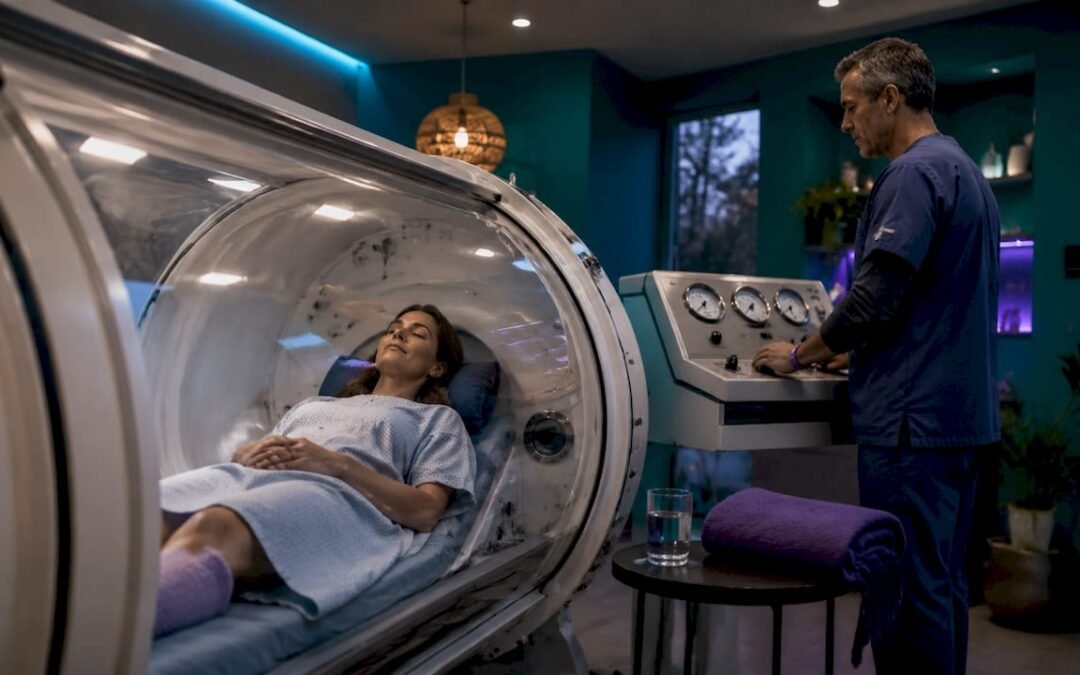
Hyperbaric oxygen therapy (HBOT) is defined as a medical treatment in which you breathe 100% pure oxygen inside a pressurised chamber, typically at 2.0–2.4 atmospheres absolute (ATA), to accelerate tissue repair and healing. Understanding what to expect from HBOT treatment removes the anxiety of the unknown and helps you get the most from every session. Treatment courses run from 20 to 60 sessions depending on your condition, and the cumulative therapeutic effects build progressively over weeks. This guide covers the full process, from your first session to your final one, including preparation, side effects, and realistic timelines.
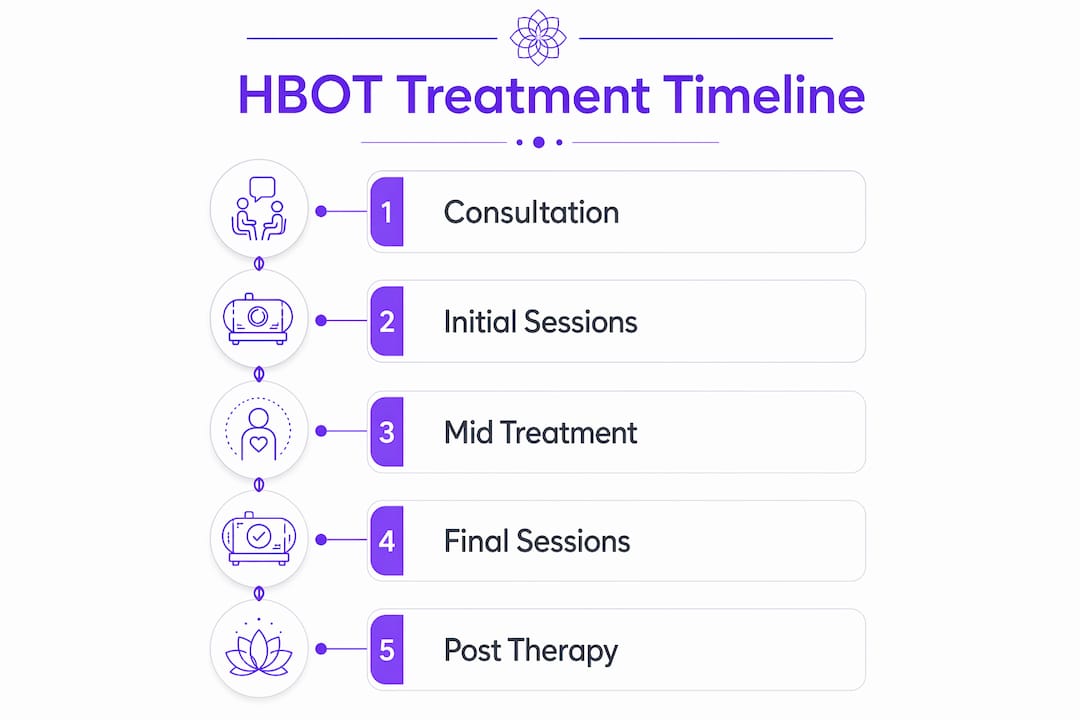
What to expect during an HBOT treatment session
A standard clinical HBOT session runs 90–120 minutes total, with 60–90 minutes spent at treatment pressure. Arriving 10–15 minutes early for check-in is standard practice at most clinics. That check-in time is not optional padding. Staff use it to review your health status, answer questions, and confirm you have no contraindicated items on your person.
The session itself follows a clear three-phase sequence:
- Pressurisation. The chamber pressure rises gradually over 10–15 minutes. You will feel fullness in your ears, similar to descending in an aeroplane. Ear equalisation techniques such as swallowing, yawning, or the Valsalva manoeuvre (gently pinching your nose and blowing softly) relieve this sensation immediately. Staff will guide you through this on your first visit.
- Active treatment. You breathe 100% oxygen through a mask or hood for 60–90 minutes at pressure. Most patients read, watch television, or simply rest. Modern chambers include communication systems so you can speak with staff at any time.
- Depressurisation. Pressure reduces gradually over 10–15 minutes. You may notice a slight temperature drop and a return of mild ear sensations. These resolve quickly once you exit.
Pro Tip: Practise the Valsalva manoeuvre at home before your first session. Knowing the technique in advance makes pressurisation far more comfortable and reduces early anxiety.
The hyperbaric chamber design itself, with transparent walls and built-in communication, is specifically engineered to reduce the sense of confinement many patients initially worry about.
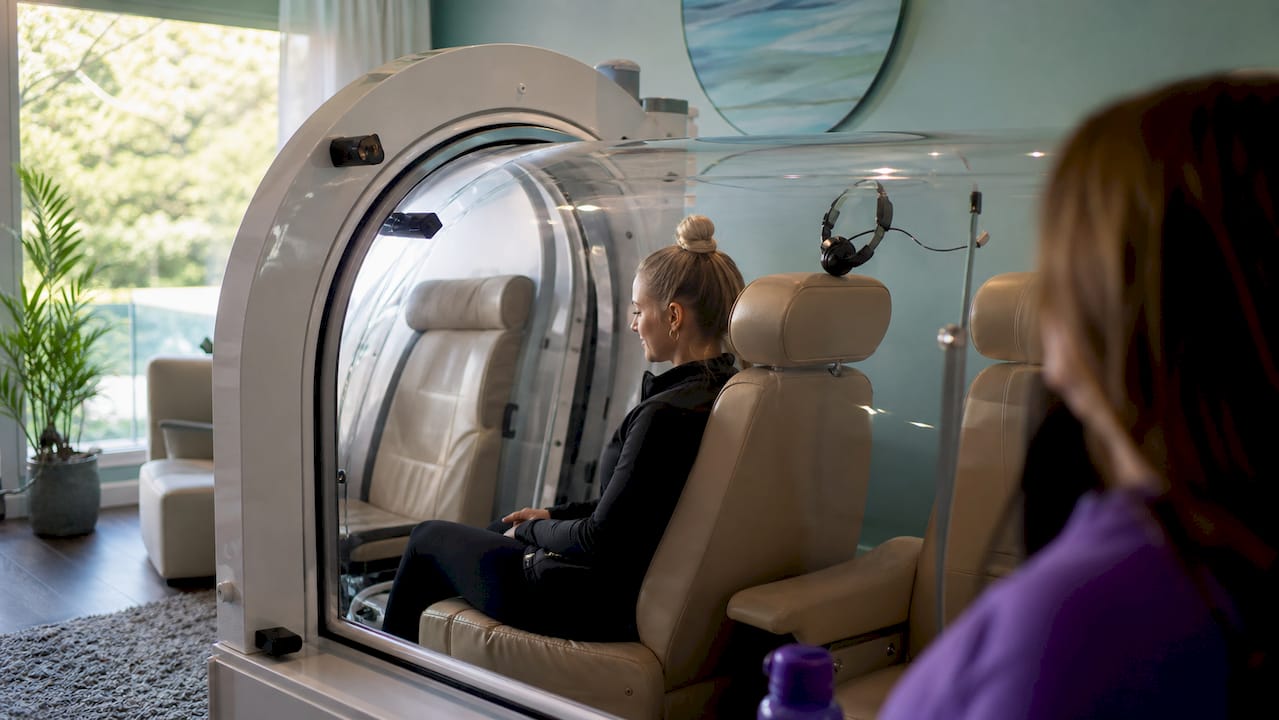
How to prepare for your hyperbaric oxygen therapy sessions
Preparation for HBOT is straightforward, but specific rules exist for safety reasons. The chamber is a pressurised, oxygen-rich environment, which means certain materials pose a fire or health risk inside it.
What to wear and bring:
- Loose, cotton clothing is required. Synthetic fabrics are not permitted inside the chamber.
- Remove all jewellery, watches, and hair accessories before entering.
- Leave petroleum-based products at home. This includes lip balm, moisturiser, and hair products containing oils or waxes.
- Electronics are prohibited inside the chamber. Leave your phone and earbuds in your locker.
- Bring a light snack for after your session. HBOT increases your metabolic rate, and many patients feel hungry post-treatment.
Before your first session:
Your clinic will conduct a health screening and consultation to review your medical history, confirm your diagnosis, and identify any contraindications. This is the right time to disclose all medications, recent surgeries, and any history of ear or lung conditions. Reviewing the HBOT safety checklist before your appointment helps you arrive prepared.
Eat a light meal one to two hours before your session. Arriving on an empty stomach is not recommended, as post-session hunger is common and can leave you feeling fatigued.
Pro Tip: Wear comfortable, loose-fitting cotton clothing on the day. Avoid applying any skin or hair products that morning. This saves time at check-in and removes any last-minute stress about prohibited items.
What are the common side effects of HBOT?
HBOT has a strong safety profile, but side effects do occur, particularly in the first few sessions. Knowing what is normal helps you stay calm and communicate clearly with your care team.
Common side effects:
- Ear discomfort. Ear pressure affects roughly 32% of patients during early sessions. This figure drops to around 8% by session ten as patients master equalisation techniques. It is the most frequently reported issue and the most manageable.
- Mild fatigue. Feeling tired after a session is normal, especially in the first week. Your body is working hard at a cellular level. Rest is part of the process.
- Temporary vision changes. Some patients notice slightly blurred vision or a mild change in their prescription during a long course of treatment. This reverses after therapy ends.
- Claustrophobia. Some patients feel anxious in the chamber initially. Modern chambers with clear walls and two-way communication systems significantly reduce this. In some cases, a short course of anti-anxiety medication is prescribed for the first few sessions.
Serious complications from clinical HBOT are exceptionally rare. Oxygen toxicity occurs in fewer than 0.01% of sessions. Pneumothorax is a contraindication, not a risk during treatment, which is why pre-screening matters.
If you experience significant ear pain, dizziness, or chest discomfort during a session, signal to staff immediately. Sessions can be paused or stopped without any risk to you. Open communication with your care team is the single most effective way to manage discomfort throughout your course.
What is the typical HBOT treatment timeline?
Treatment length varies by condition, but standard clinical protocols follow well-established patterns. The table below outlines typical session counts for common indications.
| Condition | Typical Session Range | Notes |
|---|---|---|
| Radiation injury (e.g. proctitis) | 30–40 sessions | HBOT reduces urinary bleeding by 36% and mortality by 53% |
| Diabetic foot wounds | 20–40 sessions | Adjunct to wound care and offloading |
| Carbon monoxide poisoning | 3–5 sessions | Acute protocol, often inpatient |
| Decompression sickness | 1–3 sessions | Emergency protocol |
| General wound healing | 20–30 sessions | Progress reviewed at 10-session intervals |
Most patients notice early improvements after 10–20 sessions. Progress in chronic conditions is rarely immediate or linear. Informed patients understand that the benefits accumulate over weeks, not days. Sessions are typically scheduled five days per week, which means a 30-session course takes approximately six weeks.
HBOT functions as an adjunct to standard treatments, not a replacement. For radiation injury specifically, clinical data shows statistically significant reductions in symptoms and associated healthcare costs when HBOT is added to conventional care. Your medical team will evaluate your progress at regular intervals and adjust your protocol if needed.
For conditions such as wound healing and tissue repair, the cumulative nature of therapy is the key principle. Each session builds on the last, gradually restoring oxygen supply to damaged tissue and stimulating new blood vessel growth.
How does HBOT work to support healing?
At pressures of 2.0–2.4 ATA, plasma oxygen content rises roughly 12-fold compared to breathing air at sea level. That increase is the mechanism behind everything HBOT achieves. Oxygen dissolves directly into plasma, cerebrospinal fluid, and lymph, reaching tissues that damaged or blocked blood vessels cannot supply through normal circulation.
This elevated oxygen environment triggers angiogenesis, the growth of new blood vessels, and stimulates collagen production. Both processes are central to wound repair and tissue regeneration. The anti-inflammatory effects of HBOT further support recovery by reducing the chronic inflammation that stalls healing in conditions like radiation injury and diabetic wounds.
One distinction worth understanding is the difference between clinical-grade HBOT and mild wellness oxygen chambers. Clinical HBOT operates at 2.0–3.0 ATA with 100% medical-grade oxygen. Mild wellness chambers typically operate at 1.3–1.5 ATA with ambient air or low-concentration oxygen. The clinical vs. mild HBOT difference is significant. The biological reprogramming that drives measurable healing outcomes requires the higher pressures used in clinical settings.
Pro Tip: Ask your clinic to confirm the ATA pressure and oxygen concentration used in your sessions. This single piece of information tells you whether you are receiving clinical-grade therapy or a wellness-level protocol, and it sets the right expectations for your results.
Key takeaways
Clinical HBOT delivers measurable healing outcomes through repeated sessions at 2.0–2.4 ATA, with most patients seeing progress after 10–20 sessions and full courses running 20–60 sessions depending on condition.
| Point | Details |
|---|---|
| Session structure | Each session runs 90–120 minutes with 60–90 minutes at treatment pressure. |
| Preparation matters | Wear loose cotton, avoid petroleum products, and eat a light meal beforehand. |
| Side effects are manageable | Ear discomfort affects 32% early on but drops sharply with practice and adaptation. |
| Treatment is cumulative | Benefits build over weeks; most conditions require 20–60 sessions at five per week. |
| Clinical vs. mild HBOT | Only clinical-grade HBOT at 2.0–3.0 ATA produces the biological changes that drive real healing. |
What i have learned watching patients go through HBOT
The first three sessions are always the hardest. Not because anything goes wrong, but because the unfamiliar sensations, the pressurisation, the mask, the enclosed space, feel more significant than they actually are. By session five, most people walk in, settle down, and treat it like a scheduled rest. That shift in confidence is worth anticipating.
What I find most under-discussed is patience. People arrive expecting a dramatic change after a handful of sessions, and when it does not come, they question whether the therapy is working. Progress in chronic conditions is quiet and gradual. The angiogenesis happening at a cellular level is not something you feel acutely. You notice it weeks later when a wound has closed, when fatigue has lifted, or when a symptom that was constant has become occasional.
The other thing I would tell anyone starting a course is to treat HBOT as part of a broader approach to their health, not a standalone fix. The patients who get the most from it are those who are also sleeping well, eating to support recovery, and staying in close contact with their medical team. HBOT amplifies what your body is already doing. Give it the best conditions to work with.
Side effects are real but manageable. Ear discomfort, mild fatigue, and occasional anxiety are the things I hear about most. All of them ease within the first two weeks. Serious complications are genuinely rare. The safety record of clinical HBOT, when properly screened and monitored, is one of the strongest in medical therapy.
— Mark
Support your recovery with Live5dhealth
If you are planning or already partway through an HBOT course, the therapies and products you choose alongside it matter. Live5dhealth, based in Boyle, County Roscommon, offers a full wellness centre, luxury spa, and curated range of natural health supplements designed to support cellular recovery and overall vitality.

Pairing HBOT with complementary wellness support, whether that is targeted nutrition, relaxation therapies, or recovery-focused treatments, gives your body the full environment it needs to heal. If you are exploring your options for wellness centres that complement advanced therapies, the top wellness centre alternatives for 2026 is a practical starting point for finding the right fit near you.
FAQ
How long does a single HBOT session last?
A standard session runs 90–120 minutes in total, with 60–90 minutes spent breathing 100% oxygen at treatment pressure. You should plan to arrive 10–15 minutes early for check-in.
How many HBOT sessions will i need?
Most treatment courses run 20–60 sessions depending on your condition. Radiation injury protocols typically require 30–40 sessions, while diabetic wound protocols range from 20–40 sessions.
Is HBOT safe for first-time patients?
Clinical HBOT has a strong safety record. Serious complications such as oxygen toxicity occur in fewer than 0.01% of sessions. Pre-treatment screening identifies contraindications and ensures the therapy is appropriate for you.
What is HBOT used for in radiation injury treatment?
HBOT is used as an adjunct therapy for radiation injury, including radiation proctitis. Clinical data shows it reduces urinary bleeding by 36% and mortality by 53% compared to standard care alone.
Will i feel claustrophobic inside the chamber?
Some patients experience mild anxiety in the first few sessions. Modern clinical chambers feature transparent walls and two-way communication systems, which significantly reduce discomfort. Most patients adapt fully within the first week of treatment.