
Pain therapy is the use of targeted treatments designed to reduce pain, restore function, and improve quality of life by addressing the physical, psychological, and social roots of pain. CDC 2022 guidance places non-pharmacological approaches as the first line of treatment for chronic pain, a shift that has reshaped how clinicians and patients think about relief. Modern pain therapy spans physical rehabilitation, cognitive behavioural therapy (CBT), Pain Reprocessing Therapy, virtual reality (VR) skill training, and lifestyle medicine. The result is a genuinely wide menu of options, and knowing which ones apply to your situation is the most powerful first step you can take.
What are the main pain therapy options available today?
The biopsychosocial model defines pain as a complex interplay of physical, emotional, and social factors. That framing matters because it explains why a single tablet or a single exercise programme rarely solves chronic pain on its own.
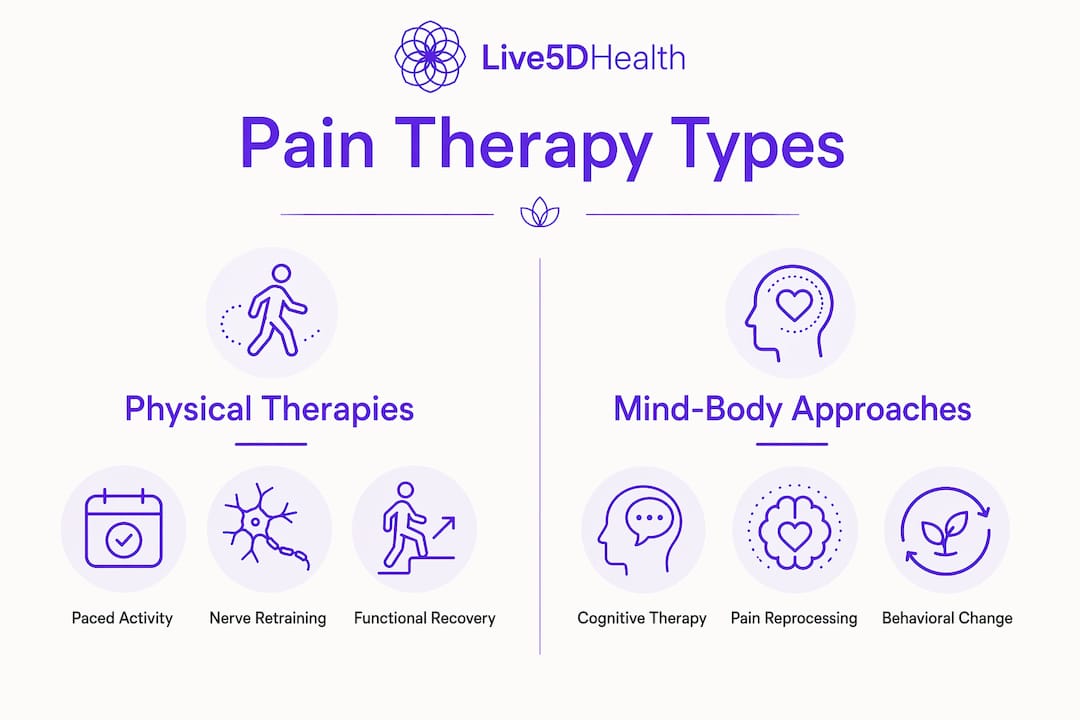
Physical therapies
Chronic pain-focused physical therapy uses pacing and gradually increasing activity to retrain the nervous system safely, rather than pushing through pain. Hydrotherapy, exercise prescription, and manual therapy all fall within this category. The goal is to rebuild confidence in movement without triggering flare-ups.
Mind-body approaches
CBT and Pain Reprocessing Therapy address the nervous system’s false alarm signals that drive chronic pain, helping people regain function by changing thought patterns around pain. Mindfulness, guided breathing, and relaxation techniques sit alongside these therapies as daily self-management tools. These are not alternatives to physical care. They work best when combined with it.
Technological interventions
VR skill-based therapy is one of the most compelling recent developments in non-invasive pain treatments. At two years, 71.1% of participants in a clinical trial were reclassified from high-impact to low-impact chronic pain after VR-based programmes. That reclassification represents a meaningful shift in daily life, not just a marginal score change on a questionnaire.
| Therapy type | Primary goal | Expected outcome |
|---|---|---|
| Physical therapy (paced) | Retrain nervous system through movement | Reduced flare-ups, improved mobility |
| CBT / Pain Reprocessing Therapy | Change pain-related thought patterns | Lower pain perception, better function |
| Mindfulness and relaxation | Reduce stress-driven pain amplification | Calmer nervous system, improved sleep |
| VR skill-based therapy | Distraction and nervous system retraining | Long-term reduction in pain intensity |
| Hydrotherapy | Gentle movement in a supportive medium | Improved joint mobility, reduced stiffness |
Pro Tip: If you are unsure where to start, ask your GP or physiotherapist for a pain-focused assessment rather than a standard musculoskeletal referral. The distinction changes the entire treatment approach.
How to build a personalised pain therapy plan that works for you
Effective pain therapy depends on personalised, multi-modal care that combines professional interventions with patient-led strategies. A plan built around your specific pain type, lifestyle, and goals will outperform any generic protocol.
Follow these steps to build yours:
- Assess your pain type and severity. Identify whether your pain is nociceptive (tissue-related), neuropathic (nerve-related), or nociplastic (nervous system sensitisation). This distinction shapes which therapies are most relevant.
- Learn the neuroscience. Pain neuroscience education shows that pain does not always signal tissue damage. Understanding this reduces fear of movement and opens the door to more active rehabilitation.
- Choose a physical therapy approach. Work with a physiotherapist trained in chronic pain to set a paced activity programme. Avoid the boom-and-bust cycle of overdoing it on good days and resting completely on bad ones.
- Add psychological support. CBT or Pain Reprocessing Therapy sessions, whether in person or online, address the mental load of living with pain. This is not a sign that your pain is imaginary. It is a sign that you are treating the whole picture.
- Review your lifestyle factors. Eight-session programmes focusing on sleep hygiene, nutrition, and stress management show positive outcomes for people with chronic pain. Prioritise sleep above almost everything else.
- Review your medication. Annual medication reviews are recommended by NHS guidelines to check safety, effectiveness, and dependency risk. Do not skip this step if you have been on the same prescription for more than twelve months.
- Set realistic, measurable goals. “Walk to the end of the street without stopping” is a better goal than “get rid of the pain.” Small wins build momentum and retrain your brain’s relationship with movement.
Pro Tip: Keep a pain diary for two weeks before your first specialist appointment. Note time of day, activity, sleep quality, and mood alongside pain scores. This gives your clinician far more to work with than a verbal summary.
What tools and strategies can enhance pain therapy effectiveness?
The right tools extend what happens in a clinic into everyday life. Multidisciplinary programmes that incorporate nutrition, sleep hygiene, stress management, and social support consistently improve pain outcomes and quality of life beyond medication alone.
Key tools and strategies include:
- VR therapy and biofeedback. VR creates immersive environments that shift attention away from pain signals. Biofeedback devices teach you to recognise and regulate physiological stress responses in real time. Both are available through specialist pain clinics and, increasingly, through remote healing programmes.
- Nutrition. An anti-inflammatory diet rich in omega-3 fatty acids, leafy greens, and whole grains reduces systemic inflammation that can amplify pain. Processed foods and excess sugar do the opposite.
- Sleep hygiene. Poor sleep lowers your pain threshold. A consistent sleep schedule, a cool dark room, and no screens in the hour before bed are the three most evidence-supported changes you can make tonight.
- Mindfulness and breathing. Diaphragmatic breathing activates the parasympathetic nervous system, directly countering the stress response that worsens pain. Ten minutes a day is enough to produce measurable changes over weeks.
- Peer support and counselling. Pain is isolating. Connecting with others through peer groups or professional counselling reduces the emotional burden and improves adherence to therapy plans. Explore mind-body approaches for structured support.
| Tool | Primary benefit | Best used alongside |
|---|---|---|
| VR therapy | Reduces pain intensity and interference | Physical therapy, CBT |
| Biofeedback | Teaches stress regulation | Mindfulness, breathing exercises |
| Anti-inflammatory nutrition | Lowers systemic inflammation | Sleep hygiene, exercise |
| Peer support groups | Reduces isolation and improves adherence | Psychological therapy |
| Mindfulness practice | Calms nervous system sensitisation | Breathing exercises, pacing |
Pro Tip: Integrate one new tool at a time. Adding VR therapy, a new diet, and a mindfulness practice simultaneously makes it impossible to know what is working.
How to overcome common barriers to pain therapy
The most common barrier to effective chronic pain management is the belief that psychological therapies dismiss or minimise physical pain. Psychological therapies work by retraining the brain’s pain signalling, not by suggesting the pain is imaginary. That distinction matters enormously for people who have spent years feeling dismissed by the medical system.
A few other barriers come up repeatedly:
- Fear of movement (kinesiophobia). The nervous system learns to treat movement as dangerous when pain has been present for a long time. Paced physical therapy, guided by a specialist, gradually reverses this. The 2026 action plan from Thrival outlines practical steps for rebuilding movement confidence.
- Scepticism about non-drug treatments. Non-invasive pain treatments have a strong and growing evidence base. VR therapy, CBT, and paced exercise all have clinical trial data behind them.
- Feeling overwhelmed by options. Start with one professional assessment and one therapy. Complexity comes later, once you have a foundation.
- Lack of clinician support. If your GP is not familiar with the biopsychosocial model of pain, ask for a referral to a specialist pain clinic or a physiotherapist with chronic pain training.
“Pain sensations in chronic conditions may be false alarms from an overprotective nervous system, not indicators of ongoing injury.” — VA Eastern Colorado Health Care
Understanding this is not just reassuring. It is the clinical foundation that makes active rehabilitation possible rather than frightening.
Key takeaways
Effective pain therapy combines physical, psychological, and lifestyle approaches in a personalised plan, because no single treatment addresses all the mechanisms driving chronic pain.
| Point | Details |
|---|---|
| Multi-modal care outperforms single treatments | Combining physical therapy, CBT, and lifestyle changes produces better outcomes than any one approach alone. |
| Neuroscience education reduces fear | Learning how the nervous system creates false alarm signals makes movement feel safer and speeds recovery. |
| VR therapy shows strong long-term results | At two years, 71.1% of VR therapy participants moved from high-impact to low-impact chronic pain classification. |
| Annual medication reviews are non-negotiable | NHS guidelines recommend yearly reviews to prevent dependency and ensure your prescription still fits your needs. |
| Lifestyle factors are active treatment | Sleep, nutrition, and stress management are clinical tools, not optional extras, in any serious pain programme. |
What I have learned from watching people reclaim their lives from pain
The single biggest shift I have seen in people who genuinely improve is the moment they stop waiting for a cure and start treating pain management as a skill. That sounds blunt, but it is the most honest thing I can say after years of working in wellness. The people who do best are not the ones who find the perfect therapy. They are the ones who build a consistent practice around several imperfect ones.
What I find consistently underestimated is pacing. Patients push hard on good days, crash on bad ones, and conclude that exercise makes them worse. It does not. Unmanaged effort makes them worse. A physiotherapist trained in chronic pain will set a baseline so low it feels almost insulting. That is exactly the point. The nervous system needs to learn that movement is safe before it will allow more of it.
I also think the resistance to psychological therapies costs people years of unnecessary suffering. CBT and Pain Reprocessing Therapy are not admissions that pain is “in your head.” They are the most direct tools we have for changing how the brain processes pain signals. The pain relief resources at Live5dhealth reflect this integrated thinking, and I would encourage anyone who has been stuck in a purely physical treatment model to consider what the psychological dimension might add.
Patience is the hardest part. Progress in chronic pain management is rarely linear. A bad week does not erase a good month. Keep the long view.
— Mark
Pain therapy and wellness support at Live5dhealth
Live5dhealth, based in Boyle, County Roscommon, brings together a luxury spa, gym, retreat centre, and specialist wellness programmes under one roof.
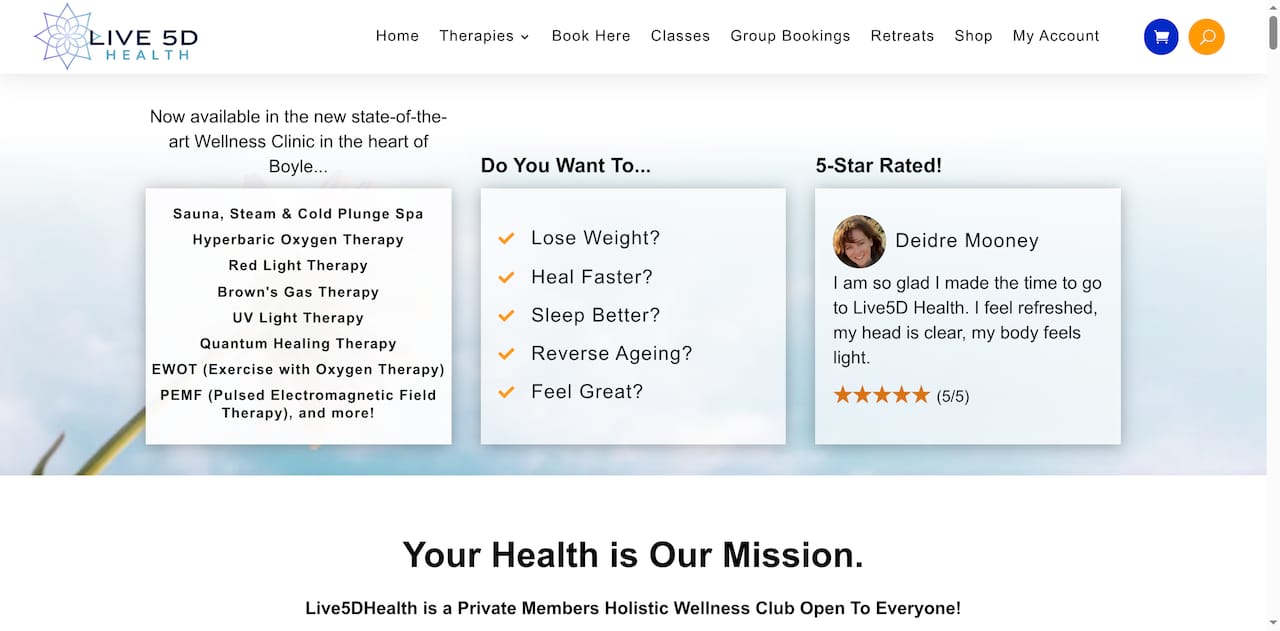
For people working through chronic pain, the centre offers complementary therapies, relaxation facilities including sauna, steam, and cold plunge, and access to natural health supplements that support an anti-inflammatory lifestyle. The wellness retreats at Live5dhealth are designed for people who want structured, supported time away from daily stressors to focus on recovery and restoration. Whether you are at the beginning of your pain management journey or looking to deepen an existing programme, the team at Live5dhealth can help you find the right combination of therapies and support.
FAQ
What is pain therapy?
Pain therapy is the use of physical, psychological, and lifestyle treatments to reduce pain, restore function, and improve quality of life. It addresses the physical, emotional, and social factors that drive pain rather than targeting symptoms alone.
Is pain therapy only for chronic conditions?
Pain therapy applies to both acute and chronic conditions, including post-injury recovery, post-surgical rehabilitation, and long-term conditions such as fibromyalgia or neuropathic pain. The specific combination of treatments varies by diagnosis and individual need.
Can psychological therapies really reduce physical pain?
CBT and Pain Reprocessing Therapy change the brain’s pain signalling patterns, producing measurable reductions in pain perception. These therapies do not deny physical pain. They retrain the nervous system’s response to it.
How long does pain therapy take to work?
Progress depends on the type and duration of pain, the therapies used, and how consistently they are applied. Structured multidisciplinary programmes typically run over several weeks, with meaningful improvements often visible within eight to twelve sessions.
Do I need a GP referral to start pain therapy?
A GP referral is not always required, particularly for private physiotherapy, mindfulness programmes, or wellness retreats. For specialist pain clinics or psychological therapies on the NHS, a referral is usually the starting point.