

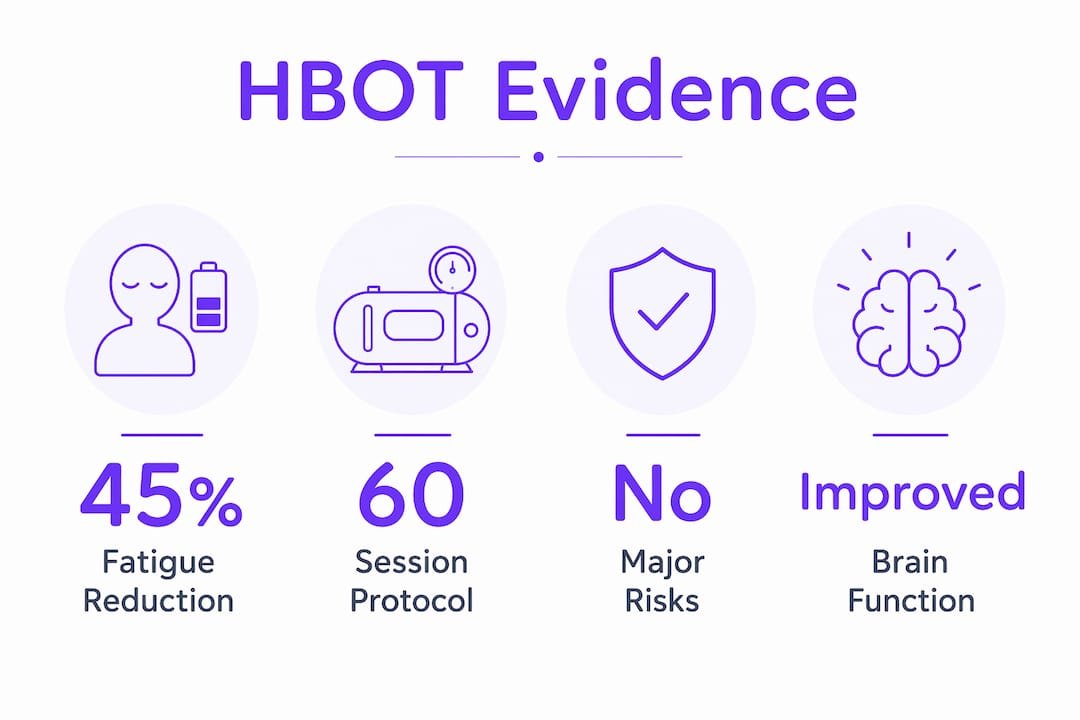
Hyperbaric oxygen therapy (HBOT) has shown genuine, measurable promise for people living with ME/CFS. A 2026 prospective cohort study found that 40 HBOT sessions produced statistically significant reductions in fatigue on the Chalder Fatigue Scale (p < 0.001, g = -0.87), alongside meaningful gains in physical functioning, pain, cognitive speed, and exercise capacity. Crucially, brain imaging revealed that thalamic hyperconnectivity, a neural signature strongly associated with ME/CFS symptoms, shifted toward patterns seen in healthy controls after treatment. HBOT is not a cure, and larger randomised controlled trials are still needed. But the evidence building in 2026 gives people with chronic fatigue syndrome real reason to pay attention.
Core benefits seen in clinical research:
- Significant reduction in fatigue severity (Chalder Fatigue Scale)
- Improved physical functioning (SF-36 Physical Functioning subscale)
- Reduced pain scores
- Faster information processing and cognitive performance
- Increased exercise capacity and muscle strength
- Normalisation of thalamic brain connectivity in responders
- High treatment adherence with no major adverse events reported
Current limits to keep in mind:
- Evidence comes primarily from cohort studies, not large randomised trials
- Response varies between individuals
- Multiple sessions over weeks are required; there is no quick fix
Table of Contents
- What is hyperbaric oxygen therapy and how does it work?
- Why might HBOT help with ME/CFS fatigue?
- What does the clinical research actually show?
- What are the risks and side effects you should know about?
- How are HBOT sessions structured for ME/CFS patients?
- Is HBOT the right choice for managing your chronic fatigue?
- What do patients actually experience after HBOT?
- What does HBOT cost and how do you access it in the UK?
- Live5dhealth: your next step toward feeling better
- Key takeaways
What is hyperbaric oxygen therapy and how does it work?
HBOT involves breathing 100% pure oxygen inside a pressurised chamber at levels above normal atmospheric pressure, typically around 2 ATA (atmospheres absolute). At that pressure, oxygen dissolves directly into blood plasma, not just into haemoglobin, which means tissues receive far more oxygen than they would under normal conditions. This is the key physiological lever: cells that are oxygen-deprived or metabolically sluggish get a concentrated supply that can support repair, reduce inflammation, and stimulate cellular regeneration.
Outside ME/CFS, HBOT has an established safety record across conditions including non-healing wounds, carbon monoxide poisoning, decompression illness, and radiation tissue damage. That breadth of use has generated decades of safety data, which is reassuring when considering it for a condition like ME/CFS where patients are often already fragile. You can read more about HBOT’s biological effects across different health conditions to understand the full scope of what the therapy can do.
What happens during a typical HBOT session:
- You enter a hyperbaric chamber (monoplace or multiplace)
- Chamber pressure rises gradually to the target level (e.g., 2 ATA)
- You breathe 100% oxygen via a mask or hood for the session duration
- Short air breaks are taken every 20 minutes to reduce oxygen toxicity risk
- Pressure is slowly reduced at the end of the session
- Sessions typically last 90 minutes
Why might HBOT help with ME/CFS fatigue?
ME/CFS is not simply “feeling tired.” The condition involves impaired oxygen metabolism at the cellular level, mitochondrial dysfunction, endothelial damage, and, as neuroimaging now confirms, measurable dysregulation of brain connectivity. These are not vague complaints; they are documented physiological abnormalities that explain why patients feel so profoundly unwell.

HBOT targets several of these pathways at once. By flooding tissues with oxygen, it may restore mitochondrial efficiency, the cellular machinery that converts oxygen into energy. It also appears to support neurovascular repair, helping blood vessels in the brain function more normally. The thalamus, a relay hub for sensory and motor signals, shows abnormal hyperconnectivity in ME/CFS patients. Post-HBOT, that hyperconnectivity normalises toward healthy patterns, which correlates directly with clinical improvement. This is what separates HBOT from purely symptomatic treatments: it appears to address underlying physiology rather than just masking symptoms.
Key theoretical benefits specific to ME/CFS:
- Restores oxygen availability to oxygen-deprived tissues and mitochondria
- Supports repair of damaged endothelial cells in blood vessels
- Modulates thalamocortical connectivity in sensorimotor and visuo-occipital networks
- Reduces neuroinflammation that may drive brain fog and fatigue
- Promotes angiogenesis, the growth of new blood vessels, improving circulation
- Targets root physiological dysfunction rather than offering temporary relief
What does the clinical research actually show?
The most significant recent evidence comes from a 2026 prospective cohort study of 30 ME/CFS patients who completed 40 HBOT sessions. The results were striking across multiple outcome measures.
| Outcome measure | Result | Effect size |
|---|---|---|
| Chalder Fatigue Scale | Significant reduction (p < 0.001) | g = -0.87 |
| SF-36 Physical Functioning | Significant improvement | — |
| SF-36 Pain | Significant reduction | — |
| Exercise capacity | Significant improvement | — |
| Information processing speed | Significant improvement | — |
| Muscle strength (handgrip) | Significant improvement | — |
Fatigue reduction that matters: The Chalder Fatigue Scale improvement carried an effect size of g = -0.87, which is considered a large clinical effect. This is not a marginal statistical finding; it reflects a change patients would genuinely feel in daily life.
Brain imaging added a compelling mechanistic layer. Functional MRI showed that ME/CFS patients had elevated thalamic hyperconnectivity in bilateral sensorimotor regions (p < 0.001) and visuo-occipital regions (p < 0.001) compared to healthy controls. After HBOT, those patterns shifted toward normal. Patients who responded best, defined as a gain of at least 10 points on the SF-36 Physical Functioning scale, showed significantly greater reductions in thalamic hyperconnectivity than non-responders (p < 0.001).
Researchers are appropriately cautious. Expert consensus is clear that HBOT remains an experimental adjunctive therapy for ME/CFS until confirmed by larger randomised controlled trials. Therapeutic efficacy also varies with session numbers, ranging from 10 to 60 across different protocols, and with pressure intensity. A registered clinical trial (NCT07621068) is currently evaluating 60 sessions over 3 months at 2 ATA, with comprehensive physical, cognitive, and neuroimaging assessments. The results of that trial will be pivotal.
What are the risks and side effects you should know about?
HBOT has a well-characterised safety profile, and the 2026 ME/CFS cohort study reported no major adverse events with high treatment adherence. That said, side effects do exist and are worth understanding before you commit to a course of treatment.
The most common issue is ear barotrauma, discomfort or pressure in the ears caused by the pressure changes, similar to what you feel on a plane. This is usually mild and manageable with techniques like swallowing or yawning during pressurisation. Mild claustrophobia can affect some patients in monoplace chambers, though multiplace chambers, where you sit alongside others, tend to be more comfortable. Oxygen toxicity is a theoretical risk at high pressures, which is why sessions include 5-minute air breaks every 20 minutes.
Practical safety considerations:
- Inform your clinician of all medications, as some interact with high-pressure oxygen
- Certain conditions contraindicate HBOT, including untreated pneumothorax and some ear conditions
- Supervised administration by trained clinical staff is non-negotiable for safety
- Consistent attendance across the full protocol is critical for therapeutic benefit
- Review a full HBOT safety checklist with a qualified practitioner before starting
Pro Tip: Sham HBOT protocols used in research involve mild pressurisation to around 1.02–1.2 ATA with ambient air, not 100% oxygen. These do not deliver the physiological oxygen dose required for therapeutic benefit. If you encounter a provider offering “low-pressure HBOT,” ask specifically about the oxygen concentration and pressure level used.
How are HBOT sessions structured for ME/CFS patients?
Protocol design matters enormously. The registered clinical trial for ME/CFS uses 60 consecutive sessions, five per week over three months, at 2 ATA for 90 minutes, with 5-minute air breaks every 20 minutes. The 2026 cohort study used 40 sessions and still produced large effect sizes. What both protocols share is consistency: daily or near-daily sessions sustained over weeks, not a handful of one-off treatments.
Treatment adherence and protocol standardisation critically influence outcomes. Skipping sessions or reducing pressure undermines the cumulative physiological effect that drives improvement. This is why professional clinical oversight is not optional; it is what separates a therapeutic course from an ineffective one.
What to expect and how to prepare:
- Sessions run 90 minutes; bring something to listen to or watch if the chamber allows
- Wear comfortable, loose-fitting clothing free of synthetic fibres
- Avoid alcohol and smoking in the 24 hours before each session
- Stay well hydrated before and after treatment
- Expect gradual improvement over weeks, not days; session frequency is as important as session count
- Discuss any new symptoms with your supervising clinician promptly
Is HBOT the right choice for managing your chronic fatigue?
HBOT is best understood as an adjunctive therapy, one that works alongside other ME/CFS management strategies rather than replacing them. The clinical evidence from 2026 is genuinely encouraging, but it comes from a cohort study of 30 patients, and the scientific community is rightly waiting for larger randomised trials before recommending HBOT as a standard treatment.
For you as a patient, the practical questions are: Are you eligible? Do you have contraindications? Can you commit to a multi-week protocol? And are your expectations realistic?
Key considerations before starting HBOT:
- Consult your GP or ME/CFS specialist before beginning any HBOT programme
- Confirm you meet eligibility criteria and have no contraindications
- Understand that benefits build over multiple sessions; early dropout reduces efficacy
- Seek a provider with clinical oversight and a structured protocol at 2 ATA
- Keep HBOT within a broader management plan that may include pacing, nutrition, and rest
- Watch for results from ongoing randomised trials, which will clarify who benefits most
The outlook for HBOT in ME/CFS is genuinely hopeful. Larger trials are underway, brain imaging is revealing the mechanisms behind clinical response, and long-lasting improvements have been observed in related fatigue syndromes even a year after treatment ends. This suggests HBOT may facilitate a genuine physiological reset rather than temporary relief.
What do patients actually experience after HBOT?
Quality-of-life outcomes reported after HBOT in fatigue syndromes go well beyond the numbers in clinical tables. Patients describe improvements in their ability to carry out daily activities, reduced post-exertional malaise, and a clearer head after weeks of brain fog. Cognitive gains, particularly in attention and information processing speed, are among the most consistently reported benefits, and these map directly onto the neuroimaging findings showing normalised thalamic connectivity.
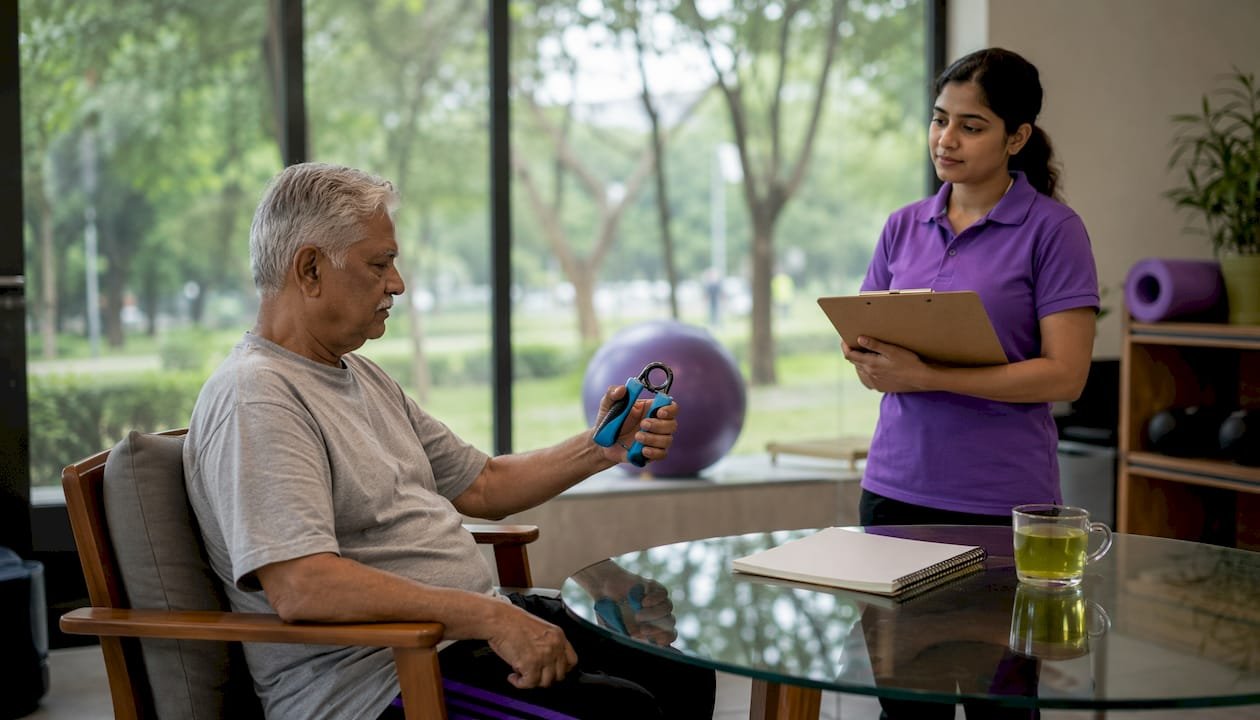
Physical improvements are equally meaningful. Gains in exercise capacity and handgrip strength, both measured objectively in the 2026 study, translate into real-world terms: being able to walk further, manage household tasks, or return to light work. For people who have been severely limited for months or years, these are not small wins. The cognitive and fatigue benefits of HBOT in chronic conditions are increasingly well-documented, and patient-reported outcomes consistently align with the clinical data.
What does HBOT cost and how do you access it in the UK?
HBOT for ME/CFS is not currently available on the NHS as a standard treatment, which means most patients access it privately. Session costs vary by provider and location, but a full course of 40–60 sessions represents a meaningful financial commitment. Some charitable hyperbaric centres, particularly those affiliated with MS therapy centres, offer subsidised access, and it is worth enquiring locally.
When evaluating providers, prioritise clinical oversight over price. A cheaper session at a lower pressure with no qualified supervision is not a bargain; it is a different product entirely. Look for centres that use 2 ATA, 100% oxygen, and have trained clinical staff present throughout. Ask about their protocol length, how they monitor patient response, and what happens if you experience side effects. Travelling to a reputable centre with a structured programme is almost always preferable to a local option that cannot answer these questions clearly.
Live5dhealth: your next step toward feeling better
Chronic fatigue takes so much from you. At Live5dhealth, a wellness and retreat centre in Boyle, County Roscommon, we understand that people with ME/CFS need more than a single therapy; they need a supported, considered approach to recovery. Our centre brings together evidence-informed therapies in a calm, restorative environment designed to help you feel genuinely well again.

Whether you are exploring HBOT as part of your ME/CFS management plan or looking for a broader wellness programme that supports your energy, sleep, and cognitive health, Live5dhealth offers a setting where your wellbeing comes first. Our retreats in Ireland are designed for people who are serious about their health and want expert support in a peaceful, healing environment. We also stock a carefully selected range of health supplements through our online shop, including products that complement recovery from chronic fatigue. Reach out to our team today to discuss how we can support your path forward.
Key takeaways
HBOT produces large, clinically meaningful reductions in ME/CFS fatigue, with brain imaging confirming that thalamic dysregulation, a core neural feature of the condition, normalises in treatment responders.
| Point | Details |
|---|---|
| Fatigue reduction is significant | The 2026 cohort study found a statistically significant improvement in Chalder Fatigue Scale scores, reflecting a large clinical effect (p < 0.001). |
| Brain connectivity normalises | Thalamic hyperconnectivity shifted toward healthy control patterns post-HBOT, correlating with clinical response. |
| Protocol consistency matters | Multiple sessions at 2 ATA over several weeks are required; sporadic sessions do not produce the same benefit. |
| Evidence is promising but preliminary | Expert consensus calls for larger randomised controlled trials before HBOT becomes a standard ME/CFS treatment. |
| Live5dhealth supports your recovery | Live5dhealth’s wellness centre and online supplement shop offer a supported, evidence-informed environment for people managing chronic fatigue. |