

Anxiety commonly rises around perimenopause because falling and fluctuating oestrogen and progesterone alter the brain’s key neurotransmitters — serotonin, GABA, and dopamine — and make the stress response more reactive. This is not a character flaw or a sign that something is fundamentally wrong with you. It is a physiological response to hormone fluctuation, and it responds well to the right support.
Systematic reviews report that roughly 15%–50% of perimenopausal and postmenopausal women experience anxiety or depression during the transition, and UK data suggest over half of British women report struggling with these symptoms. Perimenopause, the years of hormonal fluctuation before periods stop entirely, tends to be the highest-risk stage for many women.
- If your anxiety is severe, you are having panic attacks that impair daily life, or you have any thoughts of self-harm, contact your GP the same day or call NHS 111.
- If symptoms are manageable but persistent, read on. There is a great deal you can do, and effective support is available through the NHS and specialist menopause services.
Table of Contents
- Why does anxiety increase in menopause? The biological mechanisms
- How hot flashes, night sweats and poor sleep amplify anxiety
- Midlife pressures that make hormonal anxiety worse
- What menopause-related anxiety actually feels like
- How anxiety in menopause is assessed, and when to contact your GP
- Evidence-based treatments that genuinely help
- How long does menopause-related anxiety last?
- What the research tells us: SWAN and key studies
- Key takeaways
- A holistic perspective on menopause anxiety
- Useful sources to read next
Why does anxiety increase in menopause? The biological mechanisms
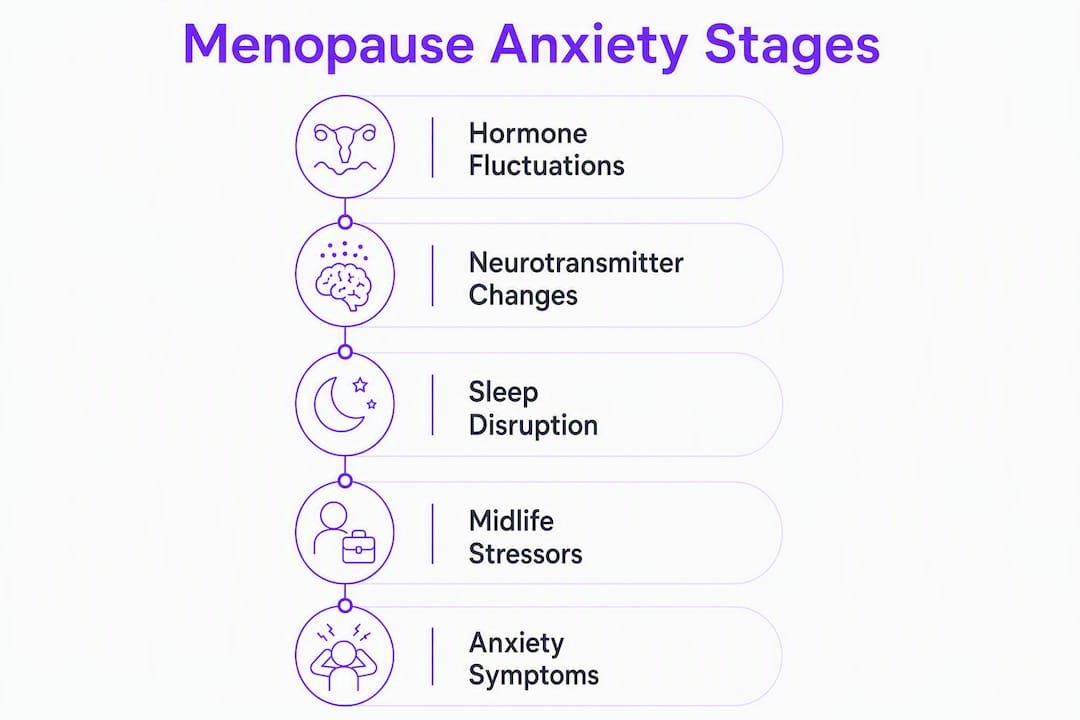
Oestrogen does far more than regulate the menstrual cycle. It actively supports serotonin synthesis, slows serotonin reuptake, and increases the sensitivity of serotonin receptors throughout the brain. When oestrogen levels fall and fluctuate during perimenopause, serotonin availability drops and monoaminergic pathways become less stable, which directly affects mood regulation and raises anxiety risk.
Progesterone adds another layer. Its metabolite, allopregnanolone, acts on GABA-A receptors in the brain — the same receptors targeted by benzodiazepine medications. GABA is the brain’s primary calming neurotransmitter. When progesterone falls sharply, allopregnanolone levels drop with it, reducing GABAergic inhibition and leaving the nervous system more prone to panic, restlessness, and hypervigilance.
Dopamine and noradrenaline are also affected. Oestrogen modulates dopamine receptor density and noradrenaline turnover, both of which influence motivation, concentration, and the tendency to ruminate or worry. Women often notice this as a new difficulty concentrating alongside the anxiety, sometimes described as brain fog.
The HPA axis — the hypothalamic-pituitary-adrenal system that governs cortisol release — becomes more reactive as both oestrogen and progesterone decline. The result is a lower threshold for the stress response: situations that previously felt manageable can suddenly trigger a disproportionate surge of cortisol. Research from the SWAN study (Study of Women’s Health Across the Nation) found that women with low anxiety at baseline were significantly more likely to report high anxiety symptoms when early or late perimenopausal or postmenopausal, with odds ratios ranging from 1.56 to 1.61, independent of life events and financial strain.
Think of it as a dimmer switch being turned down on the brain’s natural calming system, while the alarm system becomes more sensitive. The biology is real, measurable, and treatable.
Pro Tip: Keep a simple symptom diary for two to four weeks, noting anxiety levels alongside your menstrual cycle, sleep quality, and hot flash frequency. Patterns that track with hormonal shifts are a strong diagnostic clue your GP will find genuinely useful.
How hot flashes, night sweats and poor sleep amplify anxiety
The relationship between vasomotor symptoms and anxiety is a self-reinforcing cycle, and breaking it is often the fastest route to feeling better. Hot flashes and night sweats disrupt sleep architecture; poor sleep increases amygdala reactivity and reduces the prefrontal cortex’s ability to regulate emotional responses. The result is greater daytime anxiety, lower distress tolerance, and a heightened physical sensitivity to the next hot flash — which then disrupts the following night’s sleep.
Treating the sleep disruption directly can reduce anxiety more than targeting worry alone. Practical steps that genuinely help:
- Keep your bedroom cool — aim for a cool and comfortable temperature; a fan or cooling mattress topper can make a significant difference.
- Layer lightweight bedding so you can adjust quickly during a night sweat without fully waking.
- Maintain a consistent sleep and wake time, even at weekends, to stabilise your circadian rhythm.
- Avoid caffeine after midday and limit alcohol, which fragments sleep and worsens night sweats.
- Wind down with paced breathing — a slow four-count inhale and six-count exhale activates the parasympathetic nervous system and lowers cortisol before bed.
- Limit screens for 60 minutes before sleep to protect melatonin production.
CBT for insomnia (CBT-I) is the most evidence-supported non-pharmacological treatment for sleep disruption and is available through NHS IAPT (Improving Access to Psychological Therapies) services. If vasomotor symptoms are severe enough to prevent restorative sleep despite these measures, discuss vasomotor-specific treatments with your GP, including HRT.
Pro Tip: Sleepio, a digital CBT-I programme, is available free to some NHS patients via referral. Ask your GP whether it is commissioned in your area.
Midlife pressures that make hormonal anxiety worse
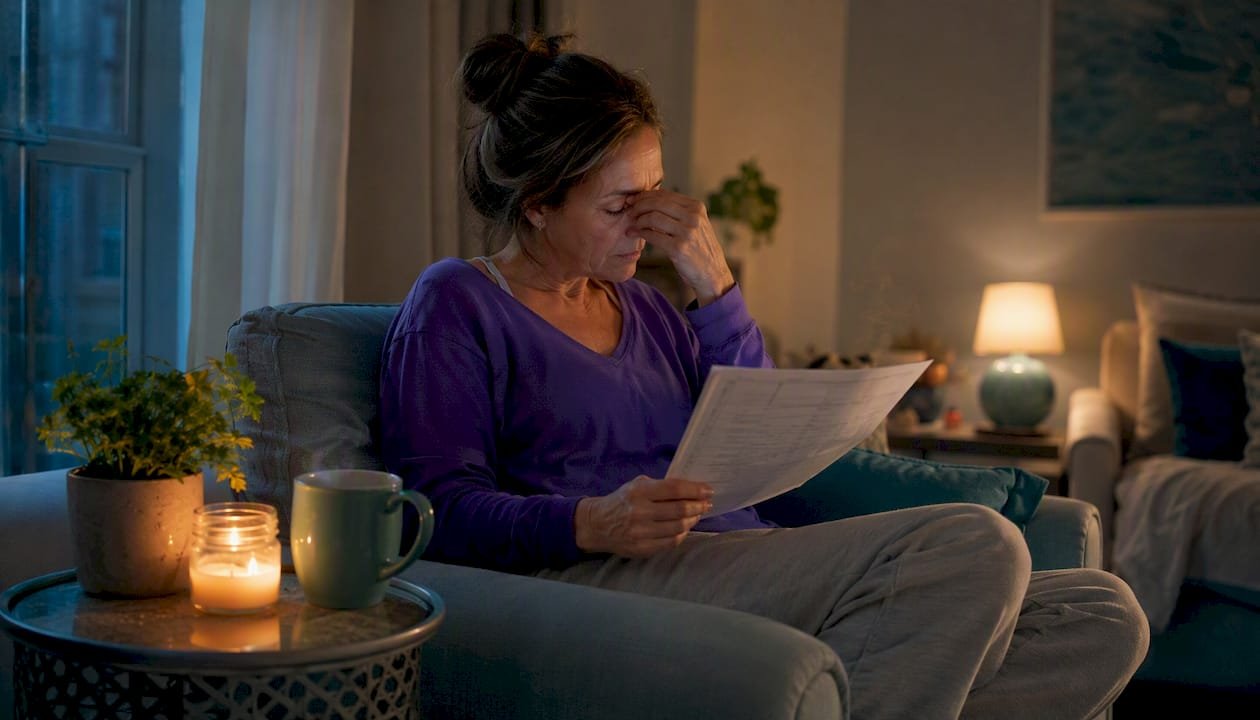
Hormonal changes rarely arrive in a vacuum. The perimenopausal years typically coincide with a cluster of significant life stressors: caring for ageing parents, supporting adolescent children, navigating career peaks or redundancy, relationship transitions, and the first real confrontations with personal mortality. These psychosocial pressures act together with hormonal change to produce emotional symptoms that are greater than either cause alone.

One finding that surprises many women: longitudinal studies show that women with low premenopausal anxiety may experience larger relative increases during the transition than women who already had high anxiety. If you have always considered yourself a calm, resilient person and are now feeling unexpectedly anxious, that pattern is well-documented. It does not mean you are losing your mind.
Non-hormonal causes are worth ruling out with your GP. Thyroid dysfunction — both hypothyroidism and hyperthyroidism — produces anxiety symptoms that closely mimic perimenopausal anxiety, and thyroid disorders become more common in midlife women. Some medications, including certain blood pressure drugs, corticosteroids, and stimulant-based treatments, can also raise anxiety. Caffeine sensitivity often increases with age. A thorough review of your current medications and a thyroid function test are sensible first steps before attributing everything to hormones.
What menopause-related anxiety actually feels like
Anxiety symptoms in menopause span emotional, physical, and cognitive domains. Recognising the full picture helps you describe your experience accurately to a clinician and understand whether what you are experiencing is a transitional response or a clinical anxiety disorder that warrants specific treatment.
Common symptoms to watch for:
- Persistent, free-floating worry that feels disproportionate to circumstances
- Panic attacks: sudden surges of intense fear, racing heart, chest tightness, breathlessness
- Restlessness and an inability to settle or relax
- Irritability that feels out of character, sometimes escalating to rage
- Difficulty concentrating, forgetfulness, and mental fatigue (brain fog)
- Physical tension: tight jaw, clenched shoulders, headaches
- Sleep-linked worsening: anxiety that spikes at 3–4 AM after a night sweat
Transitional anxiety versus clinical anxiety disorder:
| Feature | Transitional / hormonal anxiety | Clinical anxiety disorder |
|---|---|---|
| Onset | Tracks with hormonal shifts or cycle changes | May predate menopause or be unrelated to cycle |
| Severity | Mild to moderate; manageable most days | Severe; significantly impairs daily functioning |
| Duration | Fluctuates; often improves in postmenopause | Persistent for six or more months regardless of hormonal stage |
| Functional impact | Occasional disruption to work or relationships | Consistent inability to meet daily responsibilities |
| Response to self-care | Often improves with sleep, exercise, and stress reduction | Persists despite lifestyle changes; requires clinical treatment |
Brain fog — difficulty retrieving words, poor short-term memory, reduced concentration — is among the most distressing cognitive symptoms and is frequently underreported because women fear it signals dementia. It is strongly associated with sleep disruption and oestrogen fluctuation, and it typically improves as the transition progresses.
How anxiety in menopause is assessed, and when to contact your GP
A thorough assessment distinguishes hormonal anxiety from other treatable causes. Here is what a GP or menopause clinic will typically work through:
- Timing of symptoms relative to your cycle. Anxiety that worsens in the week before a period or correlates with irregular cycles is a strong hormonal signal.
- Medication and substance review. A full list of current medications, supplements, caffeine intake, and alcohol use helps identify non-hormonal contributors.
- Thyroid function test. A simple blood test; thyroid disorders are common in midlife women and produce near-identical symptoms.
- Mental health history. Prior episodes of anxiety, depression, or PMDD increase perimenopausal risk and inform treatment choices.
- Sleep and vasomotor symptom assessment. Frequency and severity of hot flashes and night sweats, and their impact on sleep quality.
- Functional impact. How much symptoms affect work, relationships, and daily activities — this determines urgency and treatment intensity.
- Red-flag screening. Any thoughts of self-harm or suicide require same-day assessment; do not wait for a routine appointment.
When to ask for onward referral:
- Severe panic attacks that prevent you from leaving the house or working
- Symptoms that persist despite three months of lifestyle changes and/or medication
- Significant functional impairment at work or in relationships
- Suicidal thoughts — seek urgent help via your GP, NHS 111, or A&E
The NHS and the British Menopause Society both recommend that women with significant menopause-related mental health symptoms are offered access to psychological therapies and, where appropriate, referral to a specialist menopause clinic. You can ask your GP to refer you directly to NHS IAPT for CBT, or to a menopause clinic if hormonal management is being considered.
Suggested questions to take to your appointment: When did these symptoms start relative to my cycle changes? How much are they affecting my daily life? Do I have any history that makes me higher risk? What are my options, and what are the realistic timelines for improvement?
Evidence-based treatments that genuinely help
The good news: menopause-related anxiety responds well to treatment, and you have real options. The most effective approach for most women combines more than one strategy.
Psychological therapies
Cognitive Behavioural Therapy (CBT) is the first-line psychological treatment recommended by the NHS for anxiety disorders and is available through IAPT without a specialist referral. CBT helps you identify and restructure the thought patterns that sustain anxiety, and it also addresses the sleep disruption that amplifies it. For managing anxiety symptoms, CBT typically produces meaningful improvement within eight to twelve sessions.
HRT and antidepressants
Hormone replacement therapy (HRT) relieves vasomotor symptoms reliably and can improve mood in some women, but it is not a guaranteed cure for anxiety. Evidence from randomised trials suggests that combining oestrogen therapy with antidepressants can help, though the mechanisms are complex and improvement is not explained solely by oestradiol or serotonin changes. SSRIs and SNRIs are effective for anxiety and are sometimes preferred when HRT is contraindicated or declined. Discuss clotting risk, contraception needs, and your personal medical history with your GP before starting HRT.
Practical self-help that works
- Exercise: Regular moderate aerobic activity reduces cortisol, raises serotonin, and improves sleep quality. Even a 20-minute walk lowers acute anxiety.
- Mindfulness and paced breathing: Regular practice retrains the HPA axis over time, lowering baseline cortisol reactivity.
- Magnesium: Evidence supports a role in sleep quality and nervous system regulation. Magnesium supplements are among the better-evidenced options for women over 40 seeking non-prescription support for sleep and mood.
- Limiting stimulants: Caffeine and alcohol both worsen vasomotor symptoms and anxiety; reducing intake often produces rapid improvement.
- Temperature management: Cooling strategies that reduce night sweat frequency break the sleep-anxiety cycle at its physical root.
When combined approaches are used together — therapy, symptom control, and lifestyle changes — outcomes are consistently better than any single intervention alone.
How long does menopause-related anxiety last?
Perimenopause is the highest-risk phase, and for many women anxiety does ease as hormone levels stabilise in postmenopause. But the timeline varies considerably. Systematic reviews report a prevalence range of 15%–50% across perimenopausal and postmenopausal women, and UK data show over half of British women report struggling during the transition. Some women find symptoms resolve within one to two years of their final period; others experience persistent anxiety for longer, particularly if vasomotor symptoms persist.
Factors associated with a longer or more difficult course include:
- A prior history of anxiety, depression, or PMDD
- Severe or prolonged vasomotor symptoms
- Ongoing psychosocial stressors without adequate support
- Untreated sleep disruption
The nervous system can remain sensitised even after hormone levels stabilise. Retraining techniques — paced breathing, mindfulness, and graded exposure to anxiety-provoking situations — help reset stress reactivity and are worth maintaining well into postmenopause.
What the research tells us: SWAN and key studies
The SWAN study (Study of Women’s Health Across the Nation) is the most cited longitudinal study on anxiety across the menopausal transition. Its key finding: women with low baseline anxiety were significantly more likely to develop high anxiety during early and late perimenopause and postmenopause, with odds ratios of 1.56 to 1.61, even after controlling for life events, financial strain, and vasomotor symptoms. Women with already-high anxiety remained symptomatic throughout but did not show the same relative increase.
Recent systematic reviews and mechanistic studies confirm that hormone fluctuation, rather than simply low hormone levels, drives much of the anxiety risk. This explains why perimenopause — the phase of greatest hormonal variability — is often harder than postmenopause, when levels are low but stable.
| Study / source | Key finding | Practical implication |
|---|---|---|
| SWAN (longitudinal cohort) | Low-anxiety women had 1.56–1.61 odds of high anxiety in perimenopause | Even calm women should be screened during the transition |
| Systematic reviews (Frontiers, 2024) | 15%–50% prevalence of anxiety/depression across menopausal stages | Anxiety is common; normalise and treat, do not dismiss |
| UK survey data | Over 50% of British women report struggling during the transition | Demand for NHS menopause services is high; early referral helps |
| RCT evidence (Frontiers, 2026) | Combined oestrogen and antidepressant therapy shows promise | Single-agent approaches may be less effective than combined care |
A key gap in the research: most studies rely on self-reported symptoms and vary in how they define menopausal stages, which makes direct comparisons difficult. The consensus is clear enough for clinical practice, however: perimenopause raises anxiety risk, hormonal fluctuation is the primary driver, and combined approaches work best.
Key takeaways
Falling and fluctuating oestrogen and progesterone are the primary biological drivers of why anxiety increases in menopause, altering serotonin, GABA, and cortisol pathways in ways that are real, measurable, and treatable.
| Point | Details |
|---|---|
| Hormones drive the biology | Oestrogen and progesterone fluctuations alter serotonin, GABA, and HPA-axis reactivity, raising anxiety risk. |
| Perimenopause is the highest-risk stage | SWAN data show odds ratios of 1.56–1.61 for high anxiety in perimenopause, even in previously calm women. |
| Sleep disruption amplifies everything | Breaking the vasomotor-sleep-anxiety cycle is often the fastest route to meaningful relief. |
| Multiple treatments are effective | CBT, HRT, SSRIs/SNRIs, exercise, and magnesium all have evidence; combined approaches work best. |
| Seek help promptly | Contact your GP if anxiety impairs daily life; NHS IAPT and menopause clinics offer specialist pathways. |
This article provides general health information, not medical advice. Always confirm your individual circumstances with your GP or a qualified healthcare professional.
A holistic perspective on menopause anxiety
The most underappreciated truth about menopause-related anxiety is how often it is dismissed — by clinicians, by partners, and by the women experiencing it. “You’re just stressed” is not a diagnosis. Neither is “it’s your age.” The biology is specific, the mechanisms are well-documented, and the suffering is real.
What I find compelling in the evidence is the SWAN finding about low-anxiety women. The women who are most surprised by perimenopausal anxiety are often the ones most at risk of it. If you have spent your adult life managing stress well, you may have less experience recognising anxiety for what it is, and less confidence asking for help. That delay costs months of unnecessary suffering.
The other thing the research makes clear: treating one thing at a time is rarely enough. A woman who addresses her sleep disruption but ignores the cortisol-raising effect of three coffees a day, or who starts HRT but does not address the caregiving stress that is running her ragged, will get partial results at best. The body is not compartmentalised. Effective support maps the whole picture.
At Live5dhealth, the approach to menopause-related anxiety starts with exactly that: understanding the full picture. Sleep quality, vasomotor symptoms, stress load, nutrition, and nervous system regulation are all part of the same system. Therapies like red light therapy, PEMF, and holistic massage support nervous system recovery and sleep quality in ways that complement medical treatment rather than replace it. For women who want an immersive reset, the healing retreats in the west of Ireland offer a structured environment for doing exactly that.
For urgent or severe symptoms, NHS care comes first. For the broader work of rebuilding resilience and supporting your body through the transition, an integrated approach makes a real difference. You do not have to choose between evidence-based medicine and holistic support. The best outcomes come from both.
Useful sources to read next
These are the most authoritative resources on menopause-related anxiety. Showing them to your GP can help frame a productive conversation.
- NHS: Menopause — the primary UK patient resource covering symptoms, diagnosis, and treatment options including HRT and psychological therapies.
- British Menopause Society — specialist guidance for clinicians and patients, including position statements on HRT, mental health, and menopause clinic referral pathways.
- SWAN study — PMC — the landmark longitudinal study on anxiety risk across menopausal stages; essential reading for understanding who is most at risk and why.
- Stress, depression, and anxiety across menopausal stages — Frontiers in Psychiatry (2024) — a systematic review covering prevalence figures, psychosocial contributors, and stage-specific risk; includes UK data.
- Sex hormone fluctuation and female risk for anxiety — PMC — a mechanistic review of how oestrogen and progesterone changes affect neurotransmitter systems; useful for understanding the biology in depth.
- Does risk for anxiety increase during the menopausal transition? — PMC — a recent mechanistic review confirming oestrogen’s role in serotonin and monoaminergic pathway regulation.
- RCT: Oestradiol/dydrogesterone combined with escitalopram — Frontiers in Physiology (2026) — trial evidence on combined hormonal and antidepressant therapy; relevant for women considering medical treatment options.