

Pelvic floor dysfunction (PFD) is when the muscles of the pelvic floor fail to relax, contract, or coordinate properly, disrupting normal bladder, bowel, and pelvic organ function. If you recognise the symptoms below, your three most useful next steps are: book an appointment with your GP, ask for a referral to a pelvic health physiotherapist, and seek same-day care if you experience any of the urgent red flags listed later in this guide.
The most common presenting symptoms include:
- Leaking urine when coughing, sneezing, or exercising
- A sudden, urgent need to urinate that is hard to control
- Difficulty fully emptying the bladder or bowel
- Chronic constipation or straining to open your bowels
- Pelvic pain or pressure, including during sex
- A sensation of heaviness or bulging in the vaginal area
These symptoms can feel isolating, but they are far more common than most people realise, and the majority respond well to the right treatment.
Table of Contents
- What does pelvic floor dysfunction actually mean?
- What does pelvic floor dysfunction feel like?
- What causes pelvic floor problems?
- How is pelvic floor dysfunction diagnosed?
- What are the main non-surgical treatments for pelvic floor dysfunction?
- When are procedures or surgery considered?
- What does recovery typically look like?
- When should you see your GP, and what are the red flags?
- Why does it matter whether your pelvic floor is tight or weak?
- Key takeaways
- A note from us at Live5dhealth
- Useful sources and further reading
What does pelvic floor dysfunction actually mean?
The pelvic floor is a sling of muscles, ligaments, and connective tissue stretching across the base of the pelvis. It supports the bladder, bowel, uterus, and rectum, and plays a central role in continence, sexual function, and core stability. When those muscles stop working as they should, pelvic floor dysfunction is the clinical umbrella term that covers the result.
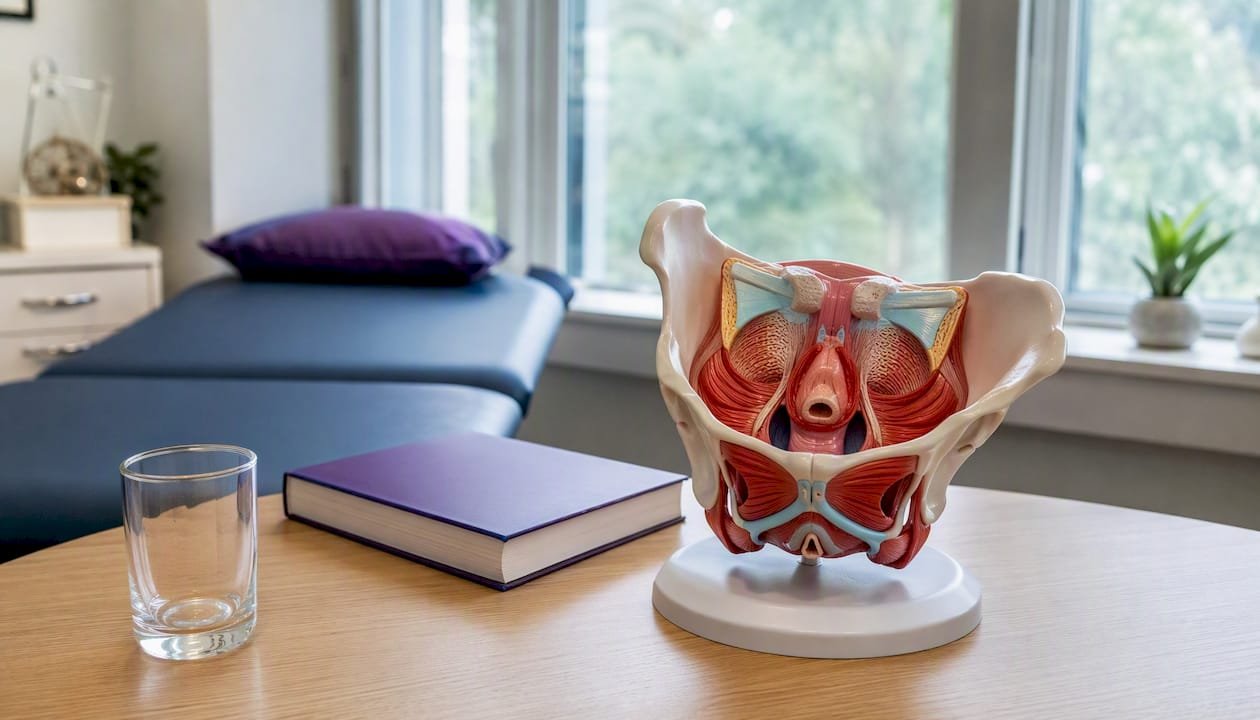
StatPearls classifies PFD into three principal patterns, and understanding which one applies to you is the key to getting the right treatment:
Hypertonicity (tight or non-relaxing pelvic floor)
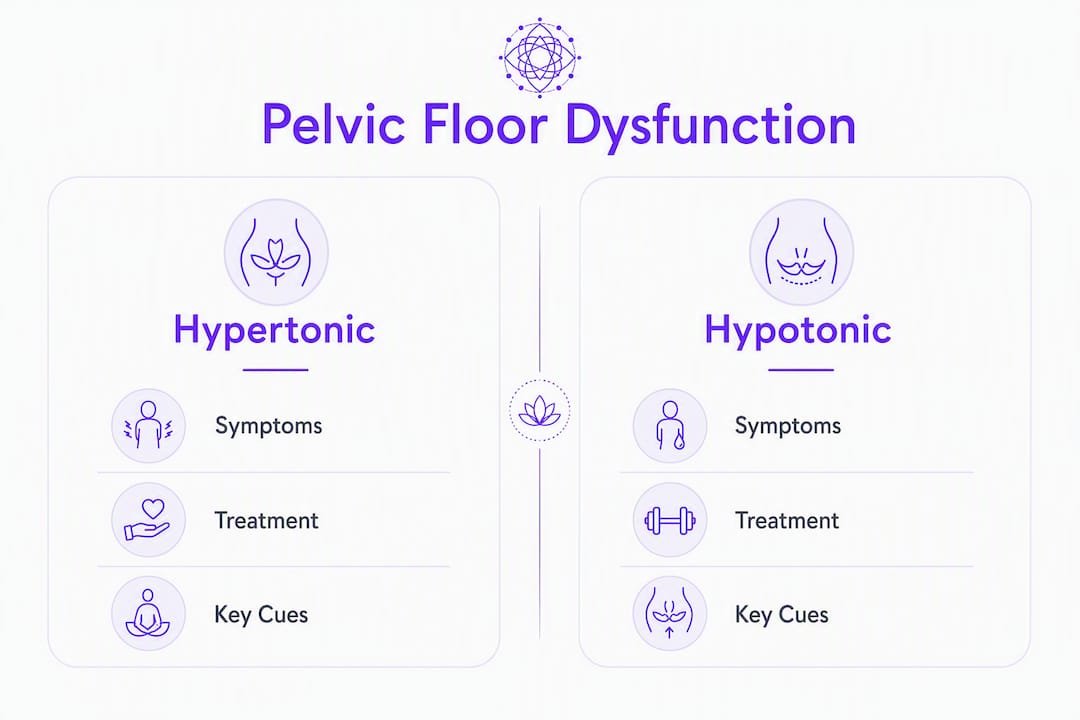
The muscles are overactive or unable to relax. Rather than releasing on demand, they remain in a state of tension. This pattern is often behind pelvic pain, painful sex, and difficulty with bowel emptying, because the muscles tighten when they should let go.
Hypotonicity (weakness)
The muscles lack the strength or endurance to maintain support. Stress urinary incontinence, where you leak when you cough or jump, is the classic presentation. This is the pattern most people picture when they hear “pelvic floor problems.”
Discoordination (failed timing)
The muscles contract and relax at the wrong moments. Someone with discoordination may strain to empty their bowels not because the muscles are weak, but because they are contracting when they should be opening. Biofeedback is particularly useful here.
Pelvic organ prolapse, where one or more pelvic organs descend into or beyond the vaginal wall, is anatomically related and often reported alongside PFD. NICE guidance NG210 provides the authoritative UK framework for assessment and non-surgical management across all these presentations.
What does pelvic floor dysfunction feel like?
Symptoms vary considerably depending on which pattern is driving the problem, and many people live with them for years before seeking help.
Urinary symptoms:
- Leaking urine with physical effort (stress incontinence)
- Urgency, or a sudden compelling need to urinate
- Frequent urination, including waking at night
- Difficulty starting the urine stream or a feeling of incomplete emptying
Bowel symptoms:
- Chronic constipation or needing to strain
- Incomplete bowel emptying
- Accidental leakage of stool or wind (faecal incontinence)
- Needing to change position on the toilet to empty fully
Pelvic pain and sexual symptoms:
- Pain in the pelvis, tailbone, or lower back
- Pain during or after sex (dyspareunia)
- Reduced sensation or difficulty with arousal
- Vulval or vaginal discomfort that persists between periods
Prolapse-related feelings:
- A dragging sensation or heaviness in the vagina
- A visible or palpable bulge at the vaginal opening, particularly after standing for long periods
Two common presentations illustrate how different PFD can look in practice. Someone with a hypertonic floor may describe years of constipation, straining hard every morning, and pelvic aching that worsens by the afternoon. Someone with a hypotonic floor might leak every time they sneeze and avoid exercise because of it. Both have pelvic floor dysfunction; the treatment for each is almost the opposite of the other.
Clinical cues that suggest hypertonicity include pain on internal examination, inability to relax the pelvic floor on command, and worsening symptoms with prolonged sitting. Hypotonicity tends to present with visible muscle weakness on examination, poor voluntary contraction, and leakage with exertion. Discoordination often shows as paradoxical contraction during bearing-down attempts.
What causes pelvic floor problems?
PFD rarely has a single cause. Most cases involve a combination of factors that accumulate over time, gradually altering muscle strength, nerve supply, or coordination.
Common risk factors and how they contribute:
- Pelvic or abdominal surgery: — Hysterectomy, prostatectomy, and colorectal surgery can all disrupt nerve supply or alter the structural relationships that support pelvic organ function.
One important caution: symptoms that look like PFD can also arise from urinary tract infections, inflammatory bowel conditions, neurological disease, or gynaecological malignancy. NICE explicitly recommends excluding these alternative diagnoses before attributing symptoms to pelvic floor dysfunction alone.
How is pelvic floor dysfunction diagnosed?
Diagnosis follows a clear pathway, moving from a GP consultation through to specialist tests only when they are genuinely needed.
- Pelvic examination — A physical examination assesses pelvic organ support, muscle tone, and any signs of prolapse. NICE guidance recommends this as part of the initial assessment in primary care.
At a pelvic health physiotherapy assessment, expect a detailed symptom interview, a review of your bladder and bowel habits, and an internal or external pelvic examination to assess muscle tone, strength, and coordination. The physiotherapist will explain every step and you can decline any part of the examination.
What are the main non-surgical treatments for pelvic floor dysfunction?
Non-surgical management is first-line care for the vast majority of people with PFD. NICE NG210 recommends tailored interventions based on symptoms and pattern, rather than a single exercise prescription for everyone.
Core first-line therapies:
- Pelvic floor muscle training (PFMT): For hypotonic presentations, a structured programme of progressive strengthening exercises is the foundation of treatment. PFMT improves muscle strength, endurance, and the reflex response that prevents leakage.
- Pelvic health physiotherapy: Harvard Health describes pelvic floor physical therapy as widely recognised first-line care for pelvic floor disorders. A specialist physiotherapist tailors the programme to your specific pattern, monitors progress, and adjusts the approach as you improve.
- Biofeedback: Sensors provide real-time information about pelvic floor activity, allowing the nervous system to learn faster how to relax or contract these muscles. For discoordination and hypertonic presentations, seeing or hearing your own muscle activity on a screen accelerates retraining in a way that verbal instruction alone cannot match.
How treatment choices match the pattern:
- Hypertonic floor: The goal is relaxation and downtraining, not strengthening. Treatment includes breathing techniques, progressive muscle relaxation, manual therapy, and biofeedback to teach the muscles to release. In severe or refractory cases, botulinum toxin injection into the pelvic floor muscles can reduce hypertonicity and break the pain cycle.
- Hypotonic floor: Progressive PFMT is the primary approach, building strength and endurance over weeks to months.
- Discoordination: Retraining the timing and sequencing of muscle activity, often with biofeedback, is central. Bowel retraining and defaecation posture advice (using a footstool to adopt a squatting position) are also helpful.
NICE explicitly advises against offering vaginal diazepam for pelvic floor dysfunction, noting insufficient evidence to support its routine use.
Self-care measures that support recovery:
- Optimise bowel habits: adequate fluid intake, dietary fibre, and avoiding prolonged straining
- Maintain a healthy weight to reduce chronic pelvic load
- Stop smoking to reduce chronic cough and improve tissue healing
- Avoid bladder irritants such as caffeine and alcohol if urgency is a problem
- Choose pelvic-floor-safe exercise: walking, swimming, and Pilates are generally well tolerated; high-impact activities may need modification until symptoms improve
Accessing care in the UK: Your GP can refer you to NHS pelvic health physiotherapy services. Waiting times vary by region, and in some areas can extend to several months. If you need faster access, private pelvic health physiotherapists are available throughout the UK, with initial appointments typically available within one to two weeks. Many people choose to start privately and then continue on the NHS.
Pro Tip: Before your first physiotherapy appointment, keep a three-day bladder and bowel diary recording what you drink, when you go to the toilet, and any leakage episodes. This single piece of preparation gives your physiotherapist more useful information than almost anything else and can significantly shorten the time it takes to get the right treatment plan.
When are procedures or surgery considered?
Surgery and interventional procedures are not first-line options, but they play an important role when conservative management has not provided sufficient improvement or when the anatomy requires correction.
- Pessary management: — A vaginal pessary is a removable device that supports prolapsed organs. It is a non-surgical option that can be fitted in clinic and is particularly useful for people who are not yet ready for surgery or who have medical reasons to avoid it.
Escalation to surgical referral is typically considered after a genuine trial of conservative care, usually at least three to six months of supervised physiotherapy. Shared decision-making with a urogynaecologist or colorectal surgeon is central to choosing the right procedure, and the risks, benefits, and recovery expectations should be discussed in full before any decision is made.
What does recovery typically look like?
Most people with PFD see meaningful improvement with the right treatment, though timelines vary depending on the pattern, severity, and individual factors.
With supervised pelvic health physiotherapy and PFMT, many people notice a reduction in leakage episodes and improved bowel function within six to twelve weeks. Full benefit often takes three to six months of consistent practice. Hypertonic presentations can take longer to resolve, particularly when pelvic pain has been present for years, because the nervous system needs time to recalibrate alongside the muscles.
Surgical recovery depends on the procedure. Pessary fitting requires no recovery time. Neuromodulation implantation typically involves a short hospital stay and a few weeks of activity restriction. Prolapse repair and sling procedures generally require four to six weeks before returning to normal activity, with full recovery taking up to three months.
Factors that predict better outcomes include earlier presentation, good adherence to the physiotherapy programme, healthy weight, absence of neurological disease, and strong support from a specialist team. Conversely, long-standing symptoms, significant nerve injury from childbirth, and ongoing risk factors such as chronic constipation can slow progress. Success looks different for everyone: for some it means no longer leaking during exercise; for others it means being able to open their bowels without pain or straining for the first time in years.
When should you see your GP, and what are the red flags?
Most pelvic floor symptoms warrant a GP appointment rather than watchful waiting, but some signs need urgent or same-day assessment.
Seek immediate or urgent medical attention for:
- Sudden, severe pelvic pain with no clear cause
- Heavy or unexpected vaginal bleeding
- Fever combined with pelvic pain (possible pelvic infection)
- Inability to pass urine (acute urinary retention)
- A visible organ protruding beyond the vaginal opening
For a routine GP appointment, prepare the following:
- A three-day bladder and bowel diary (times, volumes, leakage episodes)
- A list of all current medications, including over-the-counter and herbal preparations
- Your obstetric history: number of pregnancies, type of delivery, any complications
- Your surgical history, particularly any pelvic or abdominal procedures
- Any relevant neurological history, such as multiple sclerosis or spinal injury
NHS referral routes: GPs typically refer to NHS pelvic health physiotherapy services for first-line management. If symptoms suggest prolapse, stress incontinence requiring surgical assessment, or complex bowel dysfunction, referral to urogynaecology or colorectal surgery is appropriate. NHS waiting times for pelvic health physiotherapy vary by region; some areas have direct-access self-referral pathways that allow you to book without a GP letter. Ask your GP surgery or check your local NHS trust’s website for details.
Why does it matter whether your pelvic floor is tight or weak?
The single most important clinical distinction in pelvic floor dysfunction is whether the muscles are overactive or underactive, because the treatments are fundamentally different. Strengthening a hypertonic floor makes symptoms worse, not better. Relaxation techniques applied to a weak floor achieve nothing. Getting this wrong is one of the most common reasons people do not improve despite months of effort.
StatPearls and interprofessional literature highlight that PFD presentations often cross urogynaecology, urology, and colorectal boundaries, and that an interprofessional assessment pathway improves both accuracy and outcomes. NICE frames its guidance in a symptom-based way precisely because no single exercise prescription fits all presentations.
| Pattern | Common symptoms | Primary treatment approach | Key clinician cue |
|---|---|---|---|
| Hypertonic (tight) | Pelvic pain, painful sex, constipation, straining | Relaxation, downtraining, manual therapy, biofeedback, sometimes botulinum toxin | Paradoxical contraction on bearing down; pain on internal examination |
| Hypotonic (weak) | Stress incontinence, prolapse sensation, poor voluntary contraction | Progressive PFMT, pelvic health physiotherapy | Reduced squeeze strength on examination; visible descent with Valsalva |
| Discoordination | Incomplete emptying, urgency, mixed symptoms | Biofeedback retraining, bowel retraining, defaecation posture advice | Inconsistent muscle firing pattern on EMG; symptoms vary with position or stress |
Real-time biofeedback accelerates motor learning by letting patients see or hear their own pelvic floor contractions and relaxations, which improves retraining success compared with verbal instruction alone. For discoordination in particular, watching a live EMG trace while attempting to bear down can be the moment a patient finally understands what their muscles are actually doing.
Pro Tip: A simple clinical check that separates coordination problems from pure weakness is asking the patient to “bear down” as if opening their bowels during an internal examination. In a healthy pelvic floor, the muscles should relax and descend. If they contract instead, that paradoxical response points strongly to a hypertonic or discoordination pattern, not weakness, and changes the entire treatment plan.
Key takeaways
Pelvic floor dysfunction is a treatable condition, and identifying whether your pelvic floor is tight, weak, or discoordinated is the single most important step towards choosing the right treatment.
| Point | Details |
|---|---|
| Three main patterns | PFD is classified as hypertonic, hypotonic, or discoordination; each requires a different treatment approach. |
| First-line care | Pelvic health physiotherapy and PFMT are the evidence-based first-line treatments recommended by NICE NG210. |
| Biofeedback adds value | Real-time biofeedback accelerates motor learning and is especially useful for discoordination and hypertonic presentations. |
| Up to 50% of chronic constipation cases | Research links up to 50% of chronic constipation cases to impaired pelvic floor coordination, making PFD worth considering in long-standing bowel symptoms. |
| NHS access routes | Your GP can refer you to NHS pelvic health physiotherapy; some areas also offer direct self-referral pathways. |
A note from us at Live5dhealth
Living with pelvic floor dysfunction can feel frustrating and, at times, deeply personal. Symptoms that affect continence, intimacy, or daily comfort are not easy to talk about, and many people wait far longer than they should before asking for help. If this article has resonated with you, please know that effective support is available, and the sooner you seek it, the better your chances of a full recovery.
Your first step is your GP. From there, NHS pelvic health physiotherapy services provide specialist assessment and treatment, and private physiotherapists can often see you more quickly if waiting times are a concern. Alongside clinical care, many people find that broader wellness support, addressing sleep, stress, nutrition, and movement, plays a meaningful role in their recovery.
At Live5dhealth, we offer a range of complementary wellness therapies and luxury spa and wellness facilities in Boyle, County Roscommon, designed to support your overall wellbeing alongside any clinical treatment you are receiving. We do not claim to treat pelvic floor dysfunction medically, but we do believe that a body supported by good rest, reduced stress, and restorative therapies heals better. If you are curious about what a wellness retreat in Ireland could offer as part of your recovery journey, we would love to hear from you.

This article is for general information only and is not a substitute for professional medical advice. Always consult your GP or a qualified healthcare professional about your individual symptoms and treatment options.
Useful sources and further reading
These are the authoritative sources underpinning this guide. Each is worth bookmarking if you want to go deeper.
- NICE Guideline NG210: Pelvic floor dysfunction prevention and non-surgical management — The primary UK clinical guideline covering assessment, non-surgical treatment, and referral pathways. The most authoritative source for UK practice.
- NICE NG210 Recommendations chapter — The specific recommendations on history-taking, examination, and treatment choices, useful for understanding what your clinician should be doing at each stage.
- Pelvic Floor Dysfunction, StatPearls, NCBI Bookshelf — A detailed clinical overview covering anatomy, classification, assessment, and interprofessional management. Excellent for understanding the evidence base.
- Pelvic Floor Dysfunction, Cleveland Clinic — A clear, patient-facing explainer covering definition, symptoms, diagnosis, and treatment options including biofeedback.
- Treating patients with pelvic floor dysfunction, Mayo Clinic — A professional-facing summary with useful data on the link between chronic constipation and PFD.
- Pelvic floor SOS, Harvard Health — A practical, accessible overview of pelvic floor physical therapy as first-line care, written for a general audience.
- Pelvic Support Problems, MedlinePlus — A reliable introductory resource from the US National Library of Medicine covering causes, symptoms, and when to seek help.