

When you fast, you stop taking in the sodium, potassium, magnesium and other minerals that food normally supplies. For many healthy adults, a pinch of salt in water or a plain, sugar-free electrolyte mix is enough to keep headaches, cramps and fatigue at bay. For some people, including those having cancer treatment, on diuretics or with kidney problems, self-supplementing can be unsafe, and your clinical team should decide first.
This guide covers what each electrolyte does, how to take them without breaking your fast, what to look for on a label, and where the cautions sit. It is written for adults in Ireland, particularly women over 40, who want to fast sensibly and feel their best while doing it.
TL;DR
- Sodium, potassium and magnesium are the electrolytes people most often need to think about during a fast. Calcium, chloride and phosphorus matter too, but food usually covers them.
- A plain, sweetener-free electrolyte or a little salt in water is generally treated as compatible with a fast. Sugar, calories and flavoured mixes with sweeteners are where the trouble starts.
- Ease into fasting gradually rather than stopping food overnight, and put nutrient-dense food in your eating windows.
- If you have cancer, take chemotherapy such as cisplatin, use diuretics or have reduced kidney function, ask your oncologist, GP or pharmacist before taking any electrolyte supplement.
- Stop and seek medical help for palpitations, confusion, severe weakness or persistent vomiting.
Table of Contents
- Why fasting changes your electrolyte balance
- The electrolytes that matter most
- Do electrolytes break a fast?
- Simple ways to take electrolytes while fasting
- Natural sources and what to eat when you break the fast
- Who should ask first
- Fasting after 40: what changes
- Our perspective at Live5dhealth
- If you are fasting and using a sauna or spa
- A sensible first fasting plan
- FAQ
- Sources
Why fasting changes your electrolyte balance
Electrolytes are minerals that carry an electrical charge in your body fluids. They help regulate fluid balance, nerve signalling and muscle contraction, including your heartbeat. On a normal day, food and drink replace what you lose through urine and sweat.
During a fast that replacement stops, while losses carry on. A small study in five healthy adults measured blood and urine electrolytes before, during and after four days of total starvation on distilled water only, and found that mineral levels shifted over the period. A review of fasting with emphasis on electrolytes in The American Journal of Medicine makes the same point: fasting involves complex shifts in fluid and mineral handling. Both are older, small studies, so treat them as background, not a recipe.
Shorter fasts, such as 16:8 or a single 24-hour fast, are much gentler. Still, a narrative review of intermittent fasting looked at how alternate-day fasting and time-restricted eating affect micronutrient intake, and a clinical review in PMC warns that micronutrient intake can fall if fasting is not carefully managed. The practical lesson is that what you eat in your eating window counts as much as what you sip in your fasting window.
The electrolytes that matter most
Sodium
Sodium is the one most people run short of first, because the body sheds it readily when you are not eating. Low sodium is often behind the dull headache and tiredness people blame on “hunger”. A little salt, whether sea salt or pink salt, in water is the simplest option, and one hospital fasting guide lists salt among the things allowed during a fast.
Potassium
Potassium supports muscle and heart function. It is also the electrolyte where more is not better. Too much can be dangerous for people with impaired kidneys, and hospital guidance treats potassium with care: the Royal Children’s Hospital guideline notes that the oral route is preferred and that intravenous potassium is a high-risk medicine. That is a paediatric hospital document, so use it only as a reminder that potassium is not a mineral to guess at. If you take a product containing it, follow the label and do not stack several products.
Magnesium
Magnesium is involved in muscle relaxation and sleep, and cramps or restless nights during a fast are often what lead people to it. Forms differ in how well the gut tolerates them, and some can loosen the stool, which adds to fluid loss. Our magnesium supplements guide goes through the options.
Calcium, chloride and phosphorus
These turn up in many electrolyte products, but in a short fast your body holds reserves of calcium and phosphorus, and chloride comes along with salt. They matter more in long fasts or in people who already eat very little. If you are considering anything beyond a one- or two-day fast, speak to your GP first.
Do electrolytes break a fast?
It depends on what is in the product. Minerals themselves carry no calories. The problem is what is mixed with them. The same hospital guide that allows salt also specifies plain electrolytes free of sweeteners, artificial sweeteners and alternatives such as stevia, monk fruit or sugar alcohols. If your goal is a strict fast, that is a sensible standard.
If your goal is more relaxed, say weight management or giving digestion a rest, a small amount of sweetener may not matter to you. Decide which fast you are doing and read the label to match.
On a label, check for:
- Calories and sugar: should be zero for a strict fast.
- Sweeteners and flavourings: shorter ingredient lists are easier to judge.
- Amounts per serving: sodium, potassium and magnesium should be stated in milligrams, so you can add up what you take across the day.
- Serving size: powders and tablets are often meant to be split across the day.
- Third-party added extras: caffeine, herbal blends and vitamins you did not plan to take.
Our page on sugar-free electrolytes explains how to read these labels in a sauna setting, and the same logic carries over to fasting.
Simple ways to take electrolytes while fasting
- Salted water. A small pinch of sea salt in a glass of water, sipped through the morning. It is cheap and has no additives.
- A plain electrolyte powder or tablet. Pick one without sweeteners, and begin with less than a full serving to see how you feel.
- Mineral drops. Concentrated liquids you add to water. Our overview of mineral drops and what they do explains where they help.
- Mineral water. Sparkling or still mineral water is listed as allowed in the hospital guide above, and it adds a small amount of minerals.
- Broth in your eating window. If you are not doing a strict fast, a clear broth gives sodium and some other minerals with real food.
Sip rather than gulp. Drinking a lot of plain water alone can dilute your sodium further, which is one reason salted or mineral water is a better default than plain water on a longer fast.
Natural sources and what to eat when you break the fast
For many readers, food is the best electrolyte plan. The Cleveland Clinic advises cutting back on food and drink gradually over several days or weeks before a fast instead of stopping abruptly, because an abrupt start is a shock to the body. The same gentleness applies when you finish.
Good choices in your eating window include:
- Leafy greens, avocado, beans and lentils for potassium and magnesium.
- Nuts and seeds, especially pumpkin seeds, for magnesium.
- Yoghurt, kefir or fortified alternatives for calcium.
- Olives, pickles or a pinch of salt on food for sodium.
- Oily fish and eggs for phosphorus and other nutrients.
Break a longer fast with a small, simple meal, not a feast.
Who should ask first
This is the section to read twice if it describes you.
If you have cancer or are having treatment
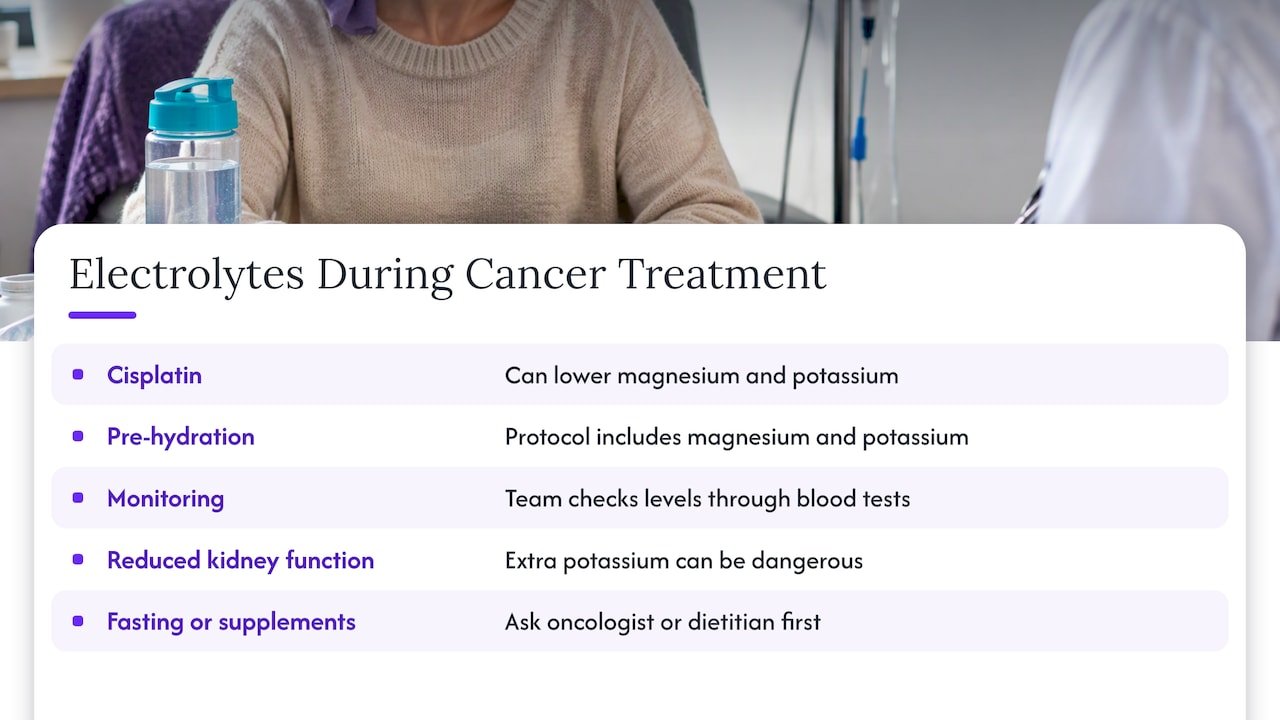
Electrolyte balance is closely monitored in oncology care. Some chemotherapy drugs, notably cisplatin, can lower magnesium and potassium, and the HSE’s national cancer chemotherapy protocol for a cisplatin-based regimen includes magnesium and potassium in the pre-hydration and lists hypomagnesaemia and hypokalaemia among electrolyte disturbances to watch. Your team checks these through blood tests. Taking your own supplements could interfere with that monitoring, and in someone with reduced kidney function extra potassium can be dangerous.
Fasting itself during treatment is a separate decision for your oncologist or dietitian. Please speak to them before you fast or buy any electrolyte product. We cover a related question in our page on sauna safety during chemotherapy.
If you take diuretics, heart or blood pressure medicines, or have kidney disease
Water tablets change how your body handles sodium and potassium, and some blood pressure medicines raise potassium. Ask your GP or pharmacist whether a supplement is safe with your prescriptions.
If you are pregnant, breastfeeding or have a history of disordered eating
Fasting is generally not a place to experiment in these situations. Talk to your GP or midwife first.
Signs to act on
Seek medical advice promptly for a racing or irregular heartbeat, fainting, confusion, severe muscle weakness, or vomiting that does not settle. Do not push through these as part of the process.
Fasting after 40: what changes
Many women over 40 are fasting around perimenopause or menopause, when sleep, hydration and energy can already feel less predictable. Hot flushes and night sweats add fluid and sodium loss, and a poor night makes a fasting morning harder. We cannot promise any supplement fixes that, but it is a good reason to start with short fasts, keep your eating windows nourishing and keep track of how you feel. Our guide on electrolytes for adults over 40 looks at this more closely.
Our perspective at Live5dhealth
We see fasting and electrolytes from the wellness-centre floor in Boyle, County Roscommon. Many of the people who come to us are interested in recovery, energy and healthy ageing, and a good number are women over 40 or people living with serious illness. What we notice is that the question is rarely “which electrolyte is best?” and more often “what is safe for me?”.
Our view is simple. Start with food and clean water, add minerals in small amounts if you need them, and choose products with short, honest ingredient lists. That is also why we put clean, energised water throughout our facility and sell electrolytes, structured water devices and distillers in our online shop: hydration is the foundation of everything else we do. If you are in treatment, our first recommendation is always to speak to your oncology team, and we would rather you did that than took a supplement because of something you read online, including here.
We also see how fasting, heat and minerals interact. If you use our sauna, steam room or cold plunge on a fasting day, plan your fluids and minerals before you go in, and keep sessions shorter than usual until you know how your body responds.
— Mark
If you are fasting and using a sauna or spa
Heat makes you sweat out water and sodium, so fasting and sauna sessions together call for more care. Our electrolyte protocol for sauna use covers sodium amounts around a session. If you are new to cold exposure, read who should avoid cold plunges before trying one fasted.
At Live5dhealth in Boyle, our sauna, steam and cold plunge spa is available for €30 a session, and you can ask our team about our supplements, electrolytes and energised water before you book. If you want a gentle, supported way to build healthy habits, our wellness retreats run for 3, 5 or 10 days.
A sensible first fasting plan
- Check your starting point. If any caution above applies, speak to your GP, pharmacist or oncology team first.
- Start short. Try a 12 to 14 hour overnight fast before moving to 16 hours.
- Hydrate with minerals. Salted water or a plain electrolyte, in small amounts through the day.
- Avoid heavy exercise on your first fasting days. Walking is plenty.
- Eat well in your window. Vegetables, protein, healthy fats and mineral-rich foods.
- Keep notes. Record headaches, sleep, energy and cramps so you can see what helps.
- Stop if you feel unwell.
FAQ
Do electrolytes break a fast?
Plain minerals with no sugar, calories or sweeteners are generally treated as compatible with a fast, and salt is listed as allowed in hospital fasting guidance. Flavoured powders with sugar or sweeteners are the ones that can break it. Check the label against how strict you want to be.
Which electrolytes do I need for fasting?
Sodium, potassium and magnesium are the ones most people focus on. Start with sodium, which is the easiest to supplement safely through a little salt in water. Add the others only if you have symptoms and no medical reason to avoid them.
Can I drink electrolytes on an empty stomach?
Most healthy people can, but concentrated mixes, especially magnesium, can upset an empty stomach. Begin with a half serving, well diluted, and sip it slowly.
Can I take electrolytes while fasting if I have cancer?
Only with your clinical team’s agreement. Chemotherapy and reduced kidney function can both change how your body handles potassium and magnesium, so your oncologist, GP or pharmacist should advise on any supplement and on fasting itself.
Sources
- Mineral metabolism during short-term starvation in man (PubMed)
- Fasting: a review with emphasis on the electrolytes (The American Journal of Medicine)
- Impact of intermittent fasting on micronutrient intake (PubMed)
- Requirements for essential micronutrients during caloric restriction and fasting (PMC)
- What’s allowed and not allowed during your fast (Marshall Medical)
- Clinical Practice Guidelines: Hypokalaemia (Royal Children’s Hospital)
- Is fasting good for you? (Cleveland Clinic)