
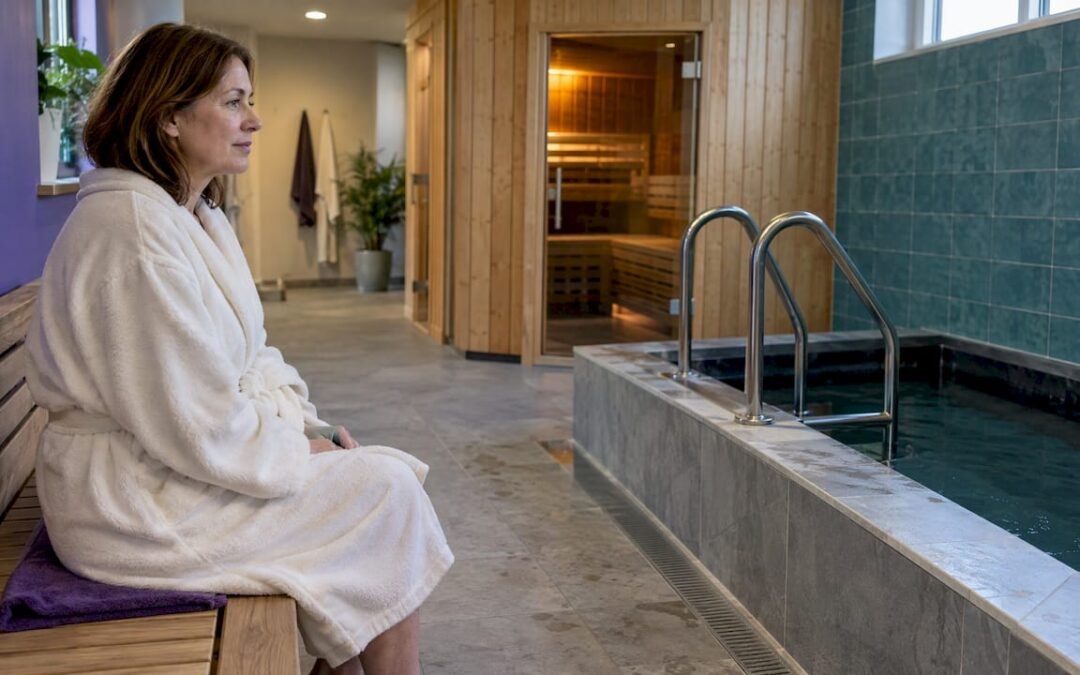
A good contrast therapy protocol is simple: a short, comfortable spell in the heat, a brief cool-down, a short and controlled cold plunge, then a proper rest, repeated for a small number of rounds. Timings in the research are modest: 5 to 10 minutes in the sauna for beginners, about a minute or so in cold water, and plenty of rest between. At Live5dhealth in Boyle, County Roscommon, our sauna, steam room and cold plunge spa sit together in one space, so you can move through your rounds calmly, at your own pace, without improvising in a cold lake or a bath full of ice.
This guide is written for women over 40, for anyone building their strength around a cancer diagnosis, and for anyone exploring recovery therapies such as hyperbaric oxygen therapy. It shows you how to build a routine, how to read your body, and when to check with your doctor first.
TL;DR
- A beginner round is 5 to 10 minutes in the sauna, a gentle cool-down, then up to a minute or two in the cold plunge, followed by a rest. Build up slowly over weeks.
- Do not jump straight from the sauna into cold water: Water Safety Ireland warns that cold-water shock responses are made worse that way.
- Evidence supports short-term relief of pain and stiffness and a sense of relaxation. Claims about long-term health effects are not yet established.
- If you have heart or blood pressure problems, are pregnant, are in cancer treatment or are at risk of lymphoedema, speak to your GP or oncology team before you begin.
- Our Sauna, Steam & Cold Plunge Spa session is €30, and is a calm place to learn the routine.
Table of Contents
- What contrast therapy actually is
- Before you start: the safety checks that matter
- The protocol, step by step
- A sauna and cold plunge routine you can keep
- What to expect, and what not to expect
- Contrast therapy and hyperbaric oxygen therapy
- Why we built our spa around this routine
- Try it at Live5dhealth
- FAQ
- Sources
What contrast therapy actually is
Contrast therapy means alternating heat and cold. In practice that is a sauna or steam room, then a cold shower or plunge, then a rest, and again. The idea is that heat widens your blood vessels and cold narrows them, and moving between the two gives the body a workout of its own.
It is worth knowing what the research says so your expectations are realistic. The American Medical Association reports that contrast therapy can temporarily reduce pain and improve mobility and muscle relaxation. A 2025 systematic review of 21 studies found some evidence of heat adaptation, including a slightly lower resting core temperature and a milder heart-rate response after repeated sessions, while evidence for lasting changes in blood pressure or blood sugar was limited.
So the honest promise is this: a routine that leaves many people feeling looser, warmer, calmer and more alert, and that you can build into a regular habit. That is a worthwhile thing in itself, and the way you structure it decides whether it feels wonderful or unpleasant.
Before you start: the safety checks that matter
These come first because they shape everything in the protocol.
Cold water is the risky part
Water Safety Ireland’s 2025 sauna guidelines explain that the shock of cold water on first immersion can cause incapacitation and drowning within the first 2 to 3 minutes. It adds that responses such as gasping, hyperventilation, a racing heart and raised blood pressure are exacerbated when you enter cold water straight from a sauna. The leaflet also advises seeking medical advice from your doctor before using a sauna.
The practical lesson: cool down for a few minutes before you get into any cold plunge, enter slowly, and never do this alone in open water. A purpose-built indoor plunge with staff nearby takes away much of the risk of a wild swim.
Fainting and fluid loss
An RNLI paper by Professor Mike Tipton of the University of Portsmouth notes that combining sauna with cold water causes the largest extra challenge to blood volume: you sweat in the heat, and the cold makes you pass more urine, so you can feel faint on standing. Its advice includes starting well hydrated and avoiding alcohol in the hours beforehand. That is why this protocol builds in seated rest and a drink between rounds.
Who should speak to a doctor first
The AMA’s sports medicine source advises people with cardiac arrhythmias, uncontrolled high blood pressure, heart disease or vascular disease to approach cold exposure with caution or avoid it, because cold narrows blood vessels. The RNLI paper also lists small children, older people, pregnant women, people with existing conditions or acute illness, and anyone sensitive to heat or cold as higher-risk groups.
If you are over 40 and have never checked your blood pressure, that is a sensible first step before any heat and cold routine. Our guides on sauna and blood pressure and who should avoid cold plunges in the UK and Ireland go into this in more detail.
If you have had cancer or are in treatment
This is a conversation for your oncology team or GP before you book anything. The HSE advises people at risk of lymphoedema, including those who have had cancer treatment, to avoid very hot baths and showers, and notes that heat from saunas, steam rooms and sun beds may increase swelling. It also recommends checking with your GP before becoming more active after treatment.
If your team gives you the all-clear for gentle heat, ask them specifically about temperature, session length and the cold element. Our page on sauna safety during chemotherapy explains what to bring to that conversation.
The protocol, step by step
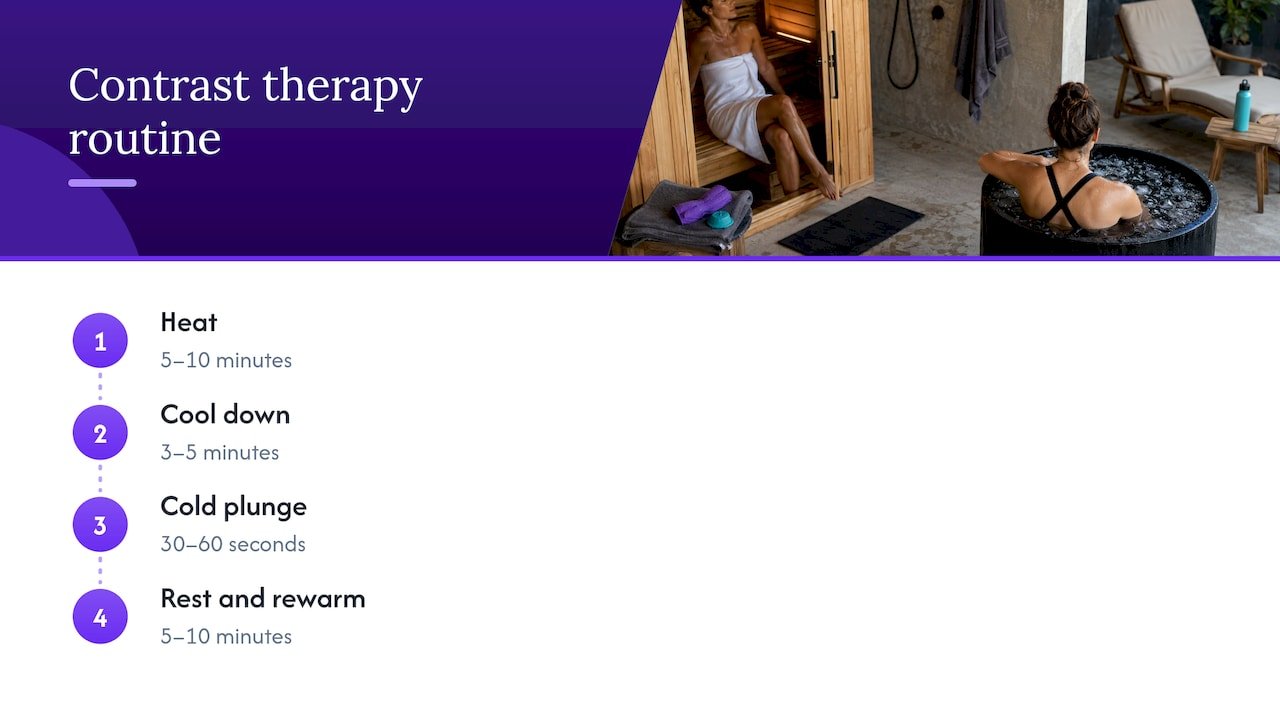
This is a gentle framework built from the durations published by the RNLI paper and the Water Safety Ireland guidance. Treat the numbers as ceilings for a beginner, not targets.
Step 1: Prepare (30 to 60 minutes before)
- Drink water and eat lightly. Arriving hungry or dehydrated makes dizziness more likely.
- Skip alcohol, as the RNLI paper advises.
- Remove jewellery, and take a quick warm shower so you start clean and slightly warm.
- Tell a member of staff if it is your first time or if you have any health condition.
Sweating also costs you salt. Our guide to electrolytes for sauna use covers a sensible approach to replacing them.
Step 2: Heat round (5 to 10 minutes at first)
The RNLI paper advises first-time sauna users to spend no more than 5 to 10 minutes in the sauna, building to a maximum of 10 to 15 minutes once heat-acclimatised. Traditional Finnish sauna bathing, according to the 2025 review, uses heating periods of 5 to 20 minutes with brief cooling in between, so there is room to grow, but not on day one.
Sit on a lower bench if the top feels too hot. Leave at once if you feel light-headed, nauseous or your heart is pounding. A steam room is a gentler alternative for the heat phase if dry heat is uncomfortable for you.
Step 3: Cool down before the plunge (3 to 5 minutes)
This is the step most online protocols skip, and the one Water Safety Ireland’s warning is about. Step out, sit, breathe slowly and let your heart rate settle. A lukewarm to cool shower works well as a bridge. Only move on when your breathing feels calm and controlled.
Step 4: The cold plunge (start with 30 to 60 seconds)
The RNLI paper recommends avoiding more than 10 minutes in cold water and observes that about a minute may be enough for the benefits people propose. The AMA article describes cold therapy as typically 10 to 15°C and advises working up gradually to both hot and cold temperatures.
Enter slowly, one step at a time, keep your head and face out of the water, and focus on a long, steady exhale. Get out if your breathing will not settle or if you feel tingling, confusion or strong dizziness. Our guide to cold plunge temperature ranges helps you choose a starting point.
Step 5: Rest and rewarm (5 to 10 minutes)
Wrap up, sit down, sip water. Stand up slowly: this is when fainting is most likely, as the RNLI paper explains. Do not go straight into another round while you are shivering or breathless.
Step 6: Repeat only if you feel good
Two or three rounds is plenty for a session. A simple beginner plan might look like this:
| Stage | Sauna | Cool-down | Cold plunge | Rest |
|---|---|---|---|---|
| Week 1 | 5 to 8 minutes | 3 to 5 minutes | 30 seconds | 10 minutes |
| Weeks 2 to 3 | 8 to 10 minutes | 3 to 5 minutes | 30 to 60 seconds | 10 minutes |
| Later, if comfortable | 10 to 15 minutes | 3 to 5 minutes | Around 1 to 2 minutes | 10 minutes |
This is a practical way to apply the published ceilings, not a medical prescription. Always finish on a rest, never on the plunge, and have a warm drink afterwards.
A sauna and cold plunge routine you can keep
How often should you do it? No source we have checked sets a recommended weekly number for contrast therapy, so build by feel. Many people start with one session a week and add a second only when they recover well: warm, calm and not exhausted the next day. If you feel wiped out, shorten the rounds rather than skipping the rest.
Timing helps too. Some people prefer an afternoon session for a looser, more relaxed body, and others find cold plunging in the evening settles them. Our pages on cold plunge and sleep and cold plunge before a workout look at when each works best.
What to expect, and what not to expect
The AMA states that research has not shown contrast therapy speeds recovery, nor provides lasting cardiovascular, mental health or immune benefits. We read that as a call to enjoy what is real: that warm, loosened feeling, the mental reset, and the confidence that comes from doing something a little challenging with care. It is a lovely companion to the other things you do for your health, not a replacement for medical care.
For women over 40 in particular, a regular routine can be a structured moment of calm in a busy week, and a reason to move your body gently. Pair it with sleep, good food and strength work, and ask your GP about anything that worries you.
Contrast therapy and hyperbaric oxygen therapy
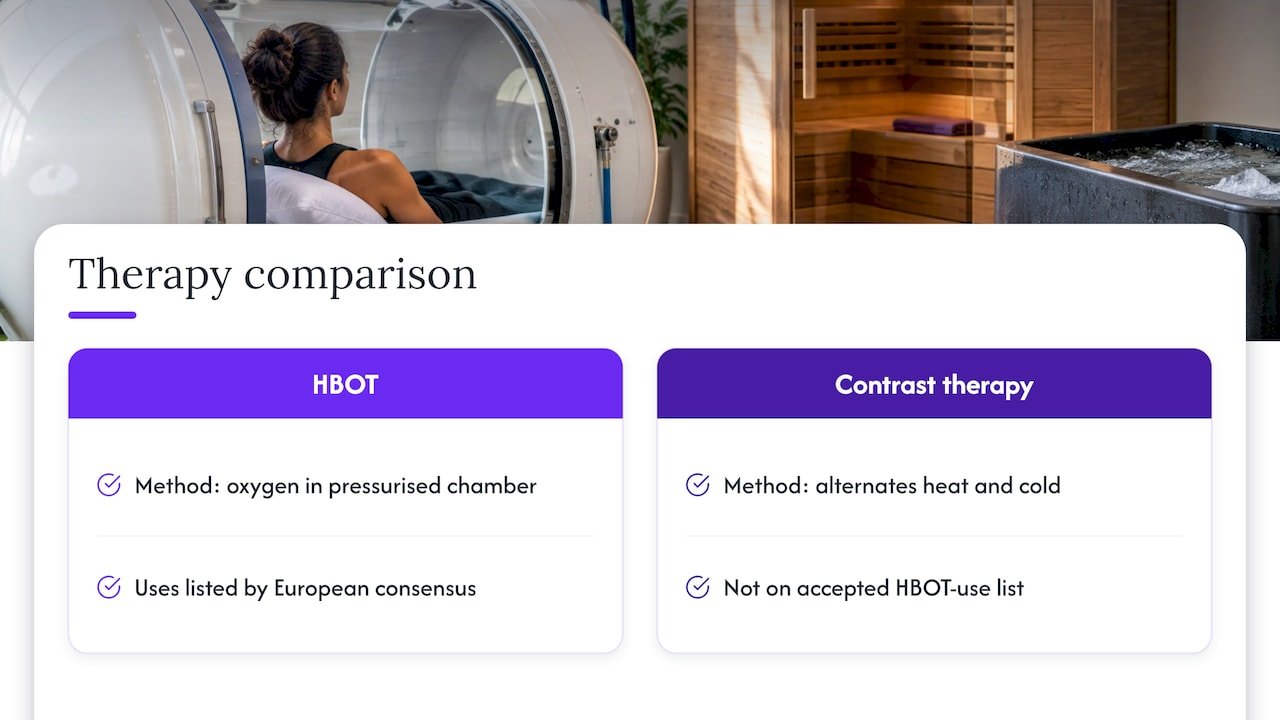
If you came here while researching hyperbaric oxygen therapy (HBOT), the two are separate therapies. HBOT involves breathing oxygen in a pressurised chamber; contrast therapy alternates heat and cold. The accepted medical uses of HBOT are set out in lists such as the Tenth European Consensus Conference, and sauna or contrast therapy does not appear on that list, so they are best planned as distinct parts of a wellness week rather than as one treatment.
At Live5dhealth, we offer both, so you can plan a visit that suits you. Our guides to hyperbaric therapy combined with wellness treatments and what hyperbaric oxygen therapy is are a good place to start.
Why we built our spa around this routine
We created our Sauna, Steam & Cold Plunge Spa so that you can try contrast therapy in a setting that feels calm, clean and supportive. Heat, steam and cold are all in one place, with energised water throughout the facility, so you can move at your own pace through each round.
Many of the women who come to us are over 40 and looking for something restorative rather than punishing. We believe a good routine should leave you feeling uplifted, and that starts with short rounds, proper rests and no pressure to push. If you are rebuilding your strength after illness, we encourage you to talk with your doctor first and then to start gently.
Our holistic focus blends modern technology with ancient wisdom, which is why contrast therapy sits comfortably alongside our other therapies, from red light to hyperbaric oxygen. Your best self awaits, one comfortable round at a time.
Mark
Try it at Live5dhealth
Our Sauna, Steam & Cold Plunge Spa session is €30. It brings the sauna, steam room and cold plunge together in our wellness centre in Boyle, so you can follow the steps above in one visit. Members also enjoy free energised water. Book through our spa day page.
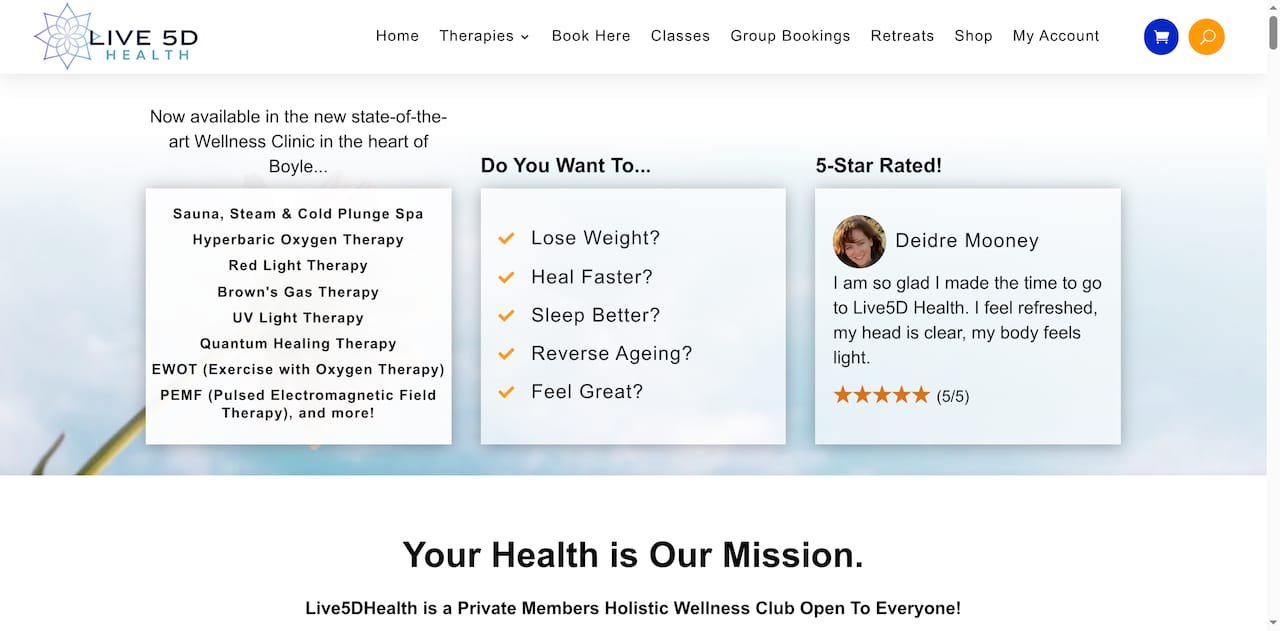
Want to make a longer break of it? Our 3, 5 and 10-day wellness retreats bring several therapies together, and our group booking option suits friends who would like to try the routine together. If you are curious about hyperbaric oxygen therapy, our HBOT page lists sessions at €80 to €120.
FAQ
How long should a first sauna and cold plunge round last?
Aim for 5 to 10 minutes in the sauna and a cold plunge of around a minute or less. The RNLI paper recommends these ranges for newcomers and advises against more than 10 minutes in cold water. Rest properly before any second round.
Is it safe to go from the sauna straight into the cold plunge?
It is better not to. Water Safety Ireland warns that cold-water shock responses are worse when you enter cold water directly from a sauna. Cool down for a few minutes first, enter slowly and keep your breathing steady.
Can I try contrast therapy during or after cancer treatment?
Speak to your oncology team or GP first. The HSE advises people at risk of lymphoedema, including those who have had cancer treatment, that heat from saunas and steam rooms may increase swelling. Your team can advise on temperature, timing and whether cold exposure suits you.
Does contrast therapy help with muscle soreness and stiffness?
The AMA reports it can temporarily reduce pain and improve mobility and muscle relaxation. Evidence for faster recovery or lasting health changes is not established, so think of it as a way to feel looser and more relaxed after a session.
Do I need to book hyperbaric oxygen therapy and contrast therapy together?
No. They are separate therapies, and you can book either on its own. If you would like to try both, speak to our team about arranging your visit.
Sources
- RNLI and Professor Mike Tipton, coastal and waterside saunas (June 2025)
- Cardiometabolic effects of contrast therapy: a systematic review (PMC, 2025)
- AMA: 4 things to know about cold plunges and contrast therapy (July 2026)
- Water Safety Ireland: Guidelines for sauna operators and users (2025)
- HSE: Preventing lymphoedema
- Tenth European Consensus Conference on Hyperbaric Medicine