

Quantum healing is an umbrella name for gentle, mind-and-energy practices: guided meditation, breathwork, hypnosis-style visualisation, hands-on or hands-above energy work, and sound and light sessions. Most people try them to feel calmer, sleep better and recover a sense of control. If you are over 40, living with a health diagnosis, or exploring options such as hyperbaric oxygen, the best approach is to choose techniques that are comfortable, to use them alongside your medical care, and to book them with a centre that combines several therapies under one roof. That is how we approach it at Live5dhealth in Boyle, County Roscommon.
This guide explains the main techniques in plain language, how to practise a simple version at home, what the research says about the calming side of these practices, and how to bring your care team into the conversation.
TL;DR
- Quantum healing covers meditation, visualisation and hypnosis, energy healing (touch, hands-above, distant), and sound and light therapies.
- Meditation and mindfulness have the strongest research behind them for people with cancer, particularly for anxiety, fatigue, stress and quality of life.
- Use these practices alongside your treatment, never instead of it, and tell your doctor or oncology team before you start anything new.
- A simple 5-minute daily practice is a good place to begin, and you can build from there.
- Our centre in Boyle offers Orynoco Quantum Healing Therapy alongside red light, PEMF, hyperbaric oxygen and a spa.
Table of Contents
- What people mean by quantum healing
- The main quantum healing techniques
- How to do a simple quantum healing meditation at home
- What the research shows about the calming side
- Using these techniques safely if you have cancer
- Building a calm routine around the techniques
- Why combining therapies under one roof helps
- Our perspective
- Try Orynoco Quantum Healing Therapy in Boyle
- FAQ
- Sources
What people mean by quantum healing
The phrase borrows its name from physics, but in wellness it is used loosely. Practitioners describe the body as a field of energy and aim to help that energy feel balanced, coherent or “in flow”. Sessions are usually quiet, restful and deeply relaxing. You are not asked to do anything strenuous.
For a woman in her forties, fifties or beyond, the appeal is often practical. Many of us carry stress from work, family and caring roles, and perimenopause or menopause can bring disrupted sleep and low energy. For someone going through cancer care, the appeal is usually about finding calm in a difficult time. Both are reasonable reasons to look for a restorative practice.
If you want a longer look at how a session feels from the chair, our guide on how quantum healing sessions feel and what science shows goes into it in more detail.
The main quantum healing techniques
The searches people make for “methods”, “meditation” and “energy healing” all point at the same handful of approaches. Here they are in plain terms.
1. Quantum healing meditation and guided visualisation
You sit or lie down, follow a voice or a script, and focus on your breath and on images of calm, light or warmth. Quantum meditation is simply this practice with an energy-field theme: you imagine tension softening and your whole body settling into balance.
This is the most accessible technique and the one you can do at home. It is also the one closest to mainstream mindfulness, which is well studied.
2. Hypnosis-style sessions
One well-known form is Quantum Healing Hypnosis Technique, which uses visualisation to guide you into a very deep, trance-like state of relaxation. Sessions of this type are long, often several hours, and usually include a conversation beforehand, the hypnosis itself, and a recording to listen to afterwards. Practitioners generally ask you to avoid alcohol the day before and stimulants such as coffee on the morning. If you have a history of anxiety, trauma or any mental health condition, mention it to your GP and to the practitioner first.
3. Energy healing: touch, hands-above and distant
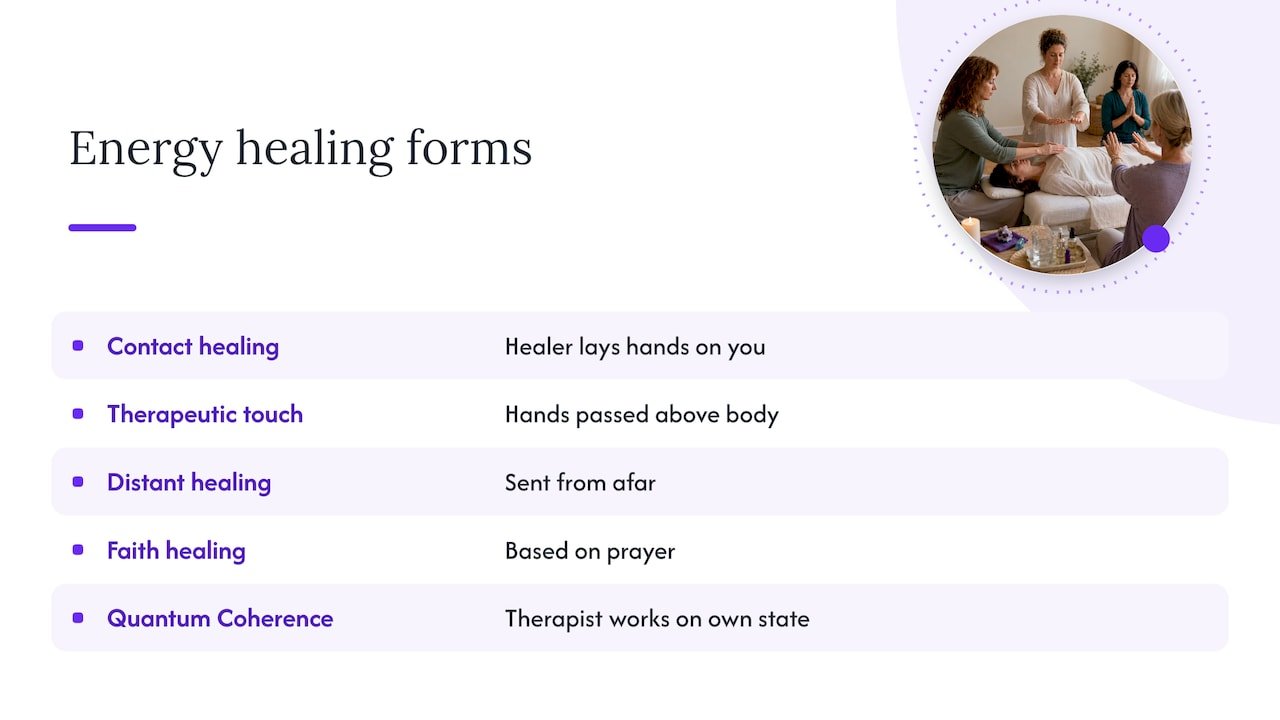
Cancer Research UK, a UK cancer charity, describes the main forms of healing: contact healing, where the healer lays hands on you; therapeutic touch, where hands are passed above the body; absent or distant healing, sent from afar; and faith healing, based on prayer. It reports no side effects from healing, with one caution: people with uncontrolled epilepsy should be careful, because very deep relaxation could in theory trigger a seizure.
In Ireland you may also come across Quantum Coherence Therapy, developed in this country, in which the therapist works on their own state rather than transferring energy to you. It can be used on its own or alongside massage.
4. Sound and light therapies
Singing bowls, tuned tones, gentle pulses of light and vibration are used to draw the nervous system into a slower rhythm. If this appeals, our overview of vibroacoustic therapy and what the research shows explains the idea of using sound you can feel as well as hear.
5. Remote and frequency-based work
Some practitioners offer “remote” sessions or use recorded healing frequencies. If you prefer to explore from home, you can browse healing frequencies and remote healing in our online shop.
How to do a simple quantum healing meditation at home
You do not need special equipment. Here is a gentle routine many women find easy to keep.
- Choose a quiet spot. A comfortable chair or your bed is fine. Silence your phone.
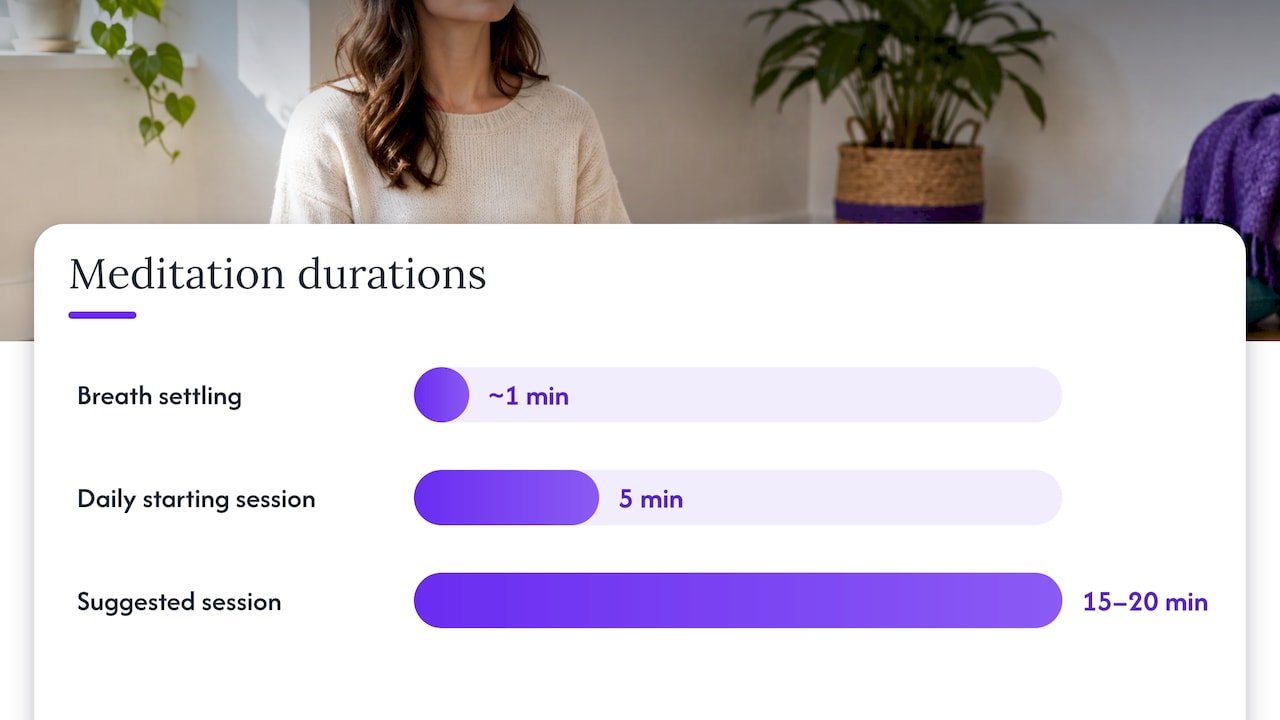
- Settle your breath. Breathe in through your nose for a count of four, and out slowly for a count of six. Do this for about a minute.
- Scan your body. Move your attention from your feet to the top of your head, softening each area as you go.
- Add an image. Picture a warm light filling your body, moving to any area that feels tense or tired.
- Rest in it. Stay for a few minutes. When thoughts wander, return to your breath without judging yourself.
- Come back slowly. Move your fingers and toes, open your eyes, and take a glass of water.
Cancer Research UK notes that most meditation teachers suggest 15 to 20 minutes twice a day, but that five minutes daily is better than nothing. Start small. Consistency matters far more than length.
If you are living with depression, anxiety, mania or psychosis, ask your doctor and a qualified meditation instructor before starting, because focusing on the present moment can sometimes stir difficult feelings. For most people, the same source describes meditation as generally very safe, with rare side effects, and usually safe alongside cancer treatment.
What the research shows about the calming side
The strongest evidence sits around meditation and mindfulness, the foundation of quantum meditation.
- The US National Center for Complementary and Integrative Health reports that a 2020 review of 26 studies with 3,476 participants found mindfulness-based approaches reduced anxiety, depression, fatigue and stress in people with cancer, and improved quality of life.
- A 2022 systematic review of 104 meditation trials, in which cancer was the most frequent condition, found the highest shares of positive results for sleep (73.9%) and fatigue (68.4%). For cancer-related fatigue, 8 trials were positive and 2 were not significant.
- Cancer Research UK says small studies suggest mindfulness-based stress reduction may help mood, concentration, anxiety, nausea and sleep, and that larger studies would tell us more.
So the honest, encouraging message is this: meditation-based practices are a recognised way to support wellbeing, particularly energy, rest and mood, during and after cancer care. They are complementary. They sit beside your treatment, not in place of it. If fatigue is your main concern, our practical guide to managing cancer fatigue naturally pairs well with a daily meditation habit, and our page on quantum healing for short-term anxiety relief covers that theme in more depth.
Using these techniques safely if you have cancer
This is where we want to be especially clear, because your health comes first.
- Talk to your doctor first. The Irish Cancer Society says it is very important to speak to your doctor before using any complementary therapy, even one you have used safely before. Treatment timing can matter: for example, radiation can make skin sensitive, so a massage may need to wait.
- Keep your standard treatment. The Irish Cancer Society’s position statement says complementary therapies are not meant to cure or treat cancer. Think of them as support for coping with anxiety, fatigue, nausea, pain, sleep problems and stress.
- Ask good questions. The NCCIH suggests asking your care team what is known about the benefits and risks, what side effects are possible, and whether the approach could interfere with your treatment.
- Be wary of anyone promising a cure. Cancer Research UK advises avoiding healers who claim they can cure cancer. A trustworthy practitioner talks about comfort, calm and wellbeing.
- Choose a qualified practitioner. In Ireland, a national working group on complementary therapists recommended in 2005 that every therapist be qualified and registered with a professional association. Ask about training, insurance and experience with clients who are in treatment.
- Tell us your history. Before any session at our centre, let us know about your diagnosis, medicines and treatment dates.
If you are also considering hyperbaric oxygen or a sauna, raise those with your oncologist too. Our guide, Ask Your Oncologist First: Sauna Safety During Chemotherapy, shows the kind of questions to bring, and our overview of alternative cancer therapies helps you frame the conversation.
Building a calm routine around the techniques
Quantum healing works best as part of a rhythm rather than a one-off. A week might look like this:
| Day | Practice | Time |
|---|---|---|
| Daily | Breath-led meditation at home | 5 to 15 minutes |
| Twice weekly | Gentle movement, a walk or stretching | 20 to 30 minutes |
| Weekly | Professional session such as holistic or oncology-aware massage, or a quantum healing session | 45 to 60 minutes |
| As advised | Heat, red light or hyperbaric oxygen after clearing it with your care team | Per session |
If massage appeals, read about oncology massage benefits in Ireland for what a safer session looks like.
Why combining therapies under one roof helps
Most women we speak with do not want five appointments in five places. They want a calm space where a quiet session, a warm sauna and a light-based treatment can happen on the same visit. Our Boyle centre is set up that way. Alongside quantum healing, we offer red light therapy, PEMF, hyperbaric oxygen therapy, EWOT, a hydrogen bar, holistic massage, a gym and a luxury spa with sauna, steam room and cold plunge. Members also receive free energised water. If you would like to understand how the therapies fit together, our guide to combined wellness treatments with hyperbaric therapy is a good place to start.
Our perspective
We built Live5dhealth around a simple idea: modern technology and ancient wisdom belong in the same room. Quantum healing is the quiet end of that spectrum. It asks you to slow down, breathe and give your body the conditions it needs to feel restored.
Women over 40 often tell us they have spent years looking after everyone else. A calm session, a warm sauna and a few minutes of focused breathing are a way of putting yourself back on the list. We have gathered the most advanced collection of healing technologies in Ireland so that you can find the combination that feels right for you, at your own pace.
If you are in cancer care, we welcome you with respect for your treatment plan. Share your history, bring your questions, and let your medical team stay at the centre of your care. Our role is to add comfort, calm and hope around it.
Mark
Try Orynoco Quantum Healing Therapy in Boyle
Our Orynoco Quantum Healing Therapy is one of the therapies you can book at our wellness centre in Boyle, County Roscommon. You can combine it with a spa visit (sauna, steam and cold plunge from €30), red light therapy (€20 to €40) or hyperbaric oxygen therapy (€80 to €120). For longer stays, we offer 3, 5 and 10-day total wellness retreats.
See the full list of therapies on our homepage, book through our booking page, or explore our wellness retreats. Coming with friends? Our group bookings are made for that.
FAQ
Can I do quantum healing at home?
Yes, in the form of guided meditation, breathwork and visualisation. Start with five minutes a day in a quiet place and build up gradually. Longer or deeper sessions, such as hypnosis-style work or energy healing, are best done with a trained practitioner.
Is quantum healing safe during cancer treatment?
Meditation is generally very safe and usually fine alongside cancer treatment, according to Cancer Research UK. Always speak to your doctor or oncology team before adding any complementary therapy, and tell your practitioner about your diagnosis and treatment dates. Use these practices as support alongside your treatment.
What should a first session feel like?
Expect a quiet room, a short chat about your health and goals, and then a period of deep relaxation. Many people feel calm and sleepy afterwards, so keep the rest of your day gentle and drink water.
How is quantum healing different from meditation?
The two overlap a great deal. Quantum healing adds an energy-field theme and may include hypnosis, touch or hands-above work, or sound and light. Meditation is the simplest, most widely studied foundation of all of them.
Can I combine quantum healing with hyperbaric oxygen therapy?
Many people enjoy both in one visit because they suit a restful, restorative day. If you have a health condition, check with your doctor first, then tell us your history when you book.
Sources
- Cancer Research UK: Meditation
- Cancer Research UK: Healing
- NCCIH: Cancer and Complementary Health Approaches
- Systematic review of the medical applications of meditation (2022)
- Irish Cancer Society: Cancer and complementary therapies
- Irish Cancer Society: Position statement on complementary and alternative therapies
- Report of the National Working Group on the Regulation of Complementary Therapists (2005)