

A soft hyperbaric chamber is an inflatable, portable enclosure that gently increases the surrounding air pressure to enhance oxygen absorption in the body, primarily for wellness and recovery rather than clinical treatment. Also known as mild hyperbaric oxygen therapy (mHBOT), this technology sits in a distinct category from the hospital-grade hard-shell units used for serious medical conditions. If you are exploring what is soft hyperbaric chamber technology and whether it suits your health goals, the answer depends heavily on understanding what these devices can and cannot do. This guide covers the mechanics, the evidence, and the practical realities so you can make a genuinely informed decision.
How does a soft hyperbaric chamber work?
A soft hyperbaric chamber functions by sealing you inside an inflatable structure and gradually increasing the internal air pressure above normal atmospheric levels. The chamber itself is constructed from durable materials such as thermoplastic polyurethane (TPU) or reinforced nylon, which hold pressure safely while remaining lightweight enough for home or clinic use.
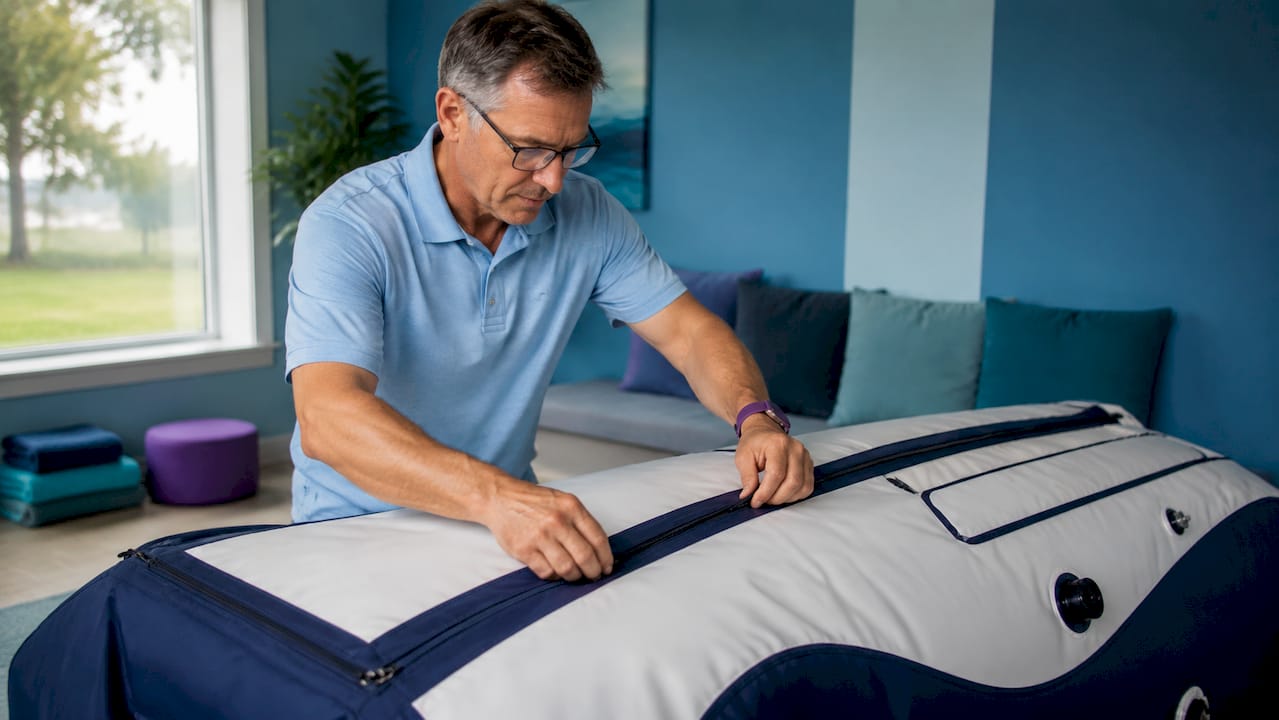
The operating pressure range for soft chambers is 1.3 to 1.5 ATA, where ATA stands for atmospheres absolute. One ATA is normal sea-level pressure. At 1.3 ATA, you are breathing air at roughly the equivalent pressure of 10 metres below sea level. That modest increase is enough to dissolve slightly more oxygen into your blood plasma and tissues than normal breathing allows.
Oxygen delivery in soft chambers works in one of two ways:
- Ambient air pressurisation: The chamber pumps in regular air, which contains approximately 21% oxygen. The increased pressure means your lungs absorb more of that oxygen per breath.
- Concentrator-enhanced airflow: Some setups pair the chamber with an oxygen concentrator, raising the oxygen concentration inside to 30–40% for a more pronounced effect.
The physiological result is a mild increase in oxygen absorption, supporting relaxation, tissue recovery, and general wellness. This is meaningfully different from the 100% oxygen delivered at high pressure in clinical hard-shell chambers, but it is not without effect.
Pro Tip: If you use a concentrator alongside your soft chamber, confirm the device is rated for hyperbaric use. Standard home concentrators are not always designed for pressurised environments.
Sessions typically run for 60 to 90 minutes, and most users operate the device themselves without clinical supervision. The learning curve is low, and most manufacturers provide clear setup instructions.
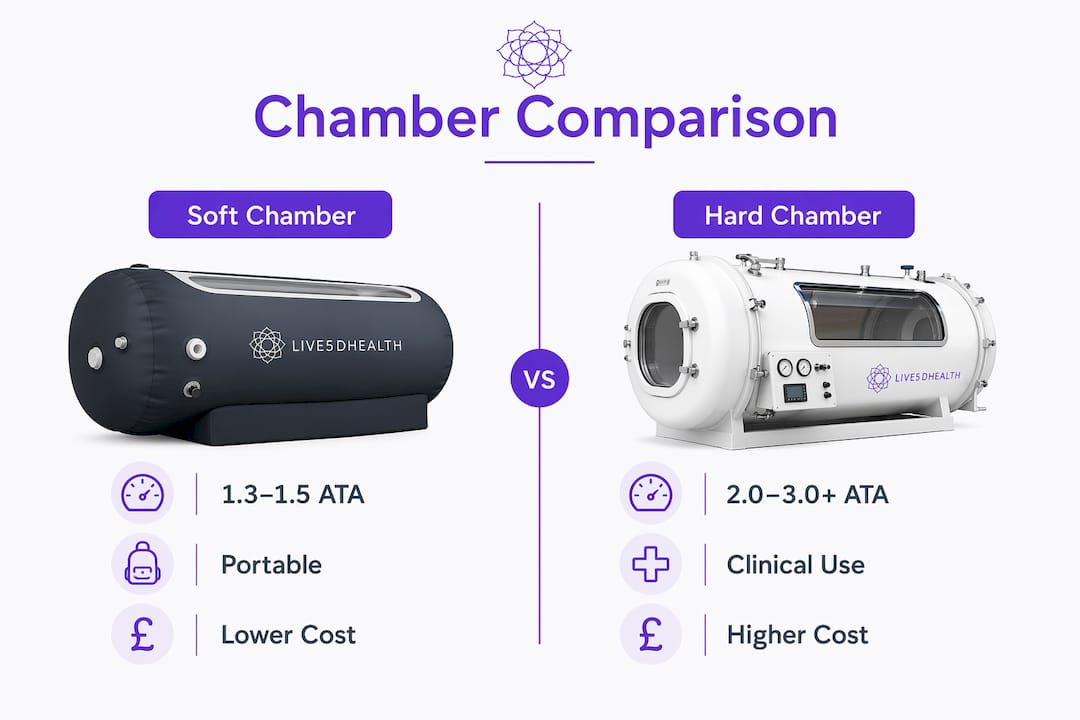
Soft vs hard hyperbaric chamber: key differences
The distinction between soft and hard chambers is not simply a matter of materials. It is a difference in physics, clinical capability, and regulatory standing.
| Feature | Soft Chamber | Hard Chamber |
|---|---|---|
| Pressure range | 1.3–1.5 ATA | 2.0–3.0+ ATA |
| Arterial oxygen (mmHg) | ~230 mmHg | ~1,824 mmHg at 2.4 ATA |
| Oxygen concentration | 21–40% (ambient or concentrator) | 100% medical-grade oxygen |
| Purchase cost | £3,200–£16,000 | £64,000–£120,000+ |
| Session cost | £60–£160 | £200–£480 |
| FDA clearance | Class II (acute mountain sickness only) | Multiple UHMS-approved indications |
| Supervision required | No | Yes |
| Bacteriostatic capability | No | Yes (above 1.5 ATA) |
The arterial oxygen figures tell the real story. Hard chambers at 2.4 ATA deliver roughly 1,824 mmHg arterial oxygen compared to approximately 230 mmHg in soft chambers. That is not a marginal gap. It explains why hard chambers can treat conditions like carbon monoxide poisoning, radiation injury, and diabetic foot ulcers, while soft chambers cannot.
Soft chambers cannot achieve the 1.5 ATA threshold required for bacteriostatic effects, meaning they are physically incapable of fighting infection or promoting wound healing in the way clinical HBOT does. This is not a limitation of design quality. Physics, not marketing, determines what pressure a flexible inflatable structure can safely sustain.
Cost is where soft chambers genuinely shine. A clinical hard-shell session can cost £200–£480, while a soft chamber session runs £60–£160. For individuals using hyperbaric therapy as a long-term wellness tool rather than a medical treatment, that difference matters enormously. You can also learn more about how hyperbaric chambers work to understand the full spectrum of options.
What does a typical session involve?
A soft hyperbaric chamber session follows a predictable and manageable routine. Knowing what to expect removes any anxiety and helps you get the most from each visit.
- Preparation (10–15 minutes): Lay the chamber flat, connect the air pump or compressor, and check all seals and zips. Wear comfortable, loose clothing. Remove jewellery and electronic devices.
- Entry and initial pressurisation: Climb inside and seal the entry. The pump begins inflating the chamber gradually. You will notice a slight increase in ambient sound and a sensation of pressure in your ears.
- Ear equalisation: As pressure rises, equalise ear pressure using techniques such as swallowing, yawning, or the Valsalva manoeuvre (gently pinching your nose and blowing softly). This is the most common challenge for new users, particularly those with sinus congestion.
- Main session (60–90 minutes): Once at target pressure, you rest, read, listen to audio, or simply relax. Many users report a calm, slightly drowsy state.
- Depressurisation (10–15 minutes): The chamber releases pressure gradually. Equalise your ears again during this phase. Rushing depressurisation increases the risk of barotrauma, so never override the release valve.
Pro Tip: If you experience persistent ear discomfort during pressurisation, stop the session and consult a GP before trying again. Those with a history of ear surgery or perforated eardrums should seek medical advice before using any hyperbaric device.
The mild pressure environment makes soft chambers low-risk and tolerable for home use without clinical supervision, which is one of their most practical advantages. Adverse events are rare and typically limited to ear discomfort or mild claustrophobia.
What are the benefits of soft hyperbaric oxygen therapy?
The benefits of soft hyperbaric oxygen therapy are real but must be understood within clear boundaries. There are no published randomised controlled trials demonstrating neurological or wound healing benefits specifically from soft chambers. Hard-shell chambers carry established clinical data at 1.5–2.4 ATA for a range of serious conditions. Soft chambers do not share that evidence base.
What the research does support is a range of general wellness and recovery advantages:
- Increased tissue oxygenation: Even at 1.3 ATA, more oxygen reaches plasma and soft tissues than at sea-level breathing.
- Athletic recovery support: Reduced muscle fatigue and faster recovery between training sessions are commonly reported. The sports recovery applications of mild HBOT are among its most credible uses.
- Relaxation and stress reduction: The enclosed, quiet environment combined with mild oxygenation produces a measurably calm physiological state for many users.
- Post-clinical HBOT maintenance: Individuals who have completed a course of clinical hard-chamber therapy sometimes use soft chambers to maintain routine oxygenation support.
- General wellness and vitality: Users report improved sleep quality, mental clarity, and energy levels, though these outcomes remain largely anecdotal.
Soft chambers are appropriate for general wellness, athletic recovery, and maintaining routine post-clinical HBOT rather than treating serious, UHMS-approved medical conditions. That framing is not a criticism. It is an accurate description of a genuinely useful tool in the right context.
A note on regulatory standing: Soft chambers are FDA-cleared as Class II devices only for acute mountain sickness. All other uses, including wellness and chronic condition management, are off-label. Insurance coverage is generally unavailable for these applications, so factor that into your planning.
If you are considering a soft chamber to manage a serious medical condition, speak with your doctor first. These devices are not a substitute for clinically indicated HBOT. They are, however, a credible addition to a broader wellness routine for the right person.
Key takeaways
Soft hyperbaric chambers deliver genuine wellness and recovery benefits at modest pressure levels, but they cannot replace clinical hard-shell HBOT for medically serious conditions.
| Point | Details |
|---|---|
| Pressure and oxygen limits | Soft chambers operate at 1.3–1.5 ATA, delivering far less arterial oxygen than hard chambers at 2.4 ATA. |
| No clinical evidence for serious conditions | No published RCTs support soft chambers for wound healing or neurological repair. |
| Cost advantage is significant | Session costs of £60–£160 compare favourably to £200–£480 for clinical hard-shell sessions. |
| Regulatory classification matters | FDA clearance covers acute mountain sickness only; all wellness uses are off-label. |
| Best suited for wellness and recovery | Athletes, post-clinical HBOT users, and general wellness seekers benefit most from soft chamber use. |
Why i think soft chambers are misunderstood in both directions
The conversation around soft hyperbaric chambers tends to swing between two unhelpful extremes. Some wellness brands oversell them as near-miraculous recovery tools. Some medical commentators dismiss them entirely because they lack hard-chamber clinical data. Neither position serves you well.
From what I have observed, the people who get the most from soft chambers are those who approach them with clear, realistic expectations. An athlete using a soft chamber three times per week as part of a structured recovery programme is likely to notice genuine benefit. Someone hoping it will resolve a chronic neurological condition without medical supervision is setting themselves up for disappointment.
The accessibility argument is real and worth taking seriously. The fact that you can use a soft chamber at home, without clinical supervision, at a fraction of the cost of hard-chamber sessions, makes consistent use genuinely possible for people who would otherwise have no access to any form of hyperbaric therapy. Consistency matters in wellness. A tool you actually use regularly will outperform a superior tool you use twice.
My honest advice: treat a soft chamber as you would any other recovery modality, whether that is cold water immersion, infrared sauna, or breathwork. It works best as part of a broader, well-considered wellness approach. If you have a serious medical condition, get proper clinical assessment first. If you are a wellness-focused individual looking to support recovery and general vitality, a soft chamber is a credible, low-risk option worth exploring.
— Mark
Explore wellness therapies at Live5dhealth
If you are inspired to take your recovery and wellness further, Live5dhealth in Boyle, County Roscommon, offers a range of therapies that complement the benefits of mild hyperbaric oxygen therapy beautifully.
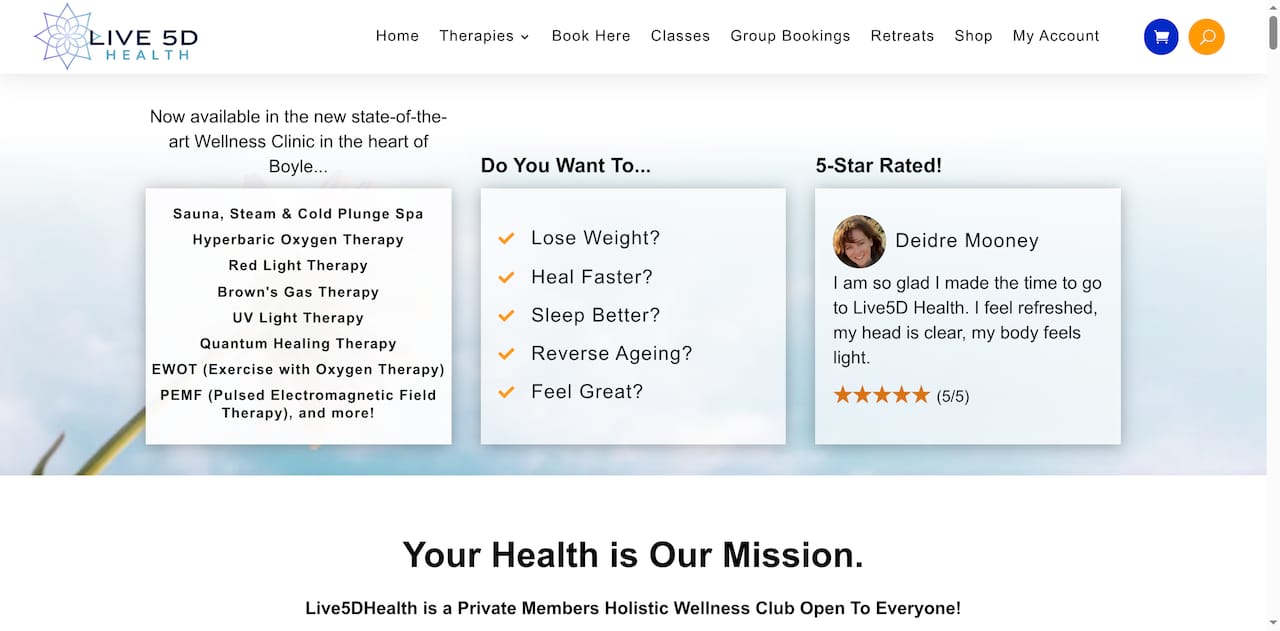
From luxury spa treatments including sauna, steam, and cold plunge to healing retreat experiences in the west of Ireland, Live5dhealth brings together the best of evidence-informed wellness in one place. You can also explore wellness centre alternatives if you are comparing options across Ireland. Whether you are an athlete, someone managing a chronic condition, or simply committed to feeling your best, Live5dhealth has the expertise and environment to support your goals.
FAQ
What is a soft hyperbaric chamber used for?
Soft hyperbaric chambers are used primarily for general wellness, athletic recovery, relaxation, and maintaining routine oxygenation support after clinical HBOT. They are FDA-cleared only for acute mountain sickness; all other applications are off-label.
Can anyone use a soft hyperbaric chamber safely?
Most healthy adults can use soft chambers safely without clinical supervision, but individuals with ear conditions, sinus problems, or serious medical diagnoses should consult a GP first. The mild pressure environment makes adverse events rare.
How does a soft hyperbaric chamber differ from a hard chamber?
Soft chambers operate at 1.3–1.5 ATA using ambient or concentrator-enhanced air, while hard chambers reach 2.0–3.0+ ATA with 100% medical oxygen. Hard chambers deliver significantly higher arterial oxygen levels and are approved for treating serious medical conditions.
How long does a soft hyperbaric chamber session last?
A typical session lasts 60–90 minutes, with an additional 10–15 minutes for setup and pressurisation. Users operate the device themselves and can read, rest, or listen to audio during the session.
Are there any conditions a soft hyperbaric chamber cannot treat?
Soft chambers cannot treat infections, non-healing wounds, or neurological conditions because they cannot reach the 1.5 ATA threshold required for bacteriostatic effects. These conditions require clinical hard-shell HBOT under medical supervision.