
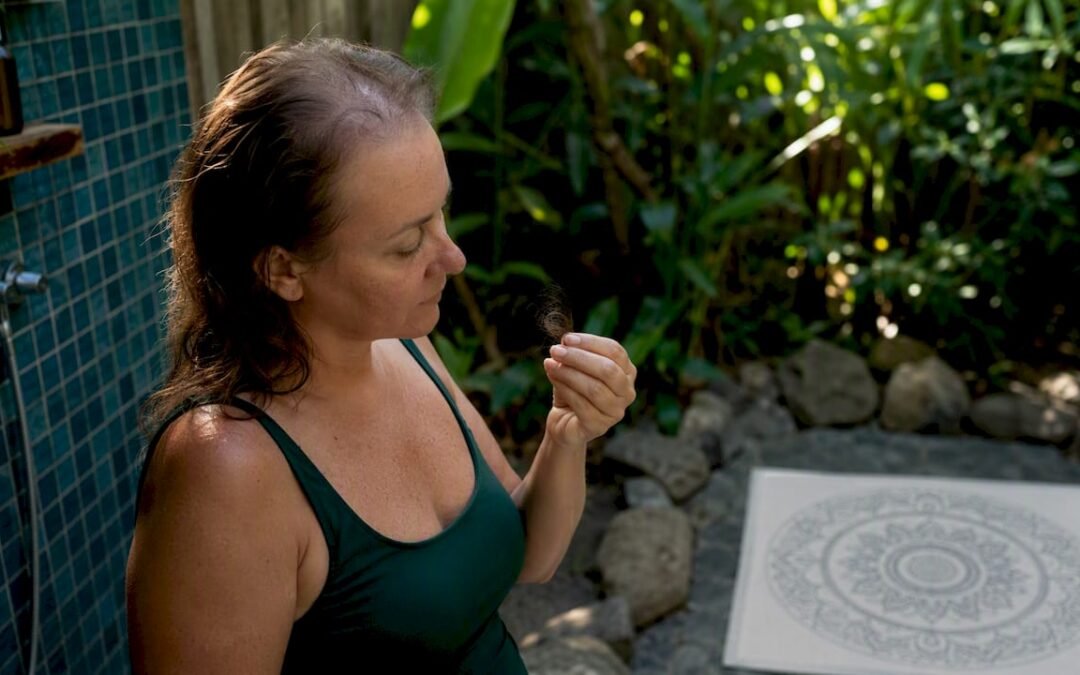
Hair thinning after menopause is driven primarily by falling oestrogen and progesterone, which shortens the hair’s active growth phase and leaves follicles increasingly sensitive to androgens. The result is follicular miniaturisation: individual hairs become finer, shorter, and less dense over time. Population studies confirm a high prevalence of hair thinning in postmenopausal women, and the quality-of-life impact is significant enough to warrant proper clinical assessment rather than a wait-and-see approach. Multiple causes often overlap, so nutrition, thyroid function, and medications all deserve attention alongside hormonal changes. The good news is that several evidence-based options are available through the NHS and privately in the UK. Start by booking a GP appointment to request core blood tests, then use the sections below to understand your options.
Key takeaways
Menopausal hair thinning is driven by falling oestrogen and progesterone, relative androgen sensitivity, and follicular metabolic changes, but it is a manageable condition with evidence-based options available through the NHS and privately in the UK.
| Point | Details |
|---|---|
| Hormonal cause is central | Falling oestrogen shortens the hair growth phase and increases androgen sensitivity, causing follicle miniaturisation. |
| Get tested before treating | Ask your GP for thyroid, ferritin, vitamin D, and iron tests; correcting deficiencies can improve shedding significantly. |
| Minoxidil is first-line | Topical minoxidil (Regaine) has the strongest evidence for female-pattern thinning; allow four to six months before judging results. |
| Realistic goals matter | Stabilisation and modest regrowth are achievable; full restoration to pre-menopausal density is rarely realistic. |
| Live5dhealth complements care | Wellness therapies and targeted supplements at Live5dhealth support circulation, stress reduction, and nutritional status alongside medical treatment. |
Table of Contents
- Why hair thins after menopause: the hormonal story
- Which types of hair loss appear around menopause?
- What you will notice, and how long thinning may continue
- When should you see a GP, and what tests will they request?
- Evidence-based medical treatments available in the UK
- Diet, supplements, and hair-care measures that genuinely help
- What the research actually says about menopausal hair thinning
- What to expect after starting treatment
- An honest perspective on hair thinning after menopause
- How Live5dhealth can support you alongside clinical care
- Sources
Why hair thins after menopause: the hormonal story
The central mechanism is straightforward. During perimenopause and menopause, oestrogen and progesterone levels fall sharply. Both hormones support the anagen (active growth) phase of the hair cycle, so when they decline, the growth phase shortens and more follicles shift prematurely into the resting and shedding phases. At the same time, androgens such as testosterone and dihydrotestosterone (DHT) do not necessarily rise in absolute terms, but their effect on scalp follicles becomes relatively stronger without oestrogen’s counterbalancing influence. Research confirms that this relative androgen excess drives follicular miniaturisation, the process by which follicles progressively produce thinner, shorter hairs until some stop producing visible hair altogether.
Beyond direct hormone-receptor effects, vascular and metabolic changes in the follicular unit also contribute. Reduced microcirculation to the scalp and altered local follicle metabolism mean that even systemic hormonal treatment alone may not fully restore density. Think of it as a “menopause of the follicle itself,” where energy supply and blood flow to the hair root are compromised alongside the hormonal shift. This is why menopausal cardiovascular and vascular changes can have a knock-on effect on scalp health.
Several non-hormonal factors commonly co-occur and compound the picture:
- Iron and ferritin deficiency — one of the most common and correctable contributors to hair shedding in women
- Thyroid dysfunction — both hypothyroidism and hyperthyroidism disrupt the hair cycle
- Vitamin D deficiency — increasingly recognised as a factor in follicle cycling
- Protein inadequacy — hair is almost entirely protein; chronic low intake accelerates shedding
- Medications — antihypertensives, anticoagulants, and some antidepressants can trigger or worsen shedding
- Chronic stress — anxiety and neuroendocrine stress responses at menopause can push follicles into a resting phase
Which types of hair loss appear around menopause?
Not all menopausal hair loss follows the same pattern, and identifying the type shapes the treatment path.
Female-pattern hair loss (androgenetic alopecia) is the most common presentation. It typically appears as diffuse thinning at the crown and a widening of the part line, rather than a receding frontal hairline as seen in men. It is gradual and progressive, and tends to become noticeable around perimenopause when hormonal protection wanes.
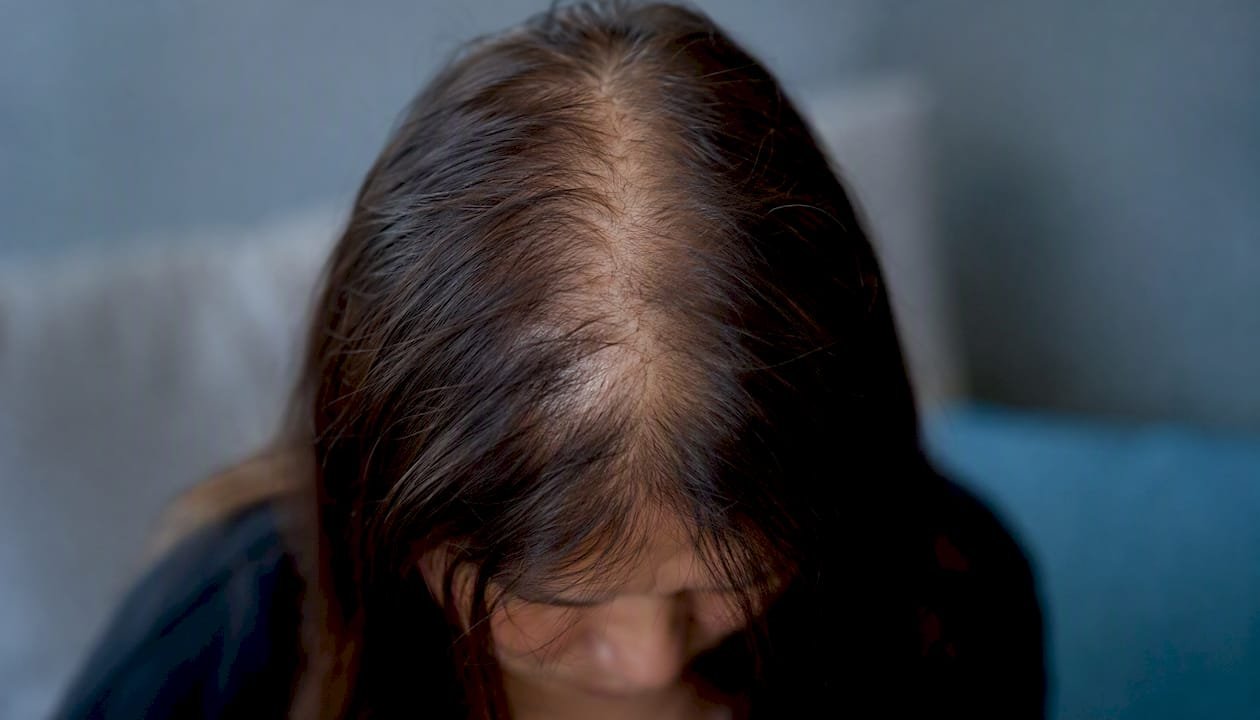
Telogen effluvium presents differently: a sudden, diffuse shedding across the whole scalp, often triggered by a physiological or emotional stressor such as surgery, illness, rapid weight loss, or the hormonal upheaval of menopause itself. Telogen effluvium generally recovers over months once the trigger is removed, which makes it important to distinguish from androgenetic alopecia where the prognosis and treatment differ substantially.
Frontal fibrosing alopecia (FFA) is a rarer but increasingly recognised scarring alopecia that causes a band-like recession of the frontal hairline. It requires prompt specialist assessment because scarring is irreversible.
Red-flag signs that need urgent GP referral:
- Rapid or extensive shedding over weeks rather than months
- Patchy, well-defined areas of complete hair loss (possible alopecia areata)
- Scalp pain, itch, burning, or visible scarring
- Systemic symptoms: fatigue, weight change, palpitations, or skin changes alongside hair loss
What you will notice, and how long thinning may continue
The earliest signs are often subtle. Most women first notice more hair collecting in the shower drain or on the brush, a part line that looks slightly wider in photographs, or a ponytail that feels thinner. Crown density tends to reduce before the frontal hairline is affected, which distinguishes female-pattern loss from male-pattern baldness.
Androgenetic changes are slow. Thinning typically progresses over years rather than months, and without treatment it tends to continue rather than plateau. Telogen effluvium moves faster: shedding often peaks around three to six months after the trigger and then gradually resolves, though it can persist if the underlying cause remains unaddressed.
Common early signs to watch for:
- A wider parting, especially visible under bright light or in photographs
- Reduced ponytail circumference
- More scalp visible at the crown when hair is wet
- Increased hair on pillowcases, in the shower, or on clothing
Pro Tip: Take a standardised photograph of your parting under the same lighting every four to six weeks. This removes the subjectivity of daily self-assessment and gives your GP or trichologist an objective record of progression or stabilisation.
When should you see a GP, and what tests will they request?
See your GP promptly if you notice rapid shedding, any of the red-flag signs listed above, or if hair loss is causing significant distress. NHS guidance confirms that hair loss has many causes and that a proper assessment is the right starting point, not self-diagnosis.
Reasons to seek an urgent appointment:
- Shedding that is sudden and severe (handfuls rather than the normal 50–100 hairs per day)
- Visible scalp scarring or persistent itch and burning
- Patchy loss with well-defined edges
- Hair loss accompanied by systemic symptoms (fatigue, weight change, cold intolerance)
Core blood tests your GP is likely to request:
- Thyroid function: TSH and free T4 (to rule out thyroid-driven loss)
- Ferritin and full iron studies (ferritin is the most sensitive marker for iron-related shedding)
- Full blood count (to identify anaemia)
- Vitamin D (25-OH vitamin D)
- Female endocrine panel where indicated: LH, FSH, testosterone, SHBG, prolactin
The typical UK pathway:
- GP assessment — history, examination, medication review, and blood tests
- Results review — treat any identified deficiency (iron, thyroid, vitamin D) and reassess
- Referral criteria — if pattern is consistent with androgenetic alopecia or the diagnosis is unclear, your GP can refer to NHS dermatology or you can self-refer to a private trichologist (the Institute of Trichologists maintains a register of qualified practitioners in the UK)
- Specialist assessment — a dermatologist or trichologist may perform dermoscopy, a scalp biopsy, or a trichogram to confirm the diagnosis before recommending medical treatment
Evidence-based medical treatments available in the UK
Several treatments have meaningful evidence behind them for menopausal hair thinning. The right choice depends on your diagnosis, overall health, and personal priorities.
Topical minoxidil (Regaine)
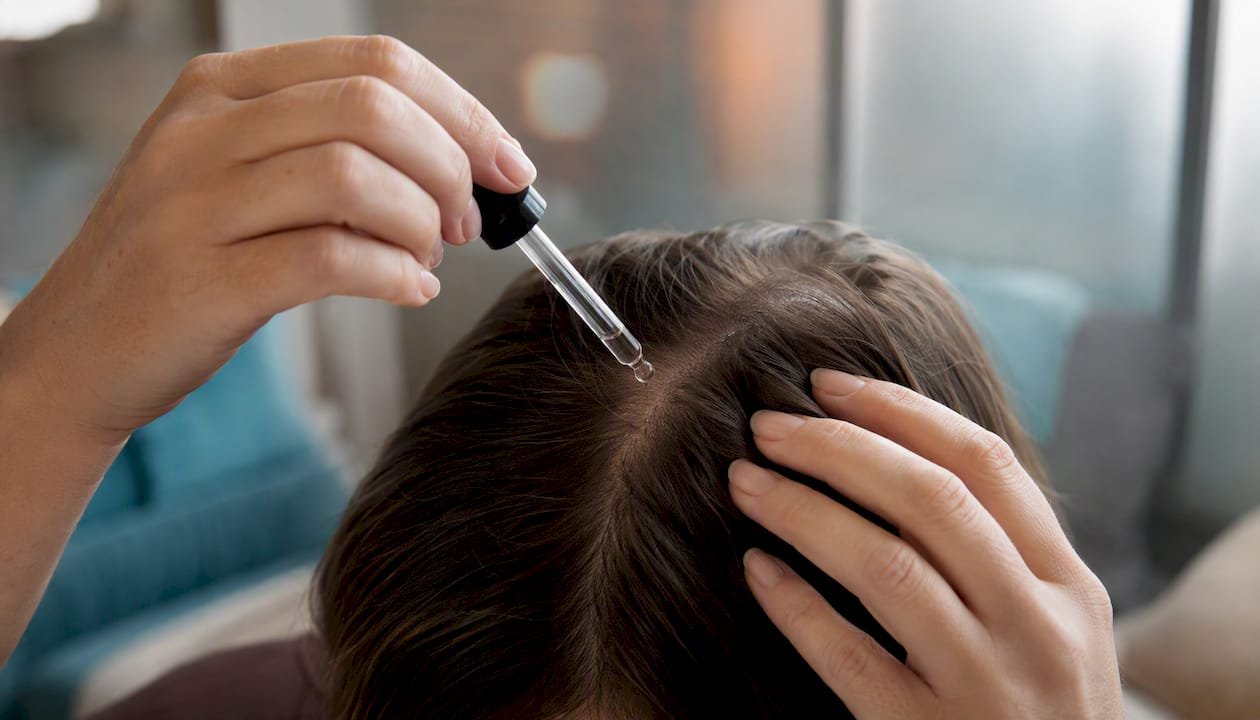
Topical minoxidil has consistent evidence as a first-line therapy for female-pattern hair loss, working by prolonging the anagen phase and increasing follicle size. The 2% and 5% solutions and 5% foam are available over the counter in the UK under the Regaine brand. Visible improvement typically takes four to six months, and the benefit requires ongoing use — stopping treatment leads to a return of thinning within months. Common side effects include initial increased shedding in the first few weeks (a sign follicles are cycling) and occasional scalp irritation.
Hormone replacement therapy (HRT)
Clinical reviews indicate that HRT can improve hair in some postmenopausal women, though the evidence base is modest and benefit is not universal. HRT addresses the root hormonal cause rather than acting directly on the follicle, so women who also have significant menopausal symptoms (hot flushes, sleep disruption, mood changes) may find it the most logical first systemic option. NHS guidance on HRT advises individual risk assessment and clinician discussion before starting, particularly regarding cardiovascular, thrombotic, and breast cancer risk. HRT is available on NHS prescription following a GP or menopause specialist consultation.
Anti-androgen options
Spironolactone (used off-label for hair loss in the UK) and finasteride (licensed for male-pattern baldness but sometimes prescribed off-label for women) can reduce androgen-driven follicle miniaturisation. Both carry important contraindications: neither is suitable for women who may become pregnant, and both require clinician supervision and monitoring. These are typically initiated by a dermatologist rather than a GP.
Procedural options
For women considering surgical or clinic-based routes, procedural options such as PRP (platelet-rich plasma) and low-level laser therapy show mixed evidence — some trials report modest benefit, but protocols and results vary considerably. Hair transplant surgery is an option for stable androgenetic alopecia, though suitability and cost considerations for women differ from the male pattern. A comparison of hair transplant versus medication versus hair systems can help you weigh the options before committing to a private pathway.
Key safety points:
- Minoxidil should not be used during pregnancy or breastfeeding
- HRT decisions must account for personal cardiovascular and cancer risk history
- Anti-androgens require reliable contraception in women of childbearing potential
- All procedural treatments in the UK are primarily accessed privately; costs vary widely
| Treatment | Typical efficacy | Time to results | Permanence | Key side effects | UK access |
|---|---|---|---|---|---|
| Topical minoxidil | Slows loss; modest regrowth | 4 months | Requires ongoing use | Initial shedding, scalp irritation | OTC (Regaine) or GP |
| HRT | Variable; best with menopausal symptoms | 6 months | Ongoing while used | Cardiovascular, thrombotic, breast risk | GP / menopause clinic |
| Spironolactone | Modest to moderate | 6 months | Ongoing while used | Blood pressure, potassium, teratogenic | Dermatologist (off-label) |
| Low-level laser therapy | Mixed; modest in some trials | 3 months | Ongoing sessions needed | Minimal | Private clinic |
| PRP | Mixed evidence | 3 months | Repeat sessions needed | Scalp discomfort, bruising | Private clinic |
| Hair transplant | Permanent redistribution | 12 months | Permanent (donor area) | Surgical risks; scarring possible | Private clinic |
Diet, supplements, and hair-care measures that genuinely help
A multifactorial approach combining medical, nutritional, and lifestyle support tends to produce better outcomes than any single intervention. Here is where to focus your energy.
Nutrients to check with your GP before supplementing:
- Iron and ferritin — where deficiency is present, correcting ferritin is associated with hair improvement; testing before supplementing is critical because excess iron is harmful
- Vitamin D — deficiency is common in the UK and linked to disrupted follicle cycling; a blood test guides the right dose
- Protein — aim for adequate daily intake; protein powders formulated for women over 40 can help if dietary intake is consistently low
- Zinc and biotin — only supplement if a deficiency is confirmed; blanket megadosing of biotin in particular can interfere with thyroid blood test results
Practical hair-care steps that reduce visible thinning:
- Switch to a gentle, sulphate-free shampoo and use a lightweight conditioner on lengths only
- Avoid tight ponytails, braids, and extensions that create traction on the follicle
- Minimise heat styling; when you do use heat, apply a thermal protectant and keep the temperature below 180°C
- Consider a volumising mousse or root-lifting spray to improve perceived density without chemical processing
- A shorter cut with layers often creates more visual volume than long, fine hair pulled straight
Lifestyle factors that support follicle health:
- Smoking cessation — smoking reduces scalp microcirculation and accelerates follicle ageing
- Stress management — chronic stress elevates cortisol, which can push follicles into a resting phase
- Consistent sleep of seven to eight hours supports hormonal regulation
- Moderate aerobic exercise improves circulation, including to the scalp
Pro Tip: Ask your hairdresser for a blunt cut at the ends rather than layers if your hair is very fine. Blunt ends catch light more evenly and make individual strands appear thicker.
What the research actually says about menopausal hair thinning
The evidence base is clearer for some interventions than others, and it is worth knowing the difference before committing to a treatment.
Topical minoxidil has the strongest and most consistent evidence for female-pattern hair loss. Multiple controlled trials and systematic reviews support its use as a first-line topical option, and it is the treatment most dermatologists reach for first. HRT’s effect on hair is real but secondary: it addresses the hormonal environment rather than the follicle directly, and clinical review data suggest benefit in selected postmenopausal women rather than universally.
Vascular and metabolic follicle changes at menopause are an emerging area of research that helps explain why hormonal treatment alone often produces incomplete results. Improving scalp microcirculation and follicular energy metabolism alongside hormonal correction is increasingly recognised as clinically sensible. Scalp blood flow changes are part of the broader vascular picture of menopause.
What to expect after starting treatment
Setting realistic expectations matters as much as choosing the right treatment.
- At three months: you may notice a reduction in shedding and some early fine regrowth. Do not stop treatment at this point if you see no dramatic change; three months is too early to judge.
- At six months: stabilisation of thinning is the realistic goal for most women. Significant regrowth is possible but not guaranteed.
- At twelve months: this is the clearest assessment point. If a treatment has not produced any measurable benefit by twelve months, discuss alternatives or combination approaches with your clinician.
What success typically looks like:
- Shedding slows to a level that feels manageable
- Existing hairs appear slightly thicker and stronger
- The part line stops widening
- Full reversal to pre-menopausal density is rarely achieved, but meaningful improvement in appearance and confidence is a realistic and worthwhile goal
Decision points to revisit with your clinician:
- No change at six months despite good adherence: consider adding a second treatment or requesting specialist referral
- Side effects that affect quality of life: discuss alternatives rather than stopping abruptly
- Rapid deterioration despite treatment: urgent dermatology referral is warranted
An honest perspective on hair thinning after menopause
Hair loss is one of the least-discussed but most emotionally significant changes that menopause can bring. Many women describe it as more distressing than hot flushes, yet it receives far less clinical attention. The tendency to normalise it (“it’s just part of ageing”) does a disservice to women who are watching something deeply tied to their identity change in ways they did not anticipate.
What I find most encouraging about the current evidence is the shift toward understanding menopausal hair thinning as a multifactorial, partly reversible condition rather than an inevitable decline. The metabolic and vascular research in particular opens doors to supportive approaches that go beyond simply replacing hormones. Improved scalp circulation, better nutritional status, and reduced chronic stress are not soft add-ons; they are mechanistically relevant.
My honest view: the women who do best are those who get a proper diagnosis early, address any correctable deficiencies, start an evidence-based treatment consistently, and set realistic goals. Chasing a full restoration of twenty-year-old hair density leads to disappointment and expensive treatments with weak evidence. Aiming for stabilisation and visible improvement, with a combination of medical and lifestyle support, is both achievable and worth pursuing.
If you are struggling emotionally with the changes, support groups such as those run by the Menopause Support charity and the British Association of Dermatologists’ patient resources are worth exploring. You are not alone in finding this hard.
How Live5dhealth can support you alongside clinical care
Medical treatment for menopausal hair thinning works best when it sits within a broader picture of wellbeing. At Live5dhealth, our wellness centre in Boyle, County Roscommon, offers therapies that complement what your GP or dermatologist prescribes, not replace it.

Red light therapy and PEMF therapy both support cellular energy and microcirculation, which aligns with the emerging evidence on follicular metabolic and vascular health. Our holistic massage and luxury spa therapies, including sauna, steam, and cold plunge, support circulation and stress reduction, two factors with direct relevance to scalp health. Our online shop carries a curated range of health supplements to support nutritional gaps identified through your GP blood tests, and our team can help you make sense of what your results mean in a wellness context.
This is not a substitute for a GP assessment or a dermatologist’s diagnosis. Get your blood tests done first. Then, when you are ready to build a supportive wellness plan around your clinical care, explore our retreats and wellness packages or book a visit to our luxury spa to see how we can help you feel your best through this transition.
Sources
The following NHS pages and peer-reviewed articles underpin the claims in this article and are worth bookmarking for your own research.
- Nhs
- PMC article: hormonal mechanisms in female hair loss (PMC4828511)
- PubMed article: HRT effects on skin and hair (PubMed 34553483)
- PubMed article: prevalence and impact of female hair loss (PubMed 35357365)
This article provides general health information and is not a substitute for professional medical advice. Consult your GP or a qualified clinician for diagnosis and personalised treatment recommendations.