

PEMF therapy shows genuine promise as an add-on treatment for depression, particularly for treatment-resistant cases that have not responded fully to standard care. The strongest evidence covers transcranial PEMF (T-PEMF) and low field magnetic stimulation (LFMS), both studied in multi-week courses alongside medication, not instead of it. It is not a replacement for antidepressants or talking therapy. If you are considering it, the right first step is a conversation with your GP or mental health team.
TL;DR:
- A double blind trial found transcranial PEMF outperformed sham stimulation in treatment resistant depression, reporting a 0.62 effect size and few, mild side effects.
- An eight week cohort found lower scores during transcranial PEMF augmentation, with better responses among people with shorter episodes than among those with chronic illness.
- A small LFMS pilot reported mood effects after three 20 minute sessions, but the response appeared dose dependent and protocols varied across studies.
- People who are pregnant, have an implanted electronic device, or have a seizure history should discuss PEMF safety with a clinician before considering treatment.
Table of Contents
- What clinical studies and reviews actually found
- How PEMF fits with antidepressants, rTMS and ECT
- What side effects and contraindications you should know about
- How sessions are scheduled and how long before you might notice change
- A practical checklist and questions to bring to your clinician
- Live5D Health: how we offer PEMF and what to expect from our trial plan
- Author perspective on PEMF’s role in care
- Book a PEMF trial or consultation at Live5D Health
- FAQ
- Sources
What clinical studies and reviews actually found
The research base for PEMF in depression is limited, and the available studies offer a preliminary basis for considering its potential.
One of the clearest signals comes from a sham-controlled, double-blind trial of low-intensity transcranial PEMF in people with treatment-resistant major depression. Active T-PEMF produced a result that was both statistically and clinically better than sham, with an effect size on the HAM-D17 scale reported as 0.62, as reported by the study. Side effects in that trial were described as few and mild.
A separate multicentre 8-week cohort study looked at T-PEMF used as an augmenting therapy on top of existing antidepressant treatment. It reported statistically significant reductions in HAM-D17 depression scores, with response and remission rates that varied depending on how long someone had been unwell. People with shorter, non-chronic episodes tended to respond better than those with long-standing, treatment-resistant depression.
Low field magnetic stimulation (LFMS), a related but distinct technology, has its own small evidence base. A double-blind pilot dosing study found mood-enhancing effects emerging after just three 20-minute sessions in a small sample of people with treatment-resistant depression. The effect appeared quickly but seemed dose-dependent, meaning repeated sessions mattered more than a single exposure.
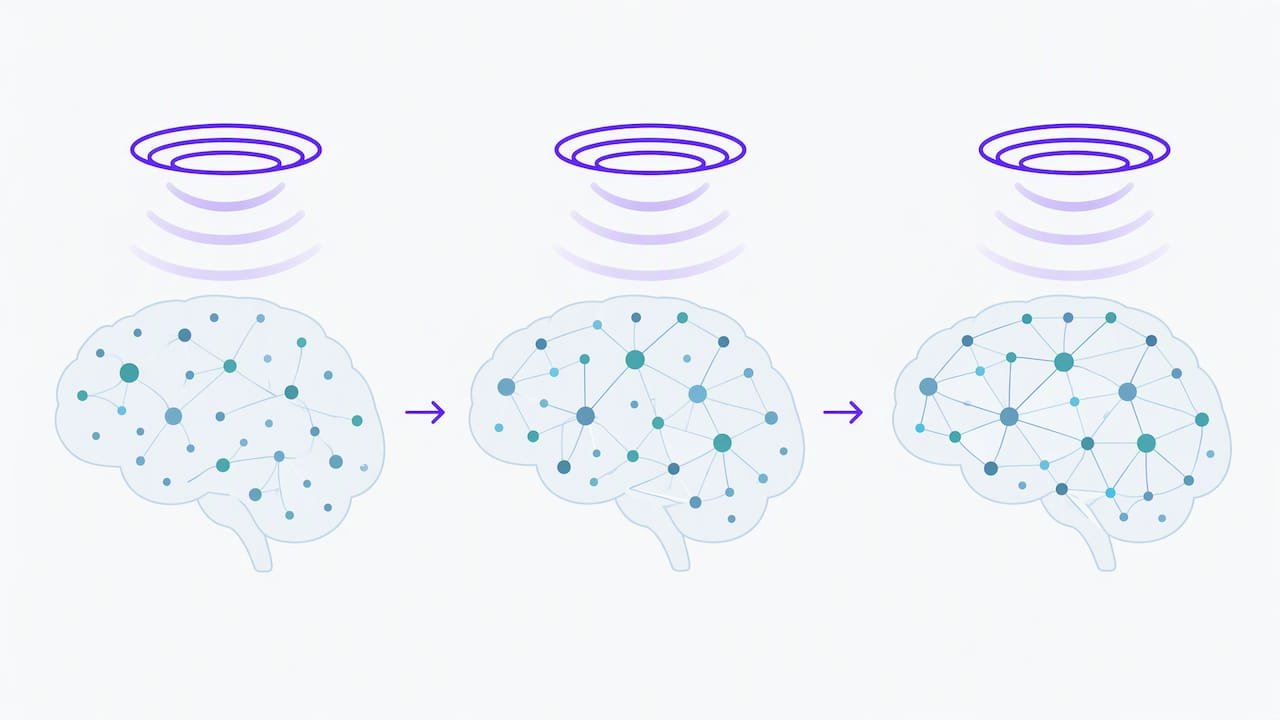
One of the more consistent findings across these trials is that T-PEMF produced a statistically superior outcome to sham stimulation in people whose depression had not responded to standard treatment, a meaningful result given how hard treatment-resistant depression is to shift.
Taken together, the picture that emerges from this body of work includes a few consistent threads:
- Sham-controlled trials of T-PEMF show better outcomes than placebo stimulation in treatment-resistant depression, not just a general sense of improvement.
- Cohort data suggests PEMF augmentation works better for people earlier in a depressive episode than for those with long, chronic courses of illness.
- LFMS trials point to a rapid mood effect in small samples, though protocols and devices vary considerably between studies.
- The cited T-PEMF cohort study tested PEMF as an addition to existing antidepressant treatment, rather than as a standalone therapy.
The limitations matter as much as the findings. The available evidence includes small studies, which limits how confidently we can generalise the results. Equipment and protocols differ from study to study, including coil placement, intensity and session length, making it hard to pool results into one clean answer. And because nearly every trial tested PEMF as an augmentation rather than a replacement, we simply do not have strong evidence on how it performs on its own.
How PEMF fits with antidepressants, rTMS and ECT
PEMF’s place in depression care is best understood as a potential add-on, not a substitute for established treatment. In Ireland, clinical guidance from the HSE states that for moderate to severe depression, a combination of talking therapy and antidepressant medication is generally more effective than either approach alone. PEMF research sits alongside that framework rather than challenging it: nearly every trial we have discussed tested it as an addition to ongoing medication.
Compared with other forms of neuromodulation, PEMF has a few practical points in its favour. PEMF and ECT have different treatment protocols, and the information available here does not establish how their risks compare. Ask your clinician about the risks and whether any treatment can be administered at home.
But the different protocols do not establish equal effectiveness, and the evidence hierarchy here is worth being honest about:
- The available review reports that ECT seems more effective than rTMS for some severe or psychotic depression cases.
- Repetitive transcranial magnetic stimulation (rTMS) shows a small to moderate benefit over sham in systematic reviews, though the effect is often smaller than clinically predefined thresholds suggest it should be.
- PEMF’s evidence is promising in specific trials but more heterogeneous overall, with fewer large, well-replicated studies than rTMS or ECT.
A related technique, magnetic seizure therapy, has been studied as a gentler alternative to ECT, but the evidence for it remains insufficient and of very low certainty when compared directly against ECT. That context helps place PEMF correctly: it is one option among several forms of neuromodulation, each with a different evidence profile, risk level and typical use case. For many people, the realistic question is not “PEMF instead of medication” but “PEMF alongside medication, under supervision, if standard treatment has not been enough.”
What side effects and contraindications you should know about
The cited sham-controlled T-PEMF study reported few and mild side effects. Ask a clinician about possible risks before considering treatment.
Trial findings do not establish whether PEMF is suitable for everyone. Discuss your circumstances with a clinician before considering treatment:
- If you have an implanted electronic device, such as a pacemaker or neurostimulator, seek advice from your clinician before considering PEMF.
- If you are pregnant, seek advice from your clinician before considering PEMF.
- If you have a history of seizures, discuss it with your clinician before considering PEMF.
A partner clinical primer on PEMF side effects covers these practical safety considerations in more depth if you want a fuller picture before your first session. For our own screening process, our PEMF contraindications page sets out exactly which conditions we check for before anyone starts a course with us.
Pro Tip: Keep a simple symptom diary during any PEMF course, noting mood, sleep and any physical sensations, and share it with your prescribing clinician so new or worsening symptoms get picked up early.
How sessions are scheduled and how long before you might notice change
The cited studies used different schedules: the T-PEMF cohort study ran for eight weeks, while the LFMS pilot used 20-minute sessions. These study protocols do not establish a typical schedule for PEMF treatment. The cited research does not establish whether home-administered sessions are suitable or how they affect treatment burden.
Benefits in these studies tended to build gradually rather than appear overnight. The LFMS pilot reported mood-enhancing effects after three sessions. The T-PEMF cohort study assessed outcomes over an eight-week course. These findings do not establish how long an individual should continue treatment; discuss that with your clinician.
A typical patient journey through a supervised course tends to follow this pattern:
- An initial screening appointment to check for contraindications and discuss current treatment and symptoms.
- A first session, with supervision and setting determined in consultation with your clinician.
- Further sessions, with the setting and schedule agreed with your clinician.
- Scheduled reviews using symptom ratings to track progress and decide whether to continue, adjust or stop.
A practical checklist and questions to bring to your clinician
Before booking anything, it helps to think through a few things clearly so the conversation with your GP or mental health team is as useful as possible.
Work through this before your appointment:
- Your current diagnosis, how long you have had symptoms, and how severe they currently are.
- What treatments you are already on, including medication and talking therapy, and how consistently you have followed them.
- Whether you have a history of treatment resistance, meaning symptoms that have not responded well to standard options.
- Any contraindications such as implanted devices, pregnancy or a seizure history.
- Practical factors: what access to PEMF looks like near you, likely costs, and what you realistically hope it will achieve.
When you sit down with your clinician, a few direct questions tend to get the most useful answers: is PEMF appropriate given my level of depression, how might it interact with my current medication, what monitoring or outcome measures will be used to judge whether it is working, and what timeframe and cost should I expect.
Pro Tip: Bring a copy of your recent symptom scores or a simple written summary of your current medication to the appointment, it saves time and gives your clinician a clearer starting point.
Live5D Health: how we offer PEMF and what to expect from our trial plan
We offer PEMF therapy as part of a wider set of clinically supervised therapies at our centre, alongside hyperbaric oxygen therapy, red light therapy and several other evidence-aware modalities. Anyone interested starts with a detailed screening conversation, because getting contraindications right matters more than enthusiasm.
- We offer PEMF therapy so you can learn more about it and consider whether it fits your routine.
- Our PEMF contraindications page sets out exactly which conditions rule someone out of treatment.
- Our detailed PEMF information page provides more information about PEMF.
We present this as one option among several, not a guaranteed outcome. What we can offer is clinical oversight, a clear screening process and a realistic trial period to judge your own response.
Author perspective on PEMF’s role in care
The literature on PEMF for depression is more encouraging than I expected when I first looked at it closely, particularly for people whose depression has not responded fully to medication alone. But promise is not proof, and every trial worth taking seriously tested PEMF as an addition to supervised care, not a substitute for it. The best decisions here come from weighing the evidence, your clinician’s judgement and your own goals together, not from choosing a therapy because it sounds modern.
— Mark
Book a PEMF trial or consultation at Live5D Health
If you want to explore whether PEMF has a place in your own care, the sensible starting point is a proper screening conversation rather than diving straight into a full course. PEMF therapy at Live5D Health begins with a safety check covering the contraindications we have outlined above, followed by a first supervised session so you know exactly what to expect.

From there, you can consider with your clinician whether PEMF is worth pursuing. You can book directly through our online booking page or get in touch with our team to ask questions before committing to anything.
FAQ
What are some online resources for depression?
The HSE’s clinical depression treatment guidance is a reliable starting point for understanding standard treatment pathways in Ireland. Your GP can also point you towards local mental health services and talking therapy options suited to your situation.
What is electromagnetic frequency therapy?
Electromagnetic frequency therapy, often called PEMF, uses pulsed electromagnetic fields delivered through a device placed near or on the body. Reviews discuss possible biological effects on neural tissue and inflammatory pathways. In depression research, the most studied forms are transcranial PEMF and low field magnetic stimulation. The cited T-PEMF cohort study examined use as an addition to antidepressant treatment; evidence predominantly covers PEMF as an augmentation to existing pharmacological treatment rather than as a replacement.
Who should not use PEMF therapy?
People with implanted electronic devices such as pacemakers, pregnant women, and anyone with a history of seizures are typically advised against PEMF as standard clinical practice. A full contraindication check before any session, such as the one on our PEMF contraindications page, should always come before starting treatment.
Can PEMF therapy be used to treat nerve pain?
This article focuses on the evidence discussed here for PEMF in depression. If nerve pain is your main concern, that is a separate question worth raising directly with your clinician or exploring through our PEMF trial resource for inflammation.
How long before PEMF might help with depression?
Trial data suggests most meaningful change builds over several weeks rather than appearing immediately, with typical courses running five to eight weeks of daily sessions. Some pilot studies have shown an early mood effect within the first few sessions, but completing a full course gives the clearest picture of whether it is working for you.
Sources
- Clinical depression treatment
- Transcranial pulsed electromagnetic fields for treatment-resistant depression: A multicenter 8-week single-arm cohort study: The eighth trial of the Danish University Antidepressant Group – PMC
- Transcranial low voltage pulsed electromagnetic fields in patients with treatment-resistant depression – PubMed