
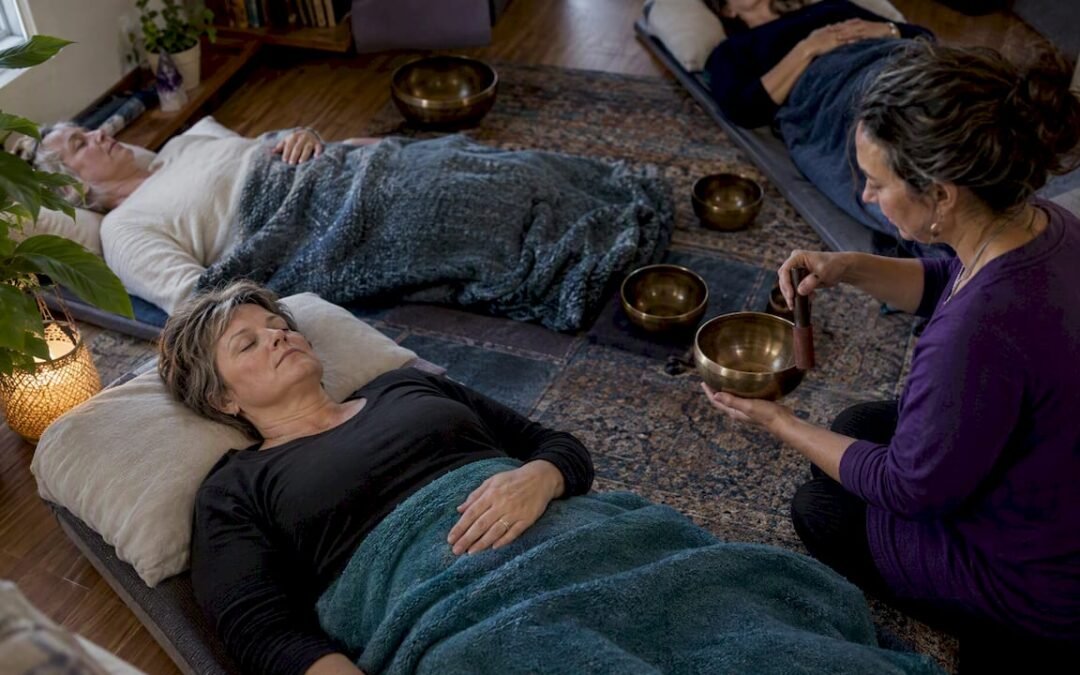
Sound therapy, particularly receptive music listening and combined approaches that pair calming audio with guided breathing, shows a medium reduction in anxiety across dozens of clinical trials. The World Health Organization now recommends relaxation techniques as a supportive measure for generalised anxiety, though we always encourage you to seek clinical care for severe or persistent symptoms.
TL;DR:
- Receptive listening and combined formats outperformed active music making, and are easier to deliver without a facilitator in everyday settings.
- For a home session, choose instrumental music at 60 to 80 beats per minute and listen for 30 to 36 minutes.
- Pairing slow diaphragmatic breathing with calming music may work better than either alone, particularly for people with moderate trait anxiety.
- Evidence varies across session formats and measures, while follow up is often brief, leaving long term benefit uncertain in many trials.
- Use sound therapy alongside psychological care, not instead of it, and seek clinical assessment if anxiety is severe, persistent, or disrupts daily life.
Table of Contents
- What sound therapy is and why it eases anxiety
- What the research finds: meta-analyses, RCTs and systematic reviews
- Common sound-therapy formats and what to expect from each
- Practical, evidence-aligned protocols you can try at home or in a guided session
- Our approach to sound therapy: practitioner-led sessions and screening
- Realistic expectations: when sound therapy helps and when to look further
- Book a sound therapy session at Live5DHealth
- FAQ
- Sources
What sound therapy is and why it eases anxiety
Sound therapy is a broad term for using music, tones or vibration to shift how your body and mind respond to stress. It splits into two camps: receptive approaches, where you listen without actively performing, and active approaches, where you sing, play an instrument or vocalise as part of the session. Music therapy, sound healing and sound baths are all variations within this spectrum, each using sound as the primary tool rather than words or talk-based techniques.
The physiological story behind this is well documented. Calming audio can nudge your brainwaves toward slower alpha and theta patterns, states associated with rest rather than alertness. At the same time, your autonomic nervous system often shifts from a sympathetic, fight-or-flight mode toward a parasympathetic one, which shows up as improved heart rate variability and, in some studies, lower cortisol. The subjective experience, feeling calmer, and the physiological markers do not always move together, which is part of why researchers measure both.
Typical formats you will encounter include:
- Guided listening sessions: pre-selected playlists chosen for tempo and instrumentation.
- Group sound baths: singing bowls, gongs or chimes played live in a shared space.
- Binaural or isochronic beat tracks: layered tones designed to encourage specific brainwave states.
- Practitioner-led sessions: one-to-one or small-group work with personalised audio parameters.
What the research finds: meta-analyses, RCTs and systematic reviews
The strongest evidence comes from a 2024 systematic review with multilevel meta-analyses published in eClinicalMedicine. Across dozens of trials involving several thousand participants, music therapy produced a medium overall effect size in reducing anxiety, with receptive and combined formats outperforming active-only music-making. That distinction matters for anyone choosing between joining a drumming circle and simply pressing play on a curated playlist.
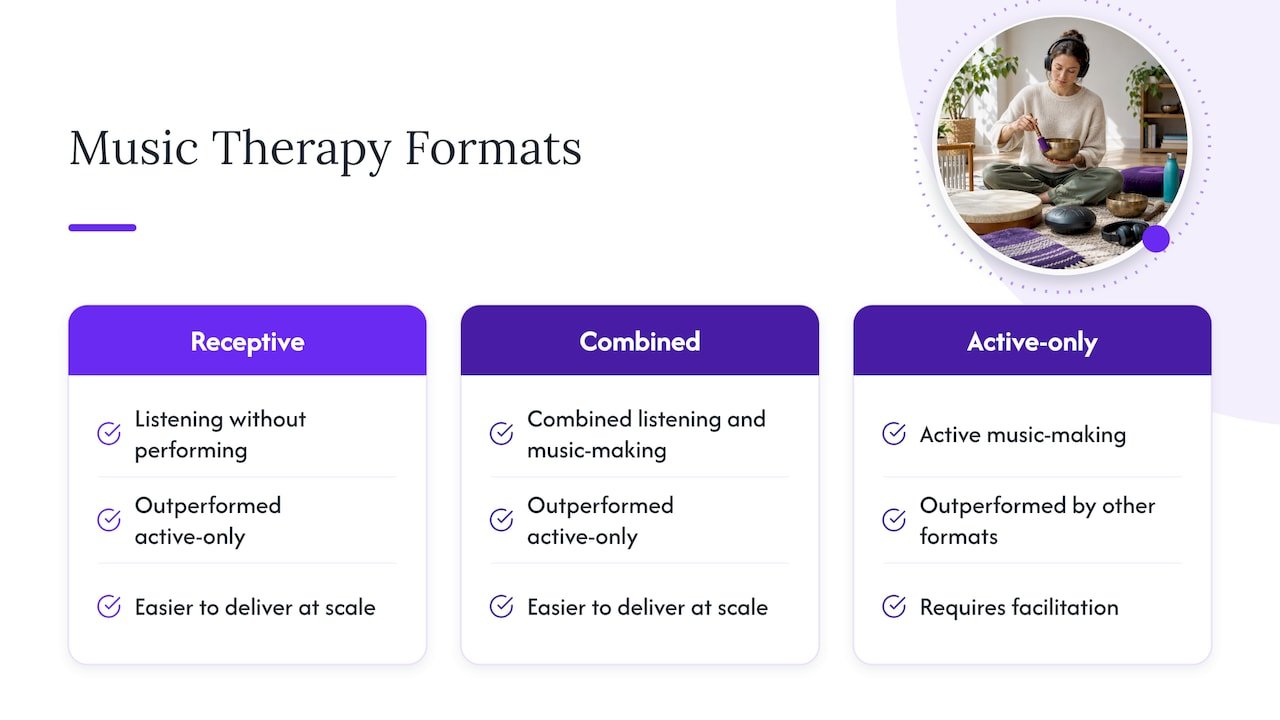
Receptive and combined formats also tend to be easier to deliver at scale, since they do not require facilitation the way active music-making does.
The World Health Organization’s 2023 mhGAP update gives this approach institutional backing. It conditionally recommends relaxation and mindfulness training as a low-risk, supportive measure for adults with generalised anxiety disorder and panic disorder, built on low-certainty but consistent evidence.
Randomised trials add useful nuance about combining methods. One parallel-arm RCT found that music paired with theta-range auditory beat stimulation reduced both somatic and cognitive state anxiety more than auditory beat stimulation alone or a pink-noise control, with the biggest gains seen in people who started with moderate trait anxiety. Meanwhile, systematic reviews of Tibetan singing-bowl interventions report encouraging reductions in anxiety alongside improved heart rate variability and favourable brainwave shifts, though the underlying studies vary widely in design and quality.
A few honest caveats belong here. Trial heterogeneity is real: session lengths, audio types and measurement tools differ from study to study, which makes direct comparisons tricky. Many trials follow participants for only a single session or a few weeks, so long-term durability is still thin. And physiological findings, such as cortisol or HRV changes, do not always track neatly with how calm people report feeling, which is a reminder that subjective relief and measurable biology are related but distinct outcomes.
Common sound-therapy formats and what to expect from each
Not every sound-based approach feels the same, and picking the right one depends on your setting and preferences.
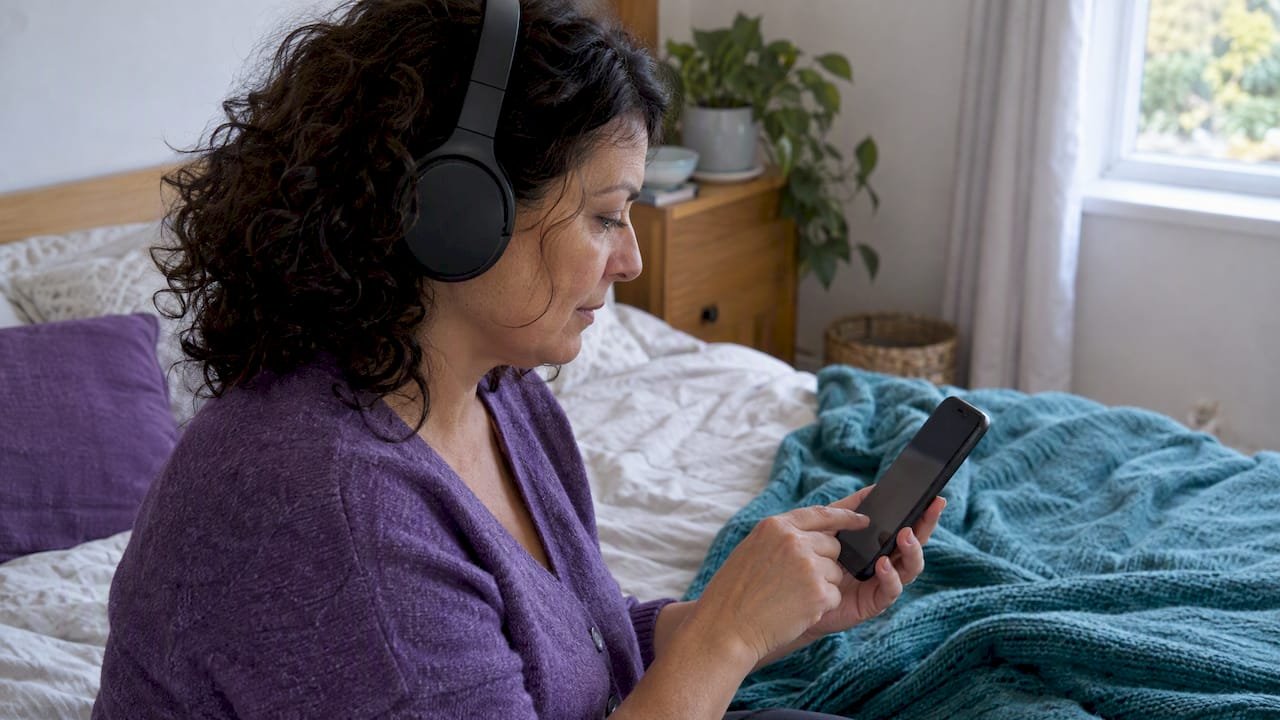
Receptive music listening is the most accessible starting point. You can follow a therapist-curated playlist or build your own, and expert reviews note that music interventions are flexible enough for self-administration when specialist support is not immediately available.
Sound baths and singing bowls usually happen in a group setting, though one-to-one sessions exist too. Expect low lighting, a session lasting 30 to 60 minutes, and a wash of overtones from bowls, gongs or chimes. Our guide to sound bath benefits walks through what the clinical literature finds alongside practical tips for getting the most from one.
Binaural and isochronic beats work differently: two slightly different tones (binaural) or a single pulsing tone (isochronic) encourage your brainwaves toward a target frequency, often in the theta range for relaxation. Our binaural beats protocol page sets out how to use these at home for calm or sleep.
Vibroacoustic approaches add a physical dimension, delivering low-frequency sound through a bed, mat or chair so you feel the vibration as well as hear it. Partner research into vibroacoustic therapy outlines the clinical basis and contraindications worth knowing before trying it.
- Immediate effects: a looser jaw, slower breathing, a sense of mental quiet.
- Cumulative effects: steadier mood and better sleep with repeated sessions over weeks.
Practical, evidence-aligned protocols you can try at home or in a guided session
Four short routines reflect what the trials above actually tested.
- Receptive listening protocol: choose slow-tempo instrumental tracks (60 to 80 beats per minute), avoid intrusive lyrics, and listen for 30 to 36 minutes. Dose-response research suggests this longer window produces a larger drop in negative mood than a brief five-minute clip.
- Combined protocol: pair slow diaphragmatic breathing with 30 to 36 minutes of calming music, adding a theta-range auditory beat track if you have one. Trial evidence suggests this combination often beats either element used alone, particularly for moderate trait anxiety.
- At-home sound-bath adaptation: select a recorded singing-bowl or gong track, keep the volume moderate to protect your hearing, dim the room, and settle in on an empty stomach, a habit many practitioners recommend reducing physiological distraction during the session.
- Quick relief routine: when anxiety spikes, 12 to 15 minutes of calming audio still produces a measurable short-term dip in distress, even though longer sessions tend to go further. Jot down a quick before-and-after rating out of 10 so you can see what is actually working for you.
Pro Tip: Keep a one-line log after each session, noting the format and a 0 to 10 calm rating, so patterns emerge within a couple of weeks rather than guesswork.
The WHO’s guidance frames relaxation techniques like these as a support alongside, not a replacement for, psychological therapies such as CBT, and our anxiety management guide covers how the two fit together.
Our approach to sound therapy: practitioner-led sessions and screening
We built our sound and brain entrainment offering around the same principle the research supports: calming audio works best when the parameters are matched to the person. Our Roxiva sound and light brain entrainment therapy combines rhythmic audio with light pulses tuned toward relaxation-associated brainwave states, delivered in a controlled setting rather than through a generic track.
We also offer sound-healing bed therapy, a vibroacoustic-style session where sound is felt as well as heard.
- Each session begins with a short conversation about your anxiety pattern and any contraindications.
- Parameters such as frequency range and session length are set for you rather than left to a generic preset.
- Clinician oversight means a guided session can safely combine elements, such as music with entrainment, that are harder to calibrate alone.
Realistic expectations: when sound therapy helps and when to look further
Sound therapy earns its place as a genuine, evidence-supported tool for mild to moderate anxiety, especially as an adjunct alongside talking therapy rather than a stand-alone fix. Track your own response honestly over a few weeks rather than expecting one session to resolve things. If anxiety is severe, persistent, or interfering with daily life, that is a clear signal to seek a clinical assessment rather than relying on sound alone.
— Mark
Book a sound therapy session at Live5DHealth
We offer practitioner-led sound and light brain entrainment through our booking page, where sessions are tailored to your anxiety pattern rather than run from a fixed script. A first appointment starts with a short screening conversation, then moves into a session using personalised frequency and timing settings.
For anyone wanting a deeper reset, our 3, 5 and 10-Day Total Wellness Retreats combine sound-based sessions with complementary therapies across several days. Reach out to book a session or ask about retreat availability.
This article is general information, not a substitute for advice from a qualified doctor. Consult a qualified healthcare professional about your own circumstances before acting on anything here.
FAQ
How to stop thinking about anxious thoughts?
Shifting attention away from anxious rumination often works better than trying to suppress the thoughts directly. Techniques such as slow breathing, grounding exercises, or listening to calming audio for 20 to 30 minutes can interrupt the loop by engaging your attention elsewhere and easing physical tension at the same time.
What is the difference between stress and anxiety?
Stress is typically a response to a specific external pressure, such as a deadline or a difficult conversation, and tends to ease once the trigger passes. Anxiety is more persistent worry or unease that can continue even without a clear external cause, and it often involves physical symptoms like a racing heart or tight chest.
What relaxation techniques help with anxiety?
Diaphragmatic breathing, progressive muscle relaxation, mindfulness practice and receptive music listening are among the techniques the World Health Organization recommends as supportive measures for anxiety. These work best combined with professional care rather than used as a sole treatment for moderate to severe symptoms.
How do I sit with anxiety rather than avoid it?
Sitting with anxiety means noticing the physical sensations and thoughts without immediately trying to push them away, often paired with slow breathing to keep your body from escalating further. Calming audio or a short guided session can make this easier by giving your attention something steady to rest on while the feeling passes.
Sources
- Music therapy for the treatment of anxiety: a systematic review with multilevel meta-analyses – eClinicalMedicine
- WHO issues new and updated recommendations on treatment of mental, neurological and substance use conditions
- Randomised trial showing combined music plus auditory beat stimulation often reduced state anxiety more than single methods (PMC)
- Effects of Tibetan Singing Bowl Intervention on Psychological and Physiological Health in Adults: A Systematic Review