

Pure oxygen therapy is the process of supplying concentrated oxygen to the body to accelerate tissue repair and recovery. Clinically known as hyperbaric oxygen therapy (HBOT) in its most advanced form, this treatment works by flooding damaged tissues with oxygen levels far beyond what normal breathing delivers. Authorities including the Mayo Clinic, NHS, and Cleveland Clinic recognise oxygen therapy as a legitimate medical tool for wound healing, burn recovery, and ischemic injury. Understanding why pure oxygen promotes healing gives you the knowledge to make informed decisions about your own recovery and wellness.
Why pure oxygen promotes healing at a cellular level
The core reason oxygen accelerates healing is simple: every cell in your body needs oxygen to produce energy and carry out repair. When tissue is damaged, blood flow is often compromised, leaving cells in a low-oxygen state called hypoxia. Pure oxygen therapy corrects this deficit directly.
Here is what happens biologically when oxygen levels rise in damaged tissue:
- Angiogenesis: Elevated oxygen levels stimulate new blood vessel growth, restoring circulation to areas that were previously starved of nutrients and oxygen.
- Collagen synthesis: Oxygen is a co-factor in collagen production. Without adequate oxygen, fibroblasts cannot produce the collagen needed to close wounds and rebuild tissue structure.
- Immune function: White blood cells require oxygen to destroy bacteria. Higher tissue oxygen levels sharpen the immune response, reducing infection risk in open wounds.
- Inflammation reduction: Oxygen therapy reduces inflammation by supporting cellular metabolism and clearing metabolic waste from injured tissue.
- Mitochondrial function: Mitochondria, the energy-producing structures inside every cell, depend on oxygen to generate ATP. More oxygen means more energy available for repair.
These mechanisms work together rather than in isolation. Angiogenesis brings more blood to the area, which delivers more oxygen and nutrients. Better immune function clears debris and infection. Collagen synthesis closes the wound. Each process depends on the one before it.
Pro Tip: If you are exploring oxygen therapy for wound care, ask your clinician specifically about tissue oxygen measurements before and after treatment. This gives you objective data on whether the therapy is producing the cellular changes you need.
How does hyperbaric oxygen therapy work?
Hyperbaric oxygen therapy is the clinical delivery of 100% pure oxygen inside a pressurised chamber. The pressure is the critical variable. At normal atmospheric pressure, oxygen dissolves into blood plasma in small amounts. Under pressure, far more oxygen dissolves directly into the plasma, bypassing the usual haemoglobin transport system entirely.
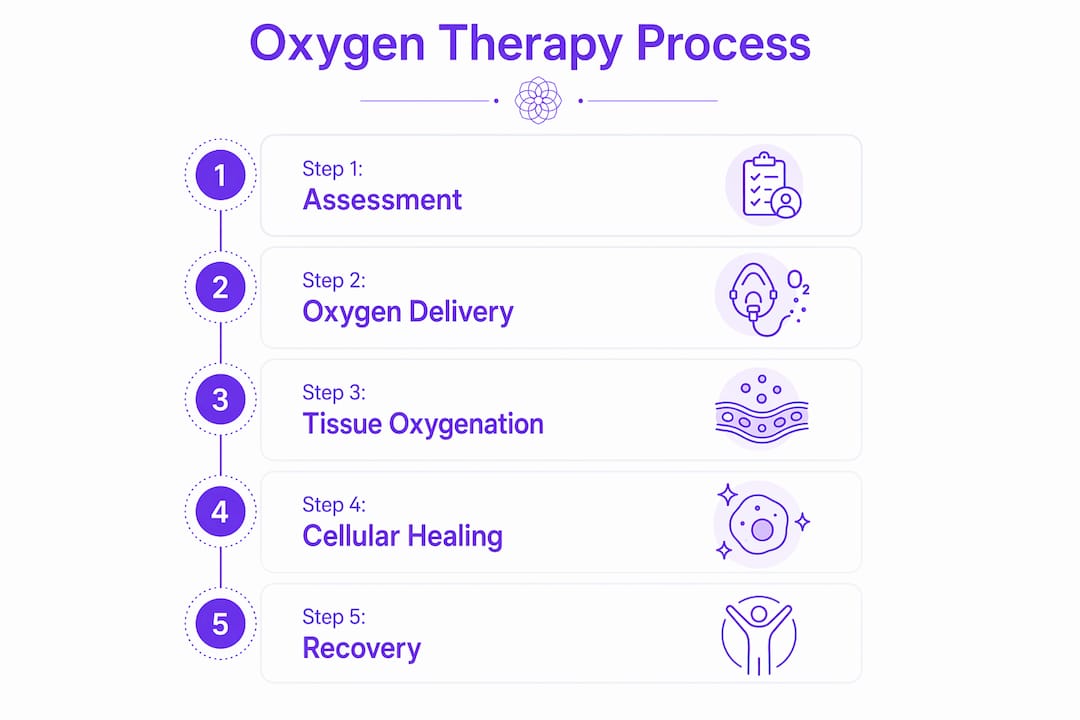
HBOT delivers 20 to 30 times the normal amount of oxygen to tissues. That scale of increase is what makes HBOT clinically significant rather than simply breathing deeply.
What a typical HBOT session looks like
- You enter a pressurised chamber, either a monoplace unit designed for one person or a multiplace chamber accommodating several patients.
- The chamber pressurises to 2.0–2.4 ATA (atmospheres absolute), roughly equivalent to diving 10–14 metres underwater.
- You breathe 100% pure oxygen continuously for 90–120 minutes per session.
- The chamber depressurises gradually at the end of the session.
- Treatment courses typically run 20–40 sessions depending on the condition being treated.
| Condition | Typical Pressure (ATA) | Sessions Required |
|---|---|---|
| Chronic wound healing | 2.0–2.4 | 20–40 |
| Burns and skin grafts | 2.0–2.4 | 20–30 |
| Ischemic tissue injury | 2.0–2.4 | 20–40 |
| Carbon monoxide poisoning | 2.4–3.0 | 3–5 |
Clinical evidence supports HBOT for burns, skin grafts, and ischemic injuries. The oxygen supply to hypoxic tissue drives cellular metabolism, angiogenesis, and immune responses that would otherwise be stalled by low oxygen availability.
Pro Tip: Treatment pressure and duration are not one-size-fits-all. Clinical HBOT dosing is tailored to your specific injury type, so always work with a qualified hyperbaric medicine specialist rather than assuming a standard protocol applies to your situation.
What are the benefits and risks of oxygen therapy?
Oxygen therapy carries genuine therapeutic benefits, but it also carries real risks when used incorrectly. Understanding both sides helps you approach it with realistic expectations.
Proven benefits
- Improved symptoms and organ function in patients with low blood oxygen levels
- Faster wound closure in chronic and diabetic wounds
- Reduced infection rates through enhanced immune activity
- Accelerated recovery from burns, crush injuries, and radiation damage
- Removal of trapped air bubbles in decompression illness
Important limitations
Oxygen therapy improves symptoms only when blood oxygen is genuinely low. This is the most misunderstood aspect of oxygen therapy in wellness circles. If your blood oxygen is already at a normal saturation level, additional oxygen provides no measurable healing benefit. The therapy works by correcting a deficit, not by creating a surplus.
“Supplemental oxygen does not cure lung diseases but improves symptoms and organ function.” — American Lung Association. This distinction matters: oxygen therapy is a supportive treatment, not a cure.
Risks to know
Excess oxygen use risks oxygen toxicity, which can slow breathing and heart rate to dangerous levels. Oxygen toxicity is not theoretical. It is a documented clinical risk, particularly with prolonged high-pressure exposure. Self-directed or unsupervised oxygen therapy amplifies this risk significantly. The Cleveland Clinic is clear that oxygen therapy must be guided medically to avoid harm.
How can you benefit from oxygen therapy for healing?
Knowing the science is one thing. Knowing how to apply it to your own recovery is another. Oxygen therapy is not a single treatment. It spans a range of clinical and wellness applications, each suited to different needs.
Common clinical indications
- Diabetic foot ulcers: Chronic wounds with poor circulation respond well to HBOT because the therapy bypasses compromised blood vessels to deliver oxygen directly.
- Post-surgical recovery: Tissue trauma from surgery creates localised hypoxia. Oxygen therapy supports faster cellular repair in the post-operative period.
- Radiation tissue damage: Radiotherapy can damage blood vessels in treated areas. HBOT stimulates angiogenesis to restore circulation and tissue health.
- Sports injuries: Some athletes use HBOT to accelerate recovery from soft tissue injuries, though clinical evidence here is still developing.
Wellness applications and misconceptions
A common misconception in wellness is that higher oxygen universally accelerates recovery. In practice, patient oxygen status guides therapy efficacy. If you are healthy with normal oxygen saturation, recreational oxygen bars or mild hyperbaric sessions are unlikely to produce the dramatic healing effects seen in clinical settings. You can read more about hyperbaric therapy misconceptions to separate fact from marketing.
Home oxygen therapy is a separate category, prescribed by clinicians for conditions like COPD or severe sleep apnoea where blood oxygen is chronically low. This is not the same as wellness oxygen use.
Pro Tip: Before pursuing any oxygen therapy, get a baseline blood oxygen saturation reading from your GP. If your SpO2 is consistently above 95%, the clinical case for supplemental oxygen is weak. If it is lower, a formal assessment is worth pursuing.
The most effective approach to oxygen therapy is one guided by clinical assessment, targeted at a confirmed oxygen deficit, and delivered at the correct pressure and duration for your specific condition. You can also explore how to maximise your HBOT results with practical strategies that complement your treatment plan.
Key takeaways
Pure oxygen promotes healing by correcting tissue hypoxia, triggering angiogenesis, supporting immune function, and enabling collagen synthesis at the cellular level.
| Point | Details |
|---|---|
| Oxygen corrects hypoxia | Damaged tissue is often oxygen-starved; pure oxygen restores the supply needed for cellular repair. |
| HBOT multiplies oxygen delivery | Pressurised chambers deliver 20–30 times normal oxygen, reaching tissues that normal breathing cannot. |
| Therapy only works if oxygen is low | Additional oxygen provides no benefit when blood oxygen levels are already normal. |
| Oxygen toxicity is a real risk | Unsupervised or excessive oxygen use can dangerously slow breathing and heart rate. |
| Clinical guidance is non-negotiable | Treatment pressure, duration, and indication must be assessed by a qualified specialist for safe outcomes. |
My honest view on oxygen therapy and wellness
I have spent a considerable amount of time reviewing the evidence on oxygen therapy, and the gap between clinical reality and wellness marketing is wider than most people realise. HBOT is genuinely impressive when applied correctly. The research from StatPearls, the Mayo Clinic, and the NHS is consistent: oxygen therapy works when tissue oxygen is the limiting factor in recovery. That is a precise condition, not a general one.
What concerns me is the growing trend of positioning oxygen therapy as a universal performance booster. Recreational oxygen bars and mild hyperbaric sessions are not the same as clinical HBOT at 2.0–2.4 ATA. Conflating them does a disservice to people who genuinely need the therapy and to those who might spend significant money on something that will not move the needle for their specific situation.
The wellness seekers I respect most are the ones who ask hard questions. Does my tissue oxygen actually need support? Has a clinician assessed my baseline? Am I addressing the root cause of my slow recovery, or just adding oxygen on top of an unresolved problem?
Oxygen therapy is a powerful adjunct to a well-designed recovery plan. It is not a shortcut, and it is not a substitute for addressing the underlying drivers of poor healing, whether those are nutrition, circulation, sleep, or chronic inflammation. Used correctly, with proper clinical oversight and realistic expectations, it can genuinely accelerate your recovery. That is worth being excited about. Just go in with your eyes open.
— Mark
Explore oxygen therapy at Live5dhealth
If you are ready to explore what oxygen therapy could do for your recovery, Live5dhealth in Boyle, County Roscommon, offers a range of advanced wellness therapies in a luxury retreat setting. From hyperbaric oxygen sessions to full spa and recovery programmes, the team at Live5dhealth can help you build a personalised healing plan grounded in evidence.

Whether you are recovering from injury, managing a chronic condition, or simply committed to feeling your best, Live5dhealth provides the clinical environment and expert guidance to make oxygen therapy work for you. Explore wellness centre alternatives in Ireland or discover the full range of luxury retreat options available at Live5dhealth to take your recovery to the next level.
FAQ
What is hyperbaric oxygen therapy used for?
HBOT is used to treat chronic wounds, burns, skin grafts, ischemic injuries, carbon monoxide poisoning, and radiation tissue damage. It works by delivering 20–30 times the normal amount of oxygen to damaged tissues under pressure.
Does breathing pure oxygen speed up healing for everyone?
No. Oxygen therapy benefits only those with genuinely low blood oxygen levels. If your oxygen saturation is already normal, additional oxygen will not accelerate healing.
How long does a hyperbaric oxygen therapy session last?
A standard HBOT session runs 90–120 minutes at pressures of 2.0–2.4 ATA. Full treatment courses typically involve 20–40 sessions depending on the condition being addressed.
Is oxygen therapy safe to use without medical supervision?
Self-directed oxygen therapy carries a real risk of oxygen toxicity, which can dangerously slow breathing and heart rate. The Cleveland Clinic advises that all oxygen therapy should be medically supervised and targeted to a confirmed clinical need.
How does oxygen support wound healing specifically?
Oxygen enables collagen formation and angiogenesis in damaged tissue, while also enhancing the immune response that clears infection. These combined effects accelerate wound closure and tissue regeneration.