
Generally, we recommend avoiding public saunas during active chemotherapy unless your oncology team has explicitly cleared you. The main reasons are infection risk from lowered immunity, dehydration and cardiovascular strain from heat exposure, and reduced sensation that can hide burns. The fastest way forward is simple: ask your oncology nurse or consultant before you book a session.
TL;DR:
- Public sauna use during chemotherapy carries infection risks, especially during the blood count nadir, which occurs approximately 7 to 14 days after infusion.
- Heat exposure stresses the cardiovascular system and may increase dehydration risks, particularly in fatigued patients or those with cardiotoxic treatments.
- Chemotherapy-induced nerve damage can impair heat sensation, raising the danger of burns from hot surfaces or steam.
- Healing wounds, surgical sites, and ports are more vulnerable to infection and should be fully healed before considering sauna use.
- Clearance from an oncology team is mandatory, and even then, sessions should be short, cool, and with strict hygiene and symptom monitoring.
Table of Contents
- Why clinicians usually advise caution during treatment
- When to avoid sauna use: a practical checklist
- Do different types of sauna carry different risks?
- If you are cleared: evidence-aligned steps to reduce harm
- Questions to bring to your oncology team
- Lower-risk ways to manage symptoms during treatment
- How we approach sauna access for people in treatment
- A note from our side on caution and care
- Book a screened, supervised session with us
- FAQ
- Sources
Why clinicians usually advise caution during treatment
Chemotherapy can lower white blood cell counts, and a reduced neutrophil count raises the chance that an everyday infection becomes a serious one. The National Cancer Institute’s guidance on infection risk points out that people on treatment are advised to avoid exposure to sources of germs and to check blood counts before routine activities that bring them into contact with shared spaces. A sauna room itself is only part of the picture. Changing rooms, communal benches and shared water features often carry a bigger infection hazard than the heat itself, according to updated oncology guidance on heat therapies.

Heat exposure also puts a demand on your cardiovascular system. Reviews of sauna use describe measurable changes in heart rate, blood pressure and fluid balance during a session, effects that research on sauna and health links to dehydration risk, particularly relevant if you are already fatigued from treatment or receiving a chemotherapy regimen known to affect the heart.
Then there is sensation. Some chemotherapy drugs cause peripheral neuropathy, a numbness or tingling in the hands and feet that can blunt your ability to feel dangerous heat before it causes a burn, a risk flagged in the same oncology guidance cited above.
Finally, wounds and devices change the equation entirely:
- Surgical sites and radiated skin heal more slowly during chemotherapy and are vulnerable to local infection in warm, humid air.
- Chemotherapy ports need fully healed insertion sites before any heat or water exposure is considered.
- Lowered immunity means a minor skin break can become an entry point for infection far more easily than usual.
When to avoid sauna use: a practical checklist
Oncology teams often refer to the “nadir”, the period roughly 7 to 14 days after a chemotherapy infusion when blood counts, including neutrophils, typically hit their lowest point. Infection risk peaks during this window, which is exactly when a public sauna presents the greatest danger.
Use this sequence to decide whether a session should wait:
- Check your timing. If you are within the nadir window following your most recent infusion, postpone any thermal facility visit until your care team confirms your counts have recovered.
- Check for fever. Any temperature above your clinic’s threshold is a reason to avoid sauna use and contact your team immediately rather than wait it out.
- Check your skin and wounds. Open wounds, fresh surgical incisions or a recently placed port that has not fully healed mean heat and humidity are off the table for now.
- Check in after exposure. If you notice redness, swelling, unusual fatigue or fever within a day or two of a sauna visit, contact your oncology nurse and mention the exposure specifically.
Keep a simple note of your treatment dates and recent blood results. Bringing this to your next appointment makes it far easier for your clinician to give a precise answer rather than a general one.
Do different types of sauna carry different risks?
Not meaningfully, at least not in the ways that matter for someone on chemotherapy. A traditional sauna uses dry heat generated by heated rocks or a stove, typically reaching high air temperatures with low humidity. An infrared sauna warms the body directly with light rather than heating the surrounding air, often at a lower ambient temperature. Steam rooms add high humidity to heat, and hot tubs combine heat with standing water, which carries its own bacterial considerations.
- Traditional and infrared saunas both raise core temperature and place a similar cardiovascular demand on the body, even though the air temperature differs.
- Steam rooms and hot tubs add moisture and shared water, which increases the communal infection risk discussed above.
- None of these recreational formats are the same as medically supervised hyperthermia, a controlled oncology treatment that deliberately raises tissue temperature under clinical monitoring to treat tumours, as described by the National Cancer Institute’s overview of hyperthermia therapy. Recreational heat exposure offers no equivalent targeting or monitoring.
The practical takeaway is that format changes the details, not the underlying caution.
If you are cleared: evidence-aligned steps to reduce harm
When your oncology team gives the go-ahead, a conservative approach still matters. Clearance is not a blanket permission to use a sauna the way you did before diagnosis.
- Shorten your sessions. Aim for far less time than typical recreational use, with frequent breaks to check how you feel rather than pushing through discomfort.
- Hydrate before and after. A clinic protocol for sessions lasting 30 to 60 minutes commonly includes measured electrolyte support around 300 to 500 milligrams of sodium, a figure worth discussing directly with your clinician, especially if you follow a sodium-restricted diet or take cardiac medication.
- Reduce infection exposure. Shower before and after your session, bring your own towel rather than using a communal one, cover any healing skin, and avoid crowded changing rooms where possible.
- Watch for stop signs. Dizziness, a racing heartbeat, faintness or a new fever means leaving the sauna immediately and contacting your care team the same day.
Pro Tip: Treat your first cleared session as a test, not a routine: go shorter and cooler than you think you need, then reassess with your clinician before your next visit.
Questions to bring to your oncology team
A useful clearance conversation covers specific, checkable details rather than a general “is it okay”. Bring:
- Your neutrophil count from your most recent blood test, and whether it has recovered from your last cycle’s nadir.
- Any recent fever, infection or antibiotic course in the past few weeks.
- The status of any port, surgical site or radiated skin, including whether it is fully healed.
- Your treatment regimen, particularly if it includes a drug with known cardiotoxic effects.
- Any neuropathy symptoms, since reduced sensation changes how safely you can judge heat.
A typical clearance, where given, usually specifies session length, a maximum number of visits per week, and a clear list of symptoms that mean stopping immediately, as reflected in nurse guidance from the Macmillan community forum, which stresses that there is no single answer for every patient.
Lower-risk ways to manage symptoms during treatment
Plenty of supportive options carry less risk than heat exposure while still helping with stress, fatigue and discomfort.
- Mind-body practices such as guided meditation, gentle yoga and slow breathing exercises are widely used to ease treatment-related stress without the cardiovascular or infection concerns of a sauna.
- Supervised touch therapies, including massage delivered by a practitioner briefed on your treatment status, often remain suitable with clearance; this overview of massage techniques for stress relief covers approaches worth discussing with your team.
- Cold plunges and contrast therapy deserve particular caution if you have any cardiopulmonary risk, since rapid temperature shifts add their own strain.
A broader look at complementary therapies during cancer treatment is worth reading before adding anything new to your routine.
How we approach sauna access for people in treatment
We take a conservative, screening-first stance with anyone mentioning chemotherapy, radiation, or a recent cancer diagnosis before booking. Our research-led sauna protocols for heart health favour shorter sessions, commonly in the 15 to 20 minute range as outlined in our guidance on sauna timing after exercise, paired with the electrolyte approach described above.
- We ask screening questions covering recent chemotherapy dates, blood count status, and any port, wound or surgical history before confirming a booking.
- We recommend a recent neutrophil check for anyone in active treatment, in line with the blood count advice from oncology sources cited earlier.
- We still require oncology clearance as a condition of access for anyone currently undergoing cancer treatment, regardless of how they feel on the day.
Readers wanting the full picture on hygiene and facility use can see our practitioner-informed spa etiquette guide for the practical side of reducing exposure in shared spaces.
A note from our side on caution and care
We understand the pull towards normality during treatment, the wish to do something that once felt restorative and simple. That is precisely why caution matters here: the body undergoing chemotherapy is not the body that used a sauna last year, and the stakes of getting it wrong are higher than they look. If you want a personalised answer, start with your oncology team, then reach out to us for a screening conversation once you have that clearance in hand.
— Mark
Book a screened, supervised session with us
We offer a genuinely different route into sauna access during a season when most public facilities simply say no outright: a screening conversation first, then a conservative, supervised session built around your specific treatment status rather than a one-size-fits-all timer.

- Sauna, Steam & Cold Plunge Spa sessions are available from €30 one-off, with screening required before anyone in active cancer treatment books.
- Electrolyte guidance around sessions follows the protocol described above, adjusted to your clinician’s advice.
- Lower-risk alternatives, including Red Light Therapy and Holistic Massage, remain worth considering if a sauna is not right for you yet.
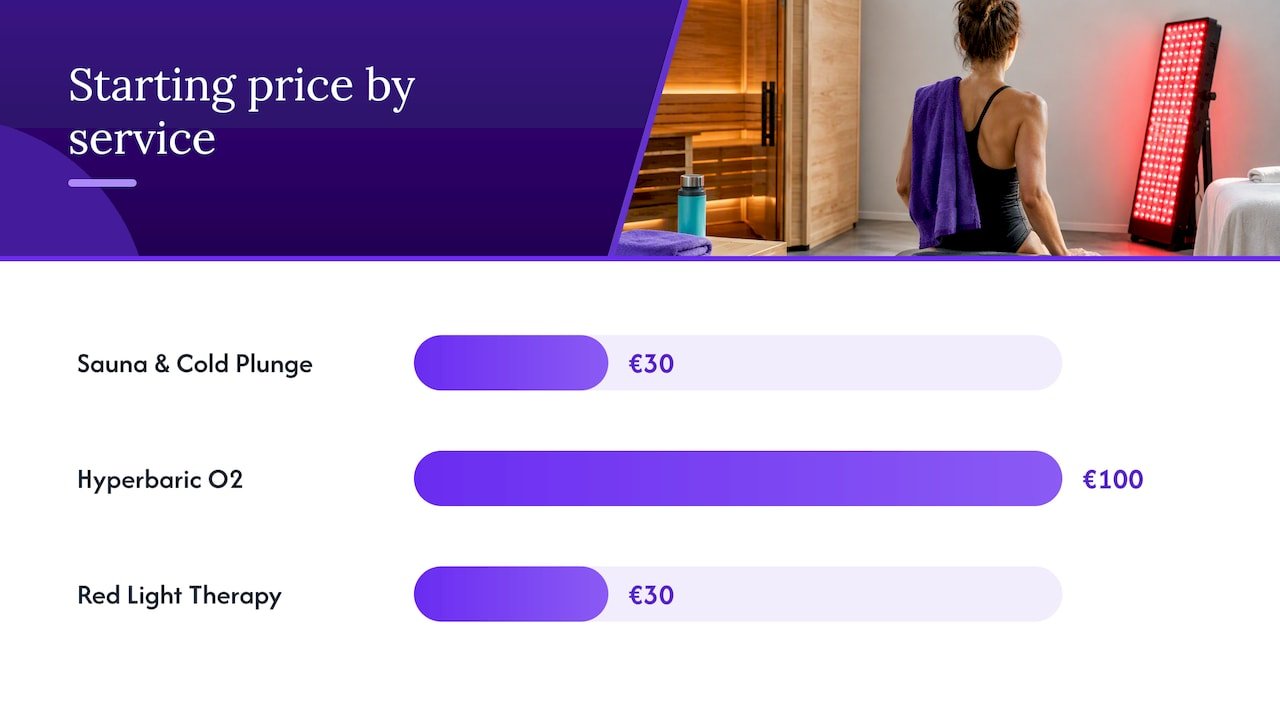
| Service | What it offers | Starting price |
|---|---|---|
| Sauna, Steam & Cold Plunge Spa | Supervised thermal sessions with screening | €30 one-off |
| Hyperbaric Oxygen Therapy | Pressurised oxygen sessions | €80 to €120 one-off |
| Red Light Therapy | Lower-heat recovery support | €20 to €40 one-off |
Oncology clearance remains a condition of booking for anyone currently in cancer treatment. If you have that clearance, book your spa day and we will take it from there.
This article is general information, not a substitute for advice from a qualified doctor. Consult a qualified healthcare professional about your own circumstances before acting on anything here.
FAQ
Can you go in a sauna during chemo?
Generally, oncology guidance advises against public sauna use during active chemotherapy because of infection, dehydration and heat-related risks, as outlined by updated recommendations on heat therapies for cancer patients. An individual exception is possible only with explicit clearance from your oncology team, since immune status, wounds and treatment regimen all vary.
Do saunas affect cancer risk?
Population studies on sauna use focus on generally healthy groups and have not shown a clear increase in common cancers from regular sauna habits, according to population sauna research. These findings do not extend to people actively receiving chemotherapy, whose immune and cardiovascular status differs substantially from the study populations.
What is chemo rage?
“Chemo rage” is a term some patients and caregivers use for irritability, mood swings or sudden anger that can accompany chemotherapy, fatigue and the stress of treatment. It is not a formal medical diagnosis, and persistent or severe mood changes are worth raising directly with your oncology team.
What is forbidden during chemo?
There is no single universal list, since restrictions depend on your specific drugs, blood counts and overall health, a point emphasised by nurse guidance on sauna and swimming during chemo. Common cautions include avoiding crowded public facilities during low blood count periods, exposure to raw or undercooked food, and unhealed wounds or ports being submerged or overheated, so always confirm specifics with your own care team.
Sources
- Updated recommendations on the use of heat in treatments for cancer patients
- Infection — Side effects of cancer treatment (National Cancer Institute)
- Sauna/steam room or swimming ok with Chemo pls? (Macmillan community nurse reply)
- Review on sauna and health (PMC article)